BB fertilizer (bulk blended fertilizer) differs significantly from granular, liquid, and compound fertilizers in production logic and nutrient characteristics, catering to diverse planting needs.
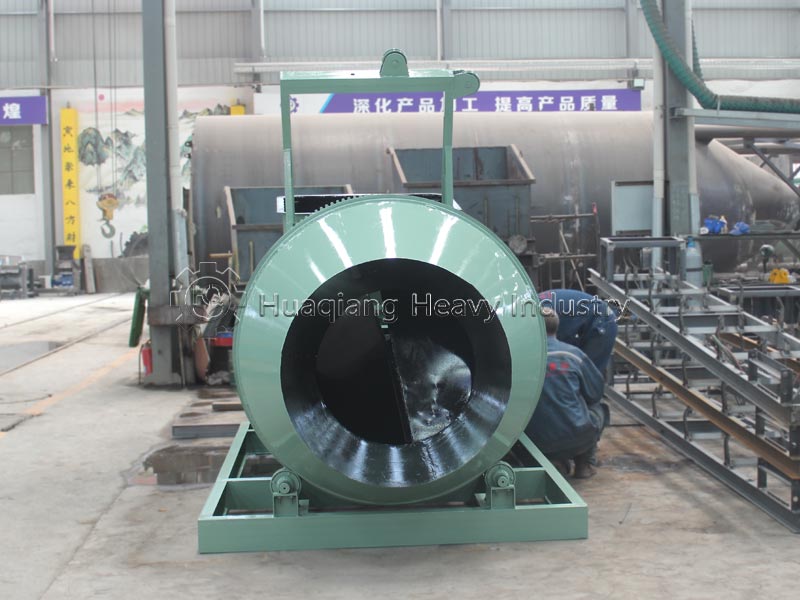
Production Process: BB fertilizer has a simple process. Single-element fertilizers are mixed and sieved using a BB fertilizer mixer on an NPK blending fertilizer production line before being shipped. The formula can be adjusted in real time. Granular fertilizers require a fertilizer granulator for pressing and are mostly single-nutrient or have a fixed ratio. Liquid fertilizers are made through dissolution and chelation, without solid particles. Compound fertilizers are directly synthesized with a fixed ratio, and the finished product formula cannot be adjusted after granulation.
Nutrient Flexibility: BB fertilizer can be customized with nitrogen, phosphorus, potassium, and micronutrients as needed, achieving “one-site-one-policy” customization. Granular fertilizers are mostly single-nutrient (such as granular urea) or have a fixed formula, resulting in poor flexibility. Liquid fertilizers have good nutrient uniformity, but formula adjustment requires specialized skills and is difficult. Compound fertilizers have a fixed nutrient ratio and cannot be dynamically adjusted according to soil and crop needs.
Application and Storage Scenarios: BB fertilizer has uniform granules, making it suitable for mechanized application; however, it requires moisture-proof and anti-segregation storage. Granular fertilizers are durable, easy to store and transport, and suitable for various application methods, but dissolve relatively slowly. Liquid fertilizers need to be diluted with water for flushing or drip irrigation; they are fast-acting but require special containers and are prone to volatilization and leakage. Compound fertilizers are convenient to apply and have good storage properties, but excessive application can easily lead to nutrient imbalances.
In summary, BB fertilizers, with their flexible formulation and simplified processing, differentiate themselves from granular, liquid, and compound fertilizers, making them more suitable for large-scale, precision planting. Other fertilizers, on the other hand, are more advantageous in specific scenarios such as rapid nutrient replenishment and convenient application.