As a major agricultural producer, my country generates nearly 1 billion tons of straw annually, making its resource utilization a crucial issue. Driven by national environmental protection policies, straw burning has been effectively curbed, and transforming this agricultural waste into valuable products has become a new development direction. Using straw as a raw material for organic fertilizer production not only aligns with the concept of a circular economy but also provides high-quality fertilizer for agricultural production, achieving a dual improvement in environmental and economic benefits.
Innovation in Straw Pretreatment Technology
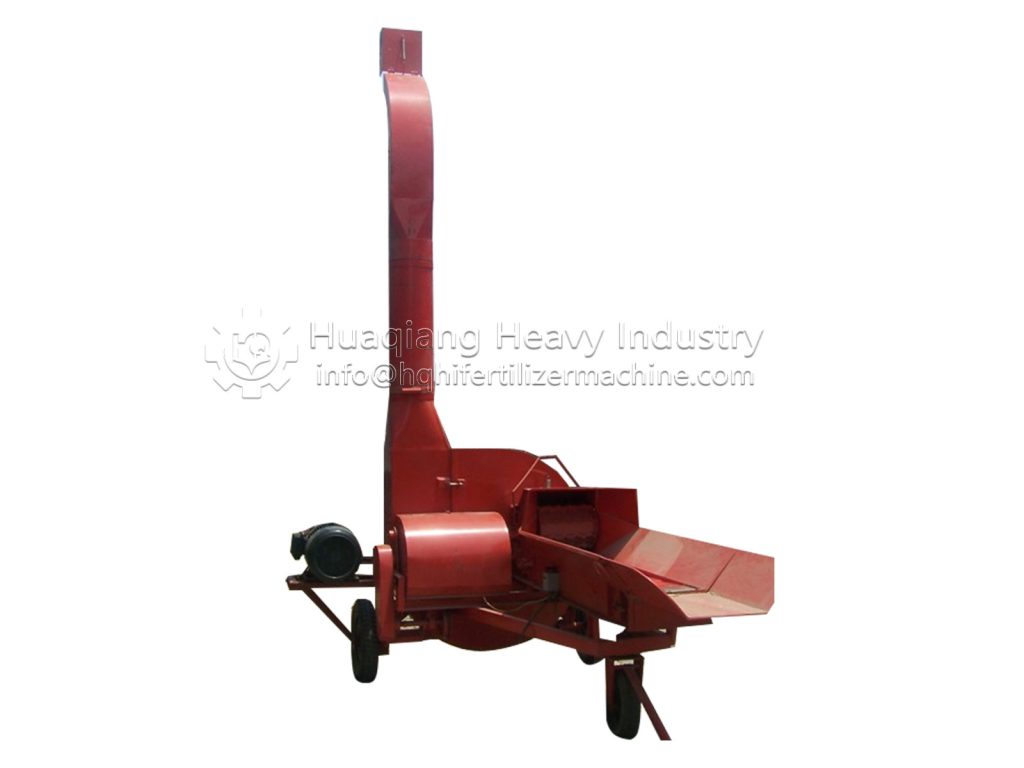
The primary step in converting straw into organic fertilizer raw materials lies in scientific pretreatment. Traditional simple crushing often fails to achieve ideal results. Huaqiang Heavy Industry’s straw pretreatment system employs a multi-stage crushing process. First, a chain crusher coarsely crushes the straw, controlling the length to within the 5-10 mm range; this stage focuses on addressing the straw’s fiber structure. Subsequently, it enters a semi-wet material crusher for fine crushing, ensuring the material reaches a fineness of 80 mesh or higher.
This refined crushing process significantly increases the surface area of the straw, creating favorable conditions for thorough mixing with subsequent raw materials such as livestock and poultry manure. The automated control system in the pretreatment process automatically adjusts crushing parameters according to different straw types, ensuring stable processing efficiency and quality. The entire pretreatment system can process 3-5 tons of straw per hour, meeting the needs of large-scale production.
Scientific Proportioning and Fermentation Process Optimization Straw itself has a high carbon-to-nitrogen ratio of 80:1, making direct fermentation difficult to achieve ideal results. Scientifically proportioning it with livestock and poultry manure to adjust the carbon-to-nitrogen ratio to the optimal range of 25:1-30:1 is a key technical step in ensuring fermentation quality. Typically, straw and chicken manure are mixed in a 3:1 ratio, utilizing the abundant carbon source of straw while supplementing the nitrogen source of livestock and poultry manure, forming a nutritionally balanced fermentation raw material.
The fermentation process uses a hydraulic turning machine for dynamic fermentation management. This equipment, driven by a high-power hydraulic system, can penetrate deep into the material pile for thorough turning, ensuring uniform mixing of straw and livestock and poultry manure. Adding a specialized cellulose-decomposing agent during fermentation significantly accelerates the decomposition and conversion of straw cellulose, shortening the traditional fermentation cycle of over 30 days to 15-20 days, increasing efficiency by over 30%.
Pelletizing Technology Breakthrough and Application Practice: Due to its unique fiber structure and poor binding properties, straw raw material presents significant technical challenges in pelletizing. The application of a new type of stirring tooth pelletizer has successfully solved this problem. This equipment uses high-strength alloy stirring teeth, which, through powerful stirring, fully combine the straw fibers with the binder, achieving a pelletizing rate of over 80%, and ensuring that the pellet strength meets national standards.
A successful case study from a straw processing center in Anhui Province fully validates the practical effectiveness of this technology. The center uses a 3-ton/hour production line customized by Huaqiang Heavy Industry, processing 20 tons of straw and 10 tons of chicken manure daily, producing 10,800 tons of high-quality organic fertilizer annually. Since the production line began operation, it has not only effectively solved the local straw processing problem but also generated 8.64 million yuan in economic benefits for the processing center annually. More notably, the project received a 2 million yuan environmental subsidy from the local government, becoming a model project for straw resource utilization.
Environmental Value and Social Benefits
The promotion and application of the straw organic fertilizer production line has brought significant environmental benefits. Processing 1 ton of straw is equivalent to reducing carbon dioxide emissions by approximately 1.5 tons, while avoiding the large amounts of harmful gases and dust pollution produced by traditional burning. The produced organic fertilizer is rich in humus and trace elements, effectively improving soil structure, enhancing soil water and fertilizer retention capacity, and reducing the use of chemical fertilizers.
From a social benefit perspective, straw resource utilization provides farmers with new sources of income. Straw that previously required costly disposal can now be transformed into valuable resources, while the production and sale of organic fertilizer create new jobs. This model promotes the recycling of agricultural waste and provides new industrial support for rural revitalization.
Technological Development Trends and Policy Support
With technological advancements and improved policies, straw resource utilization is developing towards greater efficiency and intelligence. In the future, the production line will place greater emphasis on comprehensive energy utilization, further reducing production costs through technologies such as waste heat recovery. Intelligent control systems will enable precise monitoring and optimized adjustment of the production process, improving product quality stability.
National-level environmental protection policies provide strong support for the resource utilization of straw. Local governments have introduced subsidy policies to encourage enterprises and farmers to participate in the comprehensive utilization of straw. With the development of the carbon trading market, straw resource utilization projects are expected to obtain additional revenue through carbon emission reduction trading, further enhancing the economic feasibility of the projects.
The transformation of straw from field waste to high-quality organic fertilizer not only solves environmental problems but also opens up a new path for agricultural circular economy. With the continuous maturation of technology and sustained policy support, this model will undoubtedly be promoted and applied on a wider scale, making a greater contribution to achieving sustainable agricultural development.
System Diversification: From Organic to Compound Fertilizer Lines
Building upon the successful straw-based bio organic fertilizer production line, producers can diversify their product portfolio and increase value by integrating technologies for compound fertilizers. The fermented and processed straw organic material serves as an excellent organic base. To produce blended or granulated compound fertilizers, this material can be introduced into an npk fertilizer production line. For bulk blends, an npk bulk blending machine or a more advanced npk blending machine precisely mixes the organic base with powdered N, P, and K sources. For granulated products, two main paths exist. The first utilizes an organic fertilizer disc granulation production line, where the core disc granulator agglomerates the mixture into spherical granules. The second employs a double roller press granulator for a dry compaction process, ideal for moisture-sensitive formulations and producing irregularly shaped pellets. The complete fertilizer raw material processing machinery and equipment set thus expands to include crushers, mixers, granulators, dryers, and coaters. Upstream, for large-scale composting of initial straw-manure mixtures, a windrow composting machine or a more intensive double screws compost turning machine ensures efficient aerobic decomposition. This flexibility allows a single facility to operate a dedicated disc granulation production line for pure organic fertilizer and a complementary npk fertilizer line for compound products, maximizing market responsiveness and resource utilization.