Tag: fertilizer compaction machine

Core requirements for materials processed by the new type two in one organic fertilizer granulator

While the new type two in one organic fertilizer granulator simplifies the organic fertilizer production process with its integrated design, it has more specific requirements regarding the adaptability of the processed materials.

Precise control of material particle size is crucial. Raw materials entering the new type two in one organic fertilizer granulator must undergo crushing and screening to ensure uniform particle size controlled within the 1-3 mm range. Large impurities or incompletely crushed lumps in the material will not only clog the equipment’s feed channel and die holes but may also accelerate the wear of internal components, affecting granulation continuity. Excessively fine powdery materials are prone to generating dust and will result in insufficient granule strength after molding.

Material moisture control is critical. The suitable material moisture content is 20%-30%, which needs to be fine-tuned based on the raw material composition. Excessive moisture content causes the material to easily clump together inside the machine, leading to a decrease in granulation rate and potentially causing die blockage. Insufficient moisture content results in a lack of viscosity, making it difficult to form through extrusion or granulation processes, and even if formed, it is prone to breakage.
The material composition ratio must be scientific. The carbon-to-nitrogen ratio of the raw materials should be maintained at 25-30:1. Avoid imbalances in the proportion of single high-nitrogen raw materials (such as poultry and livestock manure) or high-carbon raw materials (such as straw), otherwise the stability of the fertilizer effect after pelleting will be affected. At the same time, the proportion of fiber components in the material should not be too high. Excessive fiber can easily entangle equipment parts, requiring pretreatment to decompose some coarse fibers. If the raw material lacks viscosity, a suitable amount of natural binder can be added to improve the pelleting effect.

Furthermore, the material must be fully decomposed. Undecomposed raw materials may undergo secondary fermentation after granulation in the new type two in one organic fertilizer granulator, causing the pellets to expand and break, and potentially leading to seedling burn during fertilization.
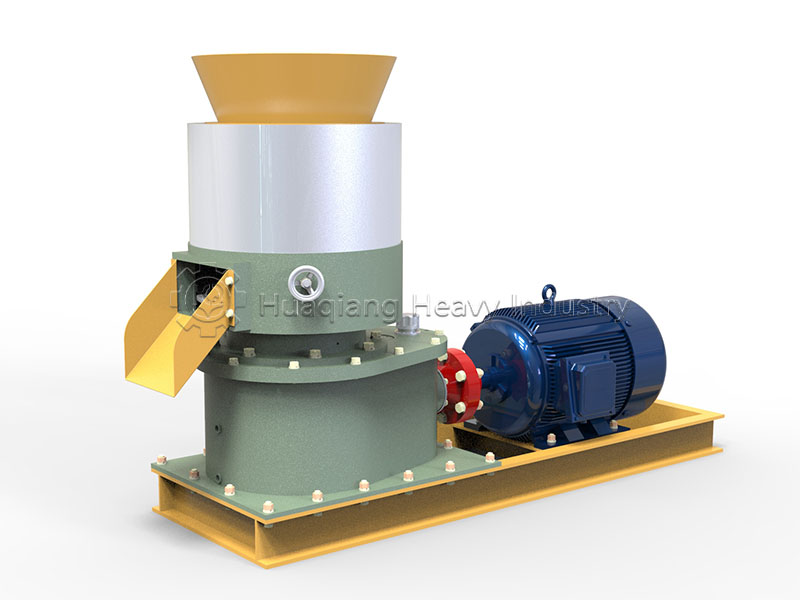
Environmentally friendly and highly efficient: The adaptability of flat die granulators in organic fertilizer production

With tightening environmental policies and increasing agricultural demand for green organic fertilizers, organic fertilizer production lines are placing higher demands on the environmental friendliness and efficiency of their equipment. Flat die granulators excel in both aspects, making them a better fit for the industry’s development needs.

From an environmental perspective, flat die granulators utilize extrusion molding during the granulation process, eliminating the need for high-temperature heating and avoiding the emission of harmful gases caused by high temperatures. Simultaneously, the equipment’s robust sealing design effectively reduces dust generated during raw material transport and extrusion, minimizing the impact on the workshop environment and operator health. Furthermore, flat die granulators have relatively low energy consumption, requiring less electricity during operation compared to some high-energy-consuming granulation equipment.

Regarding efficiency, while the granulation efficiency of flat die granulators is not as high as that of large ring die granulators, its output is sufficient to meet the production needs of small and medium-sized organic fertilizer production lines. The equipment’s flexible start-up and shutdown capabilities allow for adjustments to the operating rhythm based on raw material supply and order demand, reducing wasted capacity. Meanwhile, the granulated organic fertilizer produced by the flat die granulator can slowly release nutrients when applied, improving fertilizer utilization and indirectly contributing to the high efficiency of agricultural production.

Equipment operation and maintenance for organic fertilizer production lines

The stable operation of an organic fertilizer production line depends on scientific equipment selection and standardized routine maintenance.

When selecting equipment, the characteristics of the raw materials should be considered first. If processing high-fiber raw materials such as straw and mushroom residue, a shearing pulverizer should be selected to ensure uniform pulverization. If the raw materials are high-humidity materials such as livestock and poultry manure, the dehydration equipment’s processing capacity should be carefully considered to avoid excessive moisture in the subsequent fermentation process.

Secondly, production capacity adaptability is crucial; the equipment’s processing capacity must match the overall production capacity of the production line. Furthermore, the level of automation should be determined based on the scale of the enterprise. Small and medium-sized enterprises can choose semi-automated equipment to control costs, while large enterprises can adopt fully automated control systems to improve production stability and management efficiency.

Routine maintenance is key to extending equipment life and reducing malfunctions. Grinding equipment requires regular inspection of tool wear and prompt replacement of severely worn blades to prevent degradation of pulverization efficiency. Fermentation turning equipment requires weekly inspection of transmission component lubrication to prevent damage due to insufficient lubrication. Fertilizer granulator molds require daily cleaning to remove residual material and prevent clogging that could affect pellet quality. The combination of scientific selection and standardized maintenance can effectively improve the operating efficiency of the organic fertilizer production line, reduce the failure downtime rate, and ensure continuous and stable production.

Binderless pellet formation process for chicken manure organic fertilizer

Due to its “dry granulation” characteristics, the fertilizer compaction machine eliminates the need for large amounts of binders, maximizing the active organic matter and nutrients in the manure. It is an ideal machine for granulating chicken manure organic fertilizer.

Mature chicken manure must first be crushed and screened to break up any remaining lumps and ensure a uniform particle size (typically 60-80 mesh). This prevents large particles or impurities from affecting the extrusion process. The moisture content must also be strictly controlled, maintaining it between 45% and 50%. Excessive moisture can cause sticking to the rollers during extrusion, while excessive dryness can hinder agglomeration and formation. If the crude fiber content of the chicken manure is too high, a small amount of humus or wood ash can be added to improve the material’s plasticity and enhance pellet strength.

The mixed material is conveyed through a conveyor to the fertilizer compaction machine. The core working components of the machine (a twin-roller or spiral structure) use high pressure to compress the loose material into a continuous sheet or strip intermediate. This intermediate is then processed through crushing and spheronization to form pellets of uniform size. The formed granules are first screened and graded. Unqualified fine powder or large lumps are returned to the crushing stage for reprocessing. Qualified granules enter a cooling facility and are packaged after cooling to room temperature.

Chicken manure organic fertilizer processed by the fertilizer compaction machine has high granular strength and is less prone to moisture absorption and agglomeration. This preserves the natural nutrients of the chicken manure while solving the inconvenience of handling bulk materials. This is a high-quality processing solution that balances nutrient retention and practicality.

Organic fertilizer production: The green art of transforming waste into treasure

With sustainable agriculture gaining increasing attention, organic fertilizer production has quietly become a crucial bridge between environmental protection and agricultural development. This seemingly simple organic fertilizer production line is actually a sophisticated journey of transforming waste into treasure.

Organic fertilizer originates from a variety of organic waste. Once a major headache, waste materials like livestock and poultry manure, crop straw, and food processing residues have become core raw materials. These materials first undergo pretreatment to remove impurities and undergo pulverization to adjust their physical structure. These raw materials then enter the fermentation stage, the heart of the entire process. Under specific temperature and oxygen conditions, microorganisms actively work, breaking down large organic molecules into smaller molecules that are more easily absorbed by plants, while also killing pathogens and weed seeds.

After fermentation is complete, the material enters the crucial formation stage—granulation. The fertilizer granulator plays a crucial role, using physical pressure to compress the loose powdered fertilizer into granules. This significantly reduces transportation and storage space.

The entire organic fertilizer production line, from raw material pretreatment, fermentation, and granulation to final drying, cooling, screening, and packaging, is closely coordinated. Modern production lines are moving towards greater automation and intelligence, aiming to precisely control every process parameter to ensure a stable and efficient final product.

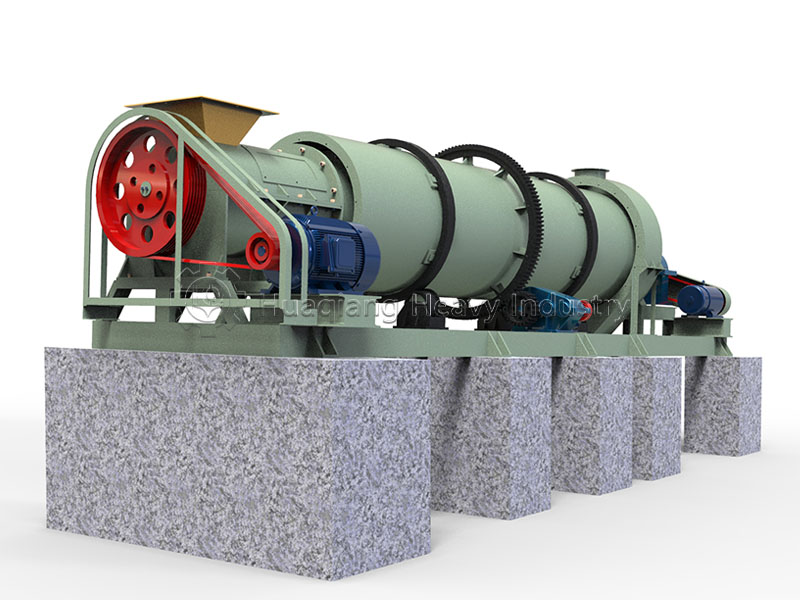
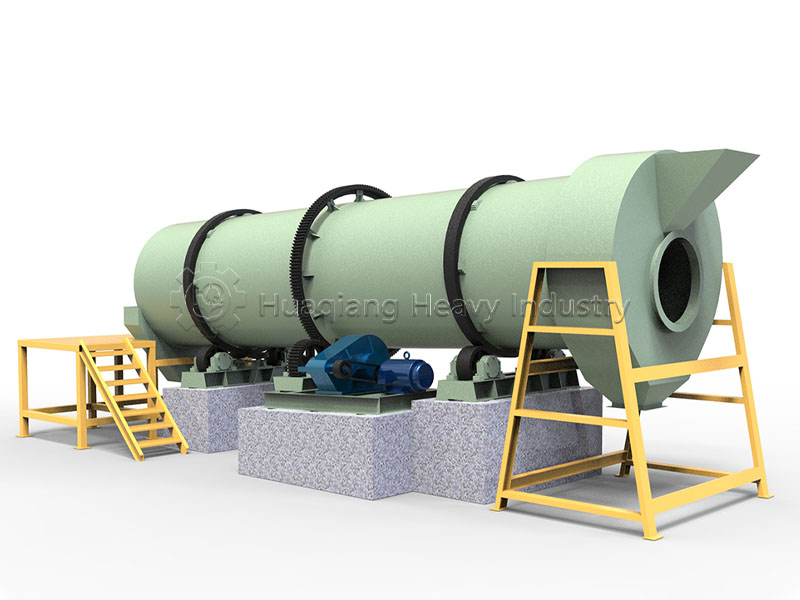
Rotary drum granulators: A key player in improving fertilizer quality and efficiency

Amidst the growing demand for high-efficiency fertilizers in agriculture, rotary drum granulators, by optimizing the fertilizer production process, have become crucial equipment for driving quality and efficiency improvements.

From a fertilizer quality perspective, rotary drum granulators effectively address the clumping and uneven nutrient distribution issues of traditional fertilizers by precisely controlling the granulation process. During granulation, the raw materials and binder are thoroughly mixed, evenly encapsulating nutrients within the granules, preventing nutrient loss and reduced fertilizer efficiency. Furthermore, the resulting granules possess a moderate hardness, resisting breakage during transportation and storage, reducing fertilizer loss and indirectly improving actual fertilizer utilization.

In terms of production efficiency, rotary drum granulators utilize a continuous operation mode, effectively shortening production cycles. The drum volume can be designed to meet production capacity requirements, ranging from 1-5 cubic meters for small and medium-sized units to over 10 cubic meters for large units, meeting the production needs of fertilizer companies of varying sizes.

In addition, rotary drum granulators support innovation in fertilizer categories. With the increasing popularity of functional fertilizers (such as slow-release and controlled-release fertilizers and trace element fertilizers), this equipment can adapt to the granulation needs of different fertilizer formulations by adjusting parameters such as raw material ratio, temperature, and rotation speed.

For the green development of agriculture, the granular fertilizers produced by the rotary drum granulator facilitate precise fertilization, reducing soil pollution and water eutrophication caused by excessive fertilizer application. This indirectly contributes to sustainable agricultural development and serves as a vital link between fertilizer production and green agriculture.

Double roller press granulator: The core principles and characteristics of dry granulation

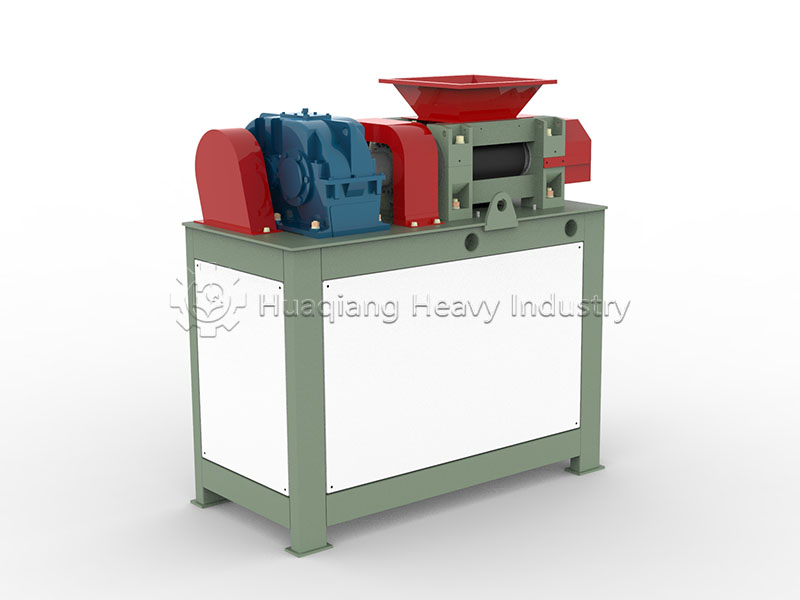
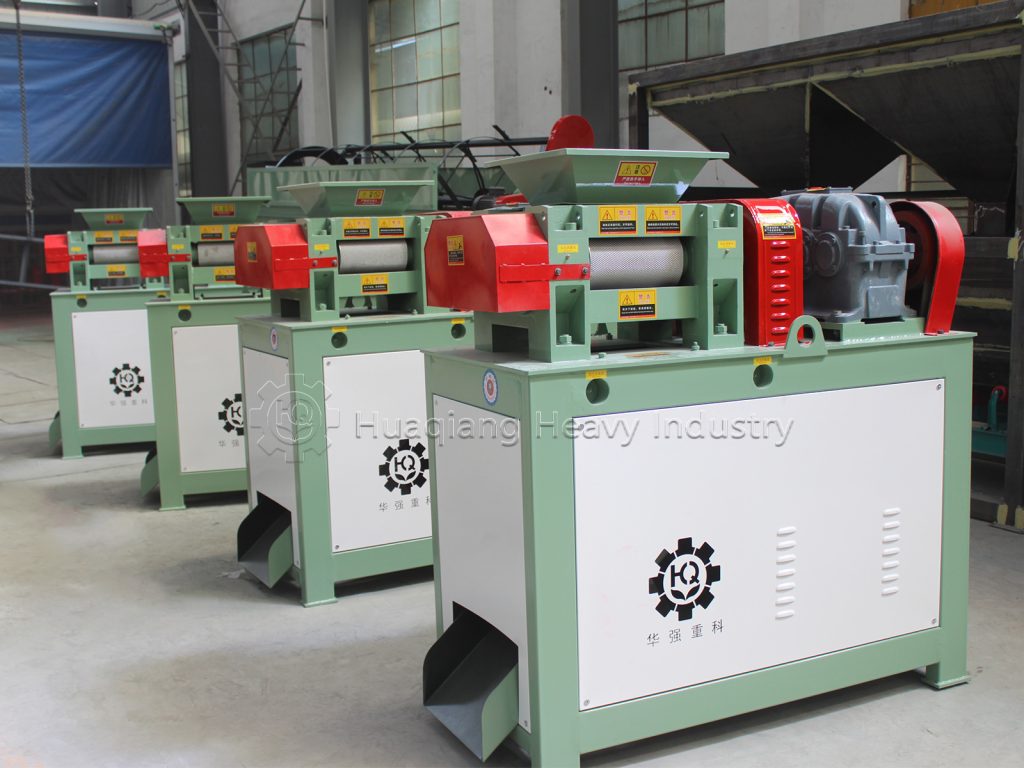
Double roller press granulators(fertilizer compaction machines), with their unique dry process, have become a mainstream option in fertilizer granulation production. This double roller press granulator eliminates the need for drying and converts powder into granules through pure physical extrusion.

The core operating mechanism revolves around twin-roll extrusion: an electric motor, via a reducer, drives two synchronously counter-rotating rollers, each with a uniform pattern of hemispherical dimples distributed across its surface. Once the dry powder enters the gap between the rollers, tens of tons of pressure displace the air between the particles, connecting them to form a dense cake. Upon exiting the rollers, the particles naturally break into oblate spherical granules. After subsequent crushing and screening, unqualified powder is automatically mixed back into fresh material for further processing, resulting in a granulation rate typically exceeding 90%.

The double roller press granulator utilizes corrosion-resistant and wear-resistant materials such as stainless steel, ensuring corrosion-resistant contact areas and a long roller life. Its compact design and easy maintenance, along with numerous quick-release features, allow for rapid adaptation to a variety of raw materials, including ammonium sulfate, organic fertilizer, and compound fertilizer.

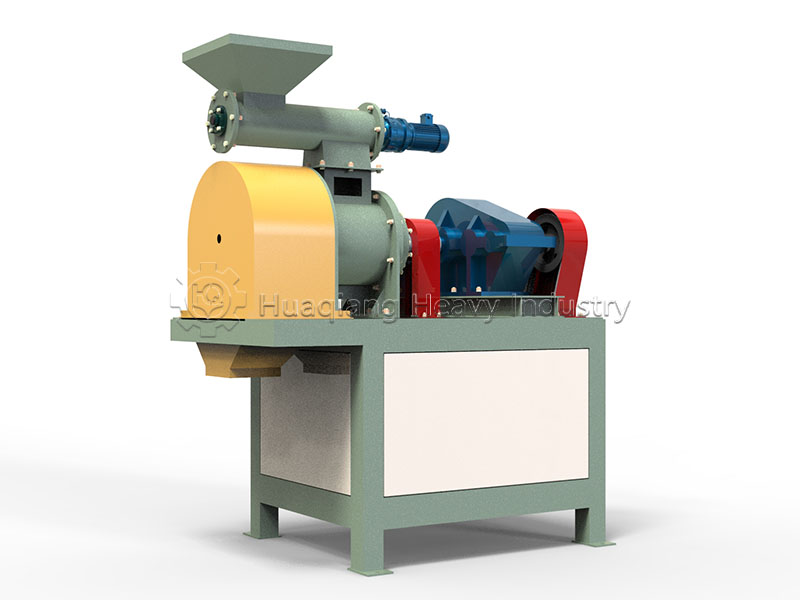
New type two in one organic fertilizer granulator: Efficient integration, simplified production process

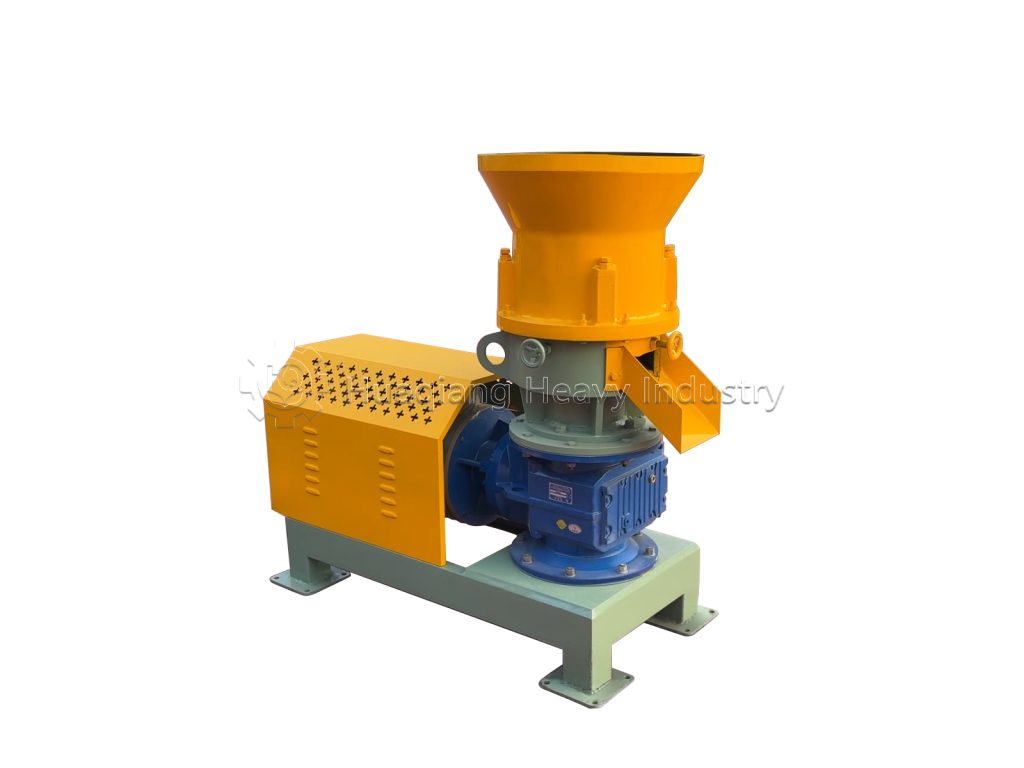
The new type two in one organic fertilizer granulator features an integrated “pretreatment + granulation” design, combining two core processes into one. It is the preferred equipment for small and medium-sized organic fertilizer companies to improve efficiency and reduce costs.

The core structure of this new type two in one organic fertilizer granulator consists of two modules: a “mixing and conditioning chamber” and a “granulation and forming chamber,” with the two chambers seamlessly connected. During operation, crushed organic fertilizer raw materials such as straw and fermented manure first enter the upper mixing and conditioning chamber, which is equipped with anti-entanglement stirring paddles. Dual-shaft counter-rotating stirring uniformly mixes the raw materials with a small amount of binder (such as starch residue and humic acid). Furthermore, moisture monitoring and spraying devices installed on the chamber wall ensure real-time adjustment of the raw material moisture to 18%-22%, preventing subsequent mold sticking and loose pellets.

Pretreated raw materials automatically fall into the lower granulation and forming chamber through a built-in material guide channel, eliminating the need for manual transfer. The forming chamber utilizes a flat die granulation core structure, paired with a trapezoidal, non-slip roller and a deep, straight-hole flat die. This not only cuts long fibers in the raw material (preventing them from tangling with the roller) but also achieves low-temperature granulation through vertical extrusion. The formed granules are discharged directly from the outlet, achieving a particle size uniformity exceeding 90%, eliminating the need for secondary screening.

In addition, the new type two in one organic fertilizer granulator is specifically optimized for the characteristics of organic fertilizer raw materials: the mixing chamber agitator is made of a wear-resistant alloy to mitigate frictional losses in fibrous raw materials; the flat die in the granulation chamber can be quickly replaced to accommodate various particle sizes ranging from 2 to 5 mm; and the entire machine is equipped with a variable-frequency motor that adjusts the speed according to the raw material’s moisture and viscosity.

Ring die granulator: Core equipment for efficient granulation in the fertilizer industry

Due to its unique granulation advantages, the ring die granulator has become a key choice for many fertilizer companies to improve production efficiency, providing strong support for the large-scale, standardized production of granular fertilizers.

The core competitiveness of the ring die granulator lies in its excellent molding effect and stable production capacity. Its core component, the “ring die,” efficiently converts a variety of raw materials, such as organic fertilizer and compound fertilizer, into granular products through precise die hole design and uniform extrusion force.

Furthermore, the ring die granulator’s adaptability meets the diverse production needs of the fertilizer industry. Whether processing high-moisture organic fertilizer raw materials or compound fertilizer formulations with varying nitrogen, phosphorus, and potassium ratios, the equipment can adapt to different raw material characteristics by adjusting parameters such as the ring die speed and extrusion pressure, easily achieving mass production.

For fertilizer companies, the ring die granulator is not only a production equipment but also a vital tool for enhancing product competitiveness. Against the backdrop of the growing agricultural demand for efficient, high-quality fertilizers, the ring die granulator will undoubtedly continue to play a key role in driving the fertilizer industry towards higher-quality production models.

Rotary drum granulators promote the resource utilization of organic waste, achieving “waste-to-fertilizer”

This “waste-to-fertilizer” resource utilization approach not only meets the needs of green development but also provides high-quality organic fertilizer for agriculture. In this process, the rotary drum granulator, with its adaptability to diverse organic waste types and efficient granulation capabilities, serves as a crucial bridge between “waste” and “qualified organic fertilizer.”

The core value of the rotary drum granulator lies primarily in its inclusive treatment of diverse organic waste types. For high-fiber waste such as straw, the rotary drum granulator uses the slow tumbling of its tilted drum, combined with the action of its lifting plates, to thoroughly mix the pulverized straw with a binder, evenly dispersing the fibers and gradually entrapping them into granules. This achieves a granulation rate exceeding 80%.

For high-moisture waste (30%-40%) such as poultry and livestock manure, the equipment uses a built-in ventilation device to regulate the humidity within the drum, achieving simultaneous “granulation and initial dehydration.” This eliminates the need for additional dehydration equipment, reducing processing steps and energy consumption. Even when processing food waste with complex composition, the rotary drum granulator’s flexible mixing design prevents impurities from clogging and ensures uniform granule shape.

Rotary drum granulators also enhance the commercial value of organic waste fertilizer. Ungranulated organic waste has a dispersed fertilizer effect, easily clumps, and is expensive to transport and store. However, the granulated organic fertilizer produced by a rotary drum granulator not only maintains a moisture content below 15%, facilitating long-term storage, but also allows for standardized granules to be created by adjusting the die aperture, meeting market demand for organic fertilizer that is easy to apply and has stable fertilizer effect.

Back To Top