Tag: fertilizer compaction machine

Large wheel compost turning machine: A high-efficiency pretreatment solution for fertilizer granulation production

In modern fertilizer production systems, the large wheel compost turning machine plays a crucial pretreatment role. Although not directly involved in the final granulation stage, this equipment is key to ensuring the efficient operation of subsequent granulation equipment.

As the large wheel compost turning machine slowly moves through the fermentation field, it is creating the ideal raw material foundation for the entire production line. The massive disc rotates steadily, evenly turning the fermented material. This seemingly simple action actually determines the success or failure of the subsequent granulation process. Raw materials carefully processed by it exhibit better plasticity and forming rate, whether fed into a rotary drum granulator for agglomeration or a flat die pelleting machine for pressing.
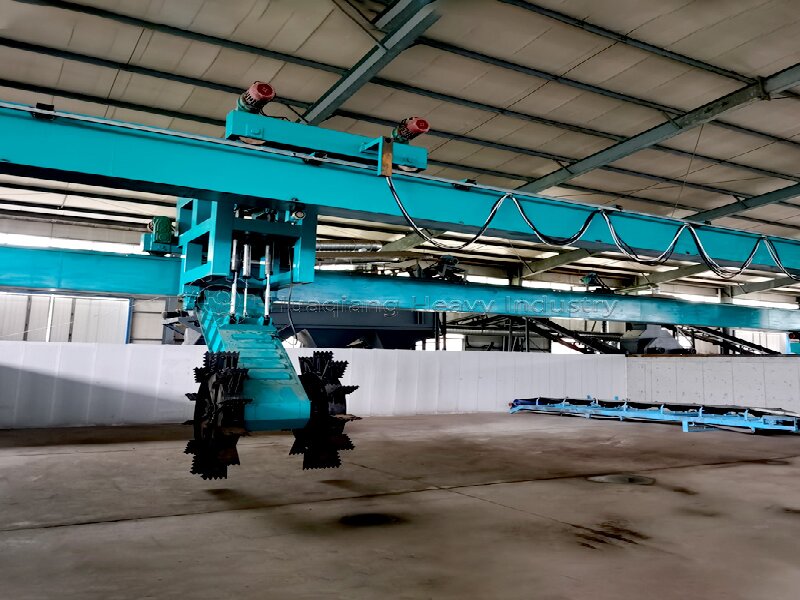
In modern fertilizer production lines, the value of the large wheel compost turning machine is increasingly prominent. It provides stable, uniformly moist raw materials for the new type two in one organic fertilizer granulator, allowing this multi-functional equipment to fully utilize its technological advantages. Similarly, for equipment like ring die pelleting machines that have high requirements for raw materials, the raw materials thoroughly fermented and mixed by the large wheel compost turning machine can effectively extend the die’s lifespan and improve production efficiency.

The unique feature of this equipment is its ability to tailor raw materials to the characteristics of different granulation equipment. Whether it’s raw materials with specific particle sizes required by fertilizer compaction machines or physical property parameters needed by other granulation equipment, the large wheel compost turning machine can prepare them for subsequent processes through precise fermentation control. This pretreatment is becoming increasingly important throughout the entire production line.
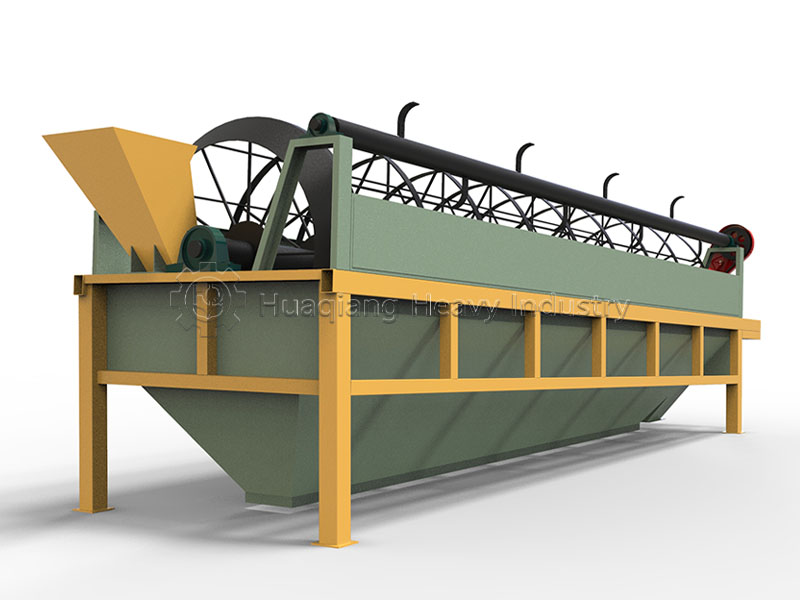
How ring die pelleting machines work and their advantages in granulation?

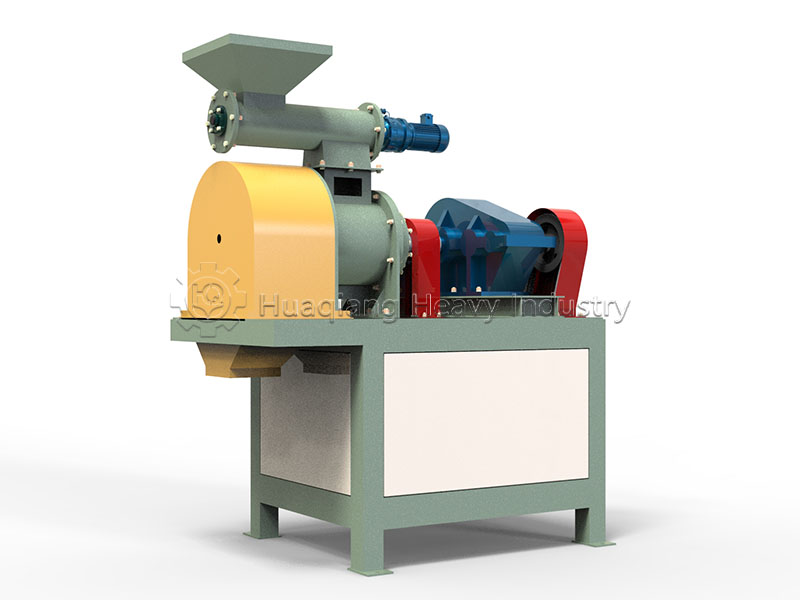
In the world of powder granulation, various granulation technologies have their strengths. Whether it’s a rotary drum granulator suitable for high output and good pelletizing, a compact flat die pelleting machine, or a fertilizer compaction machine specializing in high-hardness products, they all play a crucial role in their respective fields. Among them, the ring die pelleting machine, with its unique structure and wide applicability, has become an indispensable piece of equipment.

From pelleted feed for livestock and poultry to fuel for biomass power generation, and the preparation of organic fertilizers, many seemingly insignificant granular items may have its contribution behind the scenes. It doesn’t have a fancy appearance; at its core is a ring die filled with precise holes. This process is essentially a highly efficient physical molding. The change it brings is intuitive: loose powder disappears, replaced by regular, solid granules. This transformation brings enormous practical value.

It’s worth noting that technological evolution has never stopped. For example, the new type two in one organic fertilizer granulator, which emerged to meet market demand, integrates multiple functions to simplify the process. However, the fundamental principles of ring die granulation, due to its reliability and efficiency, remain the cornerstone of many equipment designs.

It can be said that this silent industrial artist does not change the essence of the material, but powerfully endows it with the most practical form. In countless factory workshops, it, along with other types of granulation equipment, organizes the complex world of powders into a neat and uniform order of particles.

The art of resource reshaping with organic fertilizer granulators

In today’s era where the circular economy is widely recognized, various granulation equipment is redefining the value of “waste” in its own way.

Stepping into a modern processing workshop, you’ll see different technological approaches: rotary drum granulators use the rotation of rollers to agglomerate materials into granules; while ring die pelleting machines, with their ring die structure, demonstrate high-efficiency production capacity in the feed and fuel sectors. Meanwhile, fertilizer compaction machines are focusing on transforming organic waste into valuable fertilizer products.

Within this diverse technological landscape, flat die pelleting machines maintain a unique balance. They don’t pursue exaggerated output, but rather achieve a perfect balance between pressure and efficiency within a compact space. This design gives them a unique advantage in small- to medium-scale production, especially with the emergence of new type two in one organic fertilizer granulators that combine mixing and granulation in a single unit, further simplifying the production process.

Even more commendable is the inclusivity of this technological family. From the reuse of agricultural and forestry waste to the molding of chemical raw materials, from traditional feed production to the emerging biomass energy sector, different granulation equipment showcases its strengths. Together, they form a bridge connecting different industries, allowing resources to continuously increase in value through cross-sectoral circulation.

With sustainable development becoming a global issue, the value of granulation technology has transcended that of a mere processing tool. Whether it’s a basic fertilizer compaction machine or an integrated, innovative model, they all embody the modern meaning of “turning waste into treasure” in the most practical way.

Synergistic effect of rotary screener machines, compost turners, and fertilizer compaction machines

In the final stage of organic fertilizer production, the steady rotation of a rotary screener machine is always a common sight. Unlike the vigorous turning and tossing of the upstream fermentation equipment or the forceful extrusion of the downstream granulation equipment, it plays an indispensable role as a “quality inspector” in the entire organic fertilizer production line.

After thorough aerobic fermentation by the large wheel compost turning machine, the material becomes loose and uniform. Subsequently, these raw materials may be processed into granules of specific sizes by a fertilizer compaction machine. However, whether it’s powdered or granular fertilizer, it ultimately needs to undergo fine screening by a rotary drum screen.

When the material enters the rotating drum, the separation process begins quietly. The screen mesh on the inner wall of the drum acts like a precise filter, automatically separating qualified products from substandard ones. Excessively fine powder falls from the lower screen, uniformly sized finished products are collected in the middle, while any excessively large lumps or impurities are directed to the outlet. The entire process is smooth and efficient, requiring no manual intervention yet achieving precise grading.

In the organic fertilizer production equipment system, the rotary screener machine ensures the purity and consistency of the final product, allowing the efforts of the fermentation process and the results of the granulation process to be perfectly presented. This simple and effective sorting method makes the final quality control of organic fertilizer production simple and reliable.

Comparison of organic fertilizer granulation processes: Dry method vs. Wet method

Granulation is a core process in organic fertilizer production, and the organic fertilizer granulator, as a key component of organic fertilizer production equipment, has a process selection that directly impacts efficiency. Dry granulation and wet granulation are the mainstream processes, each with its own focus in terms of principles, equipment, and applicable scenarios. The choice depends on the characteristics of the raw materials and production capacity.

Dry granulation does not require the addition of water or binders, relying on the inherent viscosity of the raw materials or external force for shaping. The commonly used equipment is a fertilizer compaction machine. After pretreatment by the organic fertilizer production equipment, the material is extruded into thin sheets and then crushed and screened. The advantages are the elimination of the drying step, low energy consumption, and a simple process, suitable for composted raw materials with a moisture content of 10%-15%. The disadvantages are the high requirements for raw material viscosity and weaker granule strength, making it suitable for small and medium-sized production.

Wet granulation requires spraying water or binders and relies on mechanical force for granulation. Typical equipment includes organic fertilizer disc granulators and rotary drum granulators, which are key components of large-scale organic fertilizer production equipment. After the material is agglomerated into spheres through rotation, it needs to be processed through drying and cooling units of the organic fertilizer production equipment. The advantages are good granule sphericity, high strength, and strong adaptability to raw materials; the disadvantages are the need for additional drying equipment, resulting in higher energy consumption and costs.

Key selection criteria: For small and medium-scale production, with low moisture content and good viscosity of raw materials, dry granulation organic fertilizer granulators are suitable; for large-scale production, where granule quality is a priority or the raw material moisture content is high, the wet process dominated by organic fertilizer disc granulators is more advantageous. Regardless of the process, complete pretreatment and post-treatment equipment are necessary to ensure efficiency.

The invisible art of formulation: How is NPK fertilizer made?

Walking through the fields, few people consider how those nitrogen, phosphorus, and potassium granules that nourish crops are actually manufactured. Their creation is not merely a chemical reaction, but an industrial journey of shaping form.

In modern fertilizer plants, production often begins with a series of precise physical mixtures. For blended fertilizers requiring flexible formulations, bulk blending fertilizer machines play a crucial role. Like a giant mixing bowl, it gathers bulk nitrogen, phosphorus, and potassium raw materials from different sources according to a pre-set “recipe.” Amidst the roar of the machines, granules of various colors are efficiently and uniformly mixed, ensuring that every scoop of the final product contains a completely consistent nutrient ratio, laying the foundation for precision agriculture.

However, powder or physically mixed granules are sometimes not in the optimal form. To obtain fertilizers with higher strength and easier storage and application, fertilizer compaction machines demonstrate their power. Under powerful extrusion, they shape loose powder into uniformly sized, dense granules.

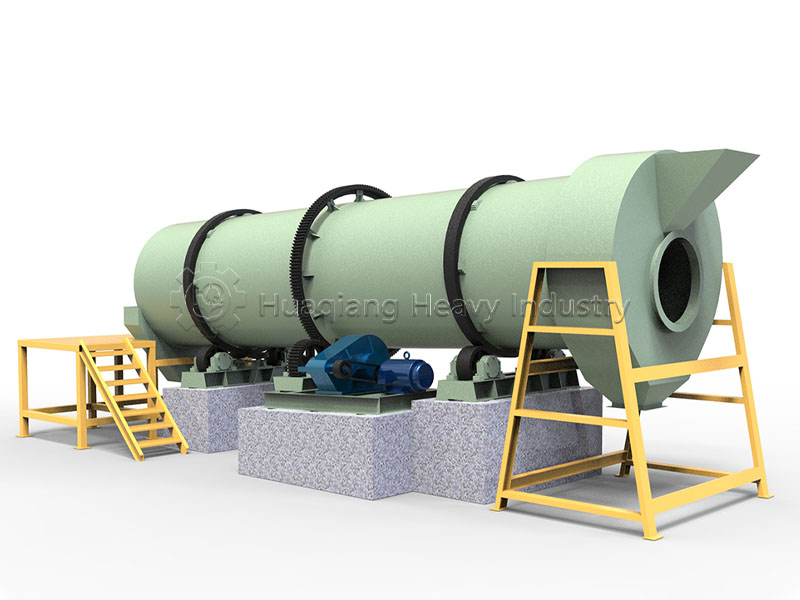
For large-scale continuous production, the rotary drum granulator paints a dynamic picture. Inside this slowly rotating giant cylinder, powdery raw materials are slightly moistened, tumbling, colliding, and agglomerating as the cylinder rotates, gradually growing into uniform, round granules.

From uniform mixing to powerful pressing and shaping, and then to rolling and agglomeration, the production of NPK fertilizer is a skillful shaping of nutrients by industrial forces. Ultimately, these granules of various shapes carry the same mission: to be integrated into the soil.

Rotary drum granulator: The core art of large-scale fertilizer production

In modern fertilizer granulation workshops, the rotary drum granulator stands out with its unique operating method. Through continuous tumbling and enveloping, it transforms fine powder materials into uniform and firm granules.

This slowly rotating behemoth is a typical representative of large-scale production. Its internal structure is simple and efficient; the material rises and falls continuously under the rotation of the drum, forming an ideal granulation motion.

Compared to other granulation technologies, rotary drum granulation exhibits unique advantages. Compared to the dense granules directly formed by fertilizer compaction machines through molds, granules produced by rotary drums are typically more rounded and regular. Unlike the high-density granules formed by ring die pelleting machines under mold constraints, the granules produced by rotary drum granulation often have a more porous structure. And compared to the flexibility of flat die pelleting machines suitable for small to medium production volumes, rotary drum granulators demonstrate irreplaceable value in large-scale continuous production.

This granulation method is particularly suitable for the production of bulk fertilizer products. From compound fertilizers to organic-inorganic blended fertilizers, rotary drum granulators can process materials with various formulations, adapting to different production requirements. Their excellent granulation properties and high production capacity make them the preferred equipment for many fertilizer companies.

In today’s pursuit of sustainable agricultural development, rotary drum granulation technology continues to play a vital role. It not only improves the physical properties of fertilizer products but also provides reliable equipment support for precision fertilization and efficient agriculture.

When fertilizer meets extrusion: The art and science of granulation

In modern fertilizer production, fertilizer compaction machines and flat die pelleting machines are quietly changing the form and future of fertilizers. Unlike chemical reaction equipment, they don’t attract attention, but with their unique mechanical charm, they transform powdered fertilizer into uniform granules.

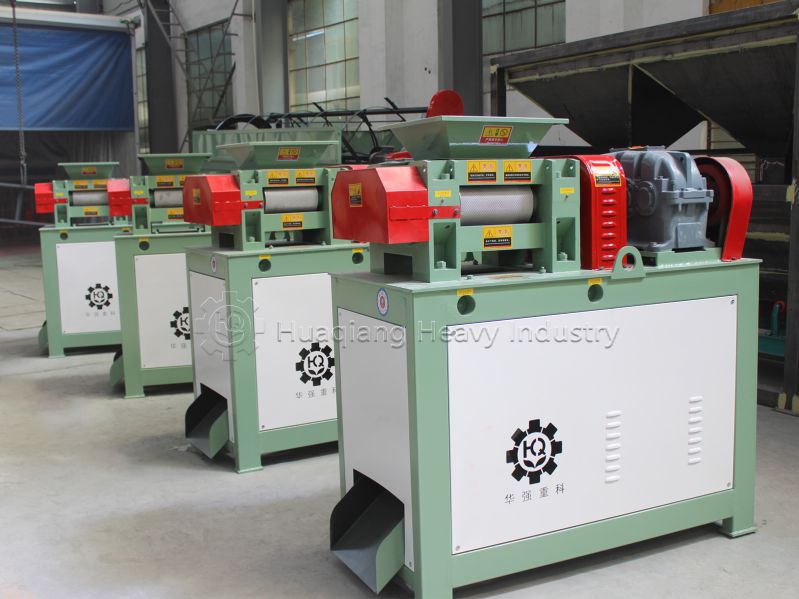
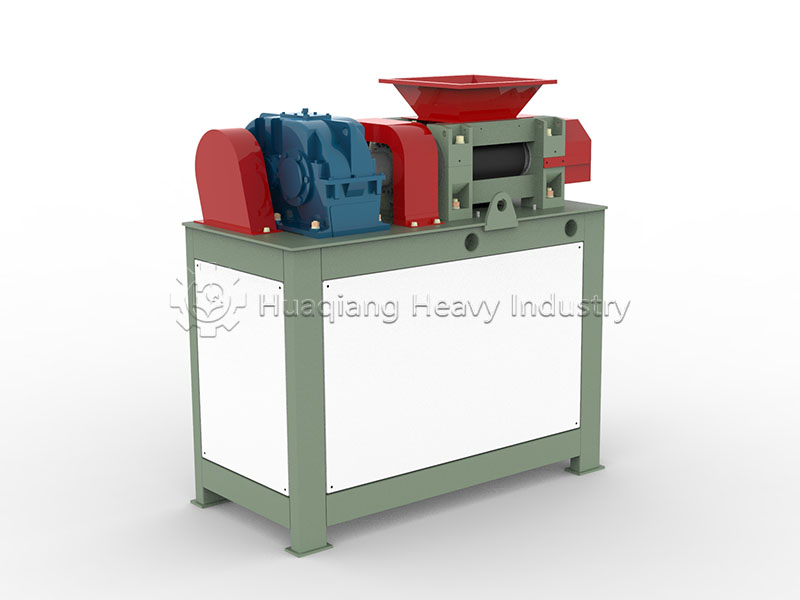
Stepping into the production workshop, you’ll see fertilizer compaction machines working steadily. They use powerful mechanical pressure to “compress” loose powdery raw materials into dense ribbons. This process involves no high temperatures and no binders.

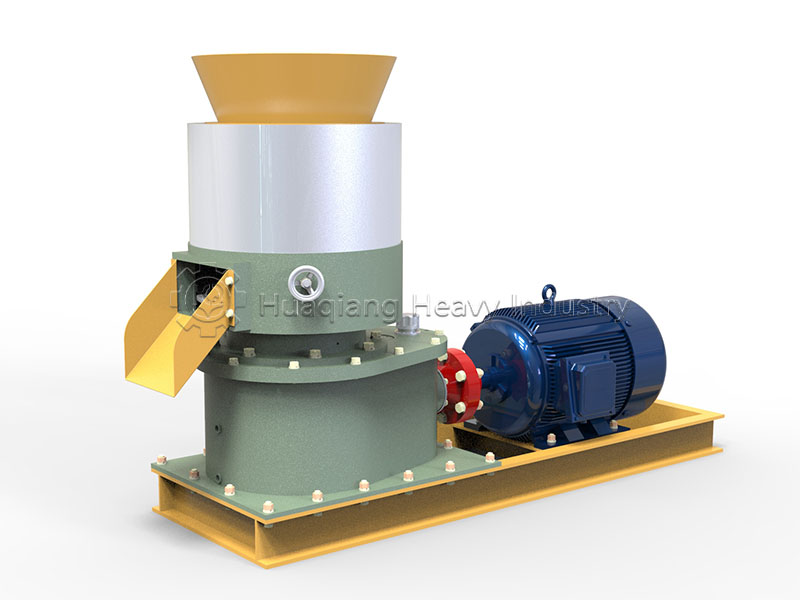
The flat die pelleting machine, on the other hand, showcases another kind of ingenuity. The horizontally placed die acts like a precision sieve; the material, under the pressure of the rollers, passes through the holes in the die, instantly becoming uniformly sized granules.

The combination of these two devices creates surprising possibilities. Powdered fertilizers that are prone to clumping become more fluid, easier to store and apply. Active ingredients are firmly locked inside the granules, reducing drift loss during use and making nutrient release more controllable.

More importantly, this physical granulation method has opened new doors for the development of specialty fertilizers. Whether it’s a compound fertilizer requiring the addition of trace elements or a special fertilizer for specific crops, it can all be achieved by adjusting the mold and process parameters. On the path to sustainable agricultural development, equipment like fertilizer compaction machines and flat die pelleting machines are playing a unique role.

The “Pellet Revolution” of cow dung: The recycling magic of the rotary drum granulator

In the core process of organic fertilizer production, the rotary drum granulator, with its unique working principle, is transforming cow dung from waste into high-quality granular fertilizer. This equipment, perfectly suited to the needs of ecological agriculture, unlocks a new path for the resource utilization of cow dung through a simple and efficient process.

First, the fermented cow dung needs to be pulverized into a uniform powder. Then, a small amount of binder and nutrient additives are mixed in a specific ratio to ensure granule formation and nutrient balance. When the mixture enters the tilted rotary drum, the centrifugal force and friction generated by the uniform rotation cause the material to tumble and agglomerate within the drum, gradually forming round and uniform granules. The entire process requires no complex chemical treatment, relying entirely on physical processes to achieve the desired shape. This preserves the organic matter and beneficial bacteria in the cow dung while avoiding secondary pollution.

The advantages of the rotary drum granulator are significant. Its large-capacity drum design is suitable for large-scale production, resulting in higher efficiency for continuous operation. It produces high-quality pellets with moderate strength, facilitating storage and transportation while preventing clumping. Furthermore, the equipment is highly adaptable to various materials, flexibly handling cow manure raw materials with different moisture levels and proportions, thus lowering the production threshold.

From an environmental burden on livestock farms to “fertile gold” for nourishing crops, the rotary drum granulator maximizes the value of cow manure. This process of transforming waste into green fertilizer not only helps solve livestock pollution problems but also injects momentum into the circular economy of agriculture.

Synergistic approach of fertilizer compaction machine and oil palm empty fruit bunch forming

As a fiber-rich organic waste, the key to the resource utilization of oil palm empty fruit bunches lies in their forming and processing. Fertilizer compaction machines, with their targeted structural design, have become the core equipment for unlocking the granulation challenges of this type of fibrous raw material.

From the perspective of raw material compatibility, oil palm empty fruit bunches retain a large amount of tough fibers after fermentation and decomposition. This type of material has low viscosity and is prone to entanglement. Fertilizer compaction machines optimize the cooperation between the pressure rollers and the die holes, employing a large-area contact extrusion design. This allows the fibrous material to naturally unfold and pass through the die holes in the correct direction under pressure, avoiding entanglement and jamming.

Simultaneously, during the extrusion process, the fibers intertwine to form a “net-like support structure,” eliminating the need for excessive binders. Forming can be achieved solely through mechanical force and the material’s own viscosity, reducing production costs while ensuring the environmentally friendly properties of organic fertilizer.

The synergistic advantages of the two are particularly prominent in terms of forming effect and fertilizer retention. The low-temperature extrusion process of the fertilizer compaction machine minimizes the damage to organic matter and beneficial microorganisms in the oil palm empty fruit bunches caused by high temperatures, while preserving the loose fiber characteristics of the formed granules.

Furthermore, this synergistic approach optimizes the production process. The loose structure of the oil palm empty fruit bunches reduces frictional wear within the extruder, extending the lifespan of easily worn parts. Meanwhile, the fertilizer compaction machine’s high-efficiency forming capability rapidly transforms the decomposed oil palm empty fruit bunches into regular granules, solving the problems of dust generation during transport and uneven application of loose materials.

Back To Top