Tag: double roller press granulator

Organic fertilizer production line: Value reshaping driven by granulation technology

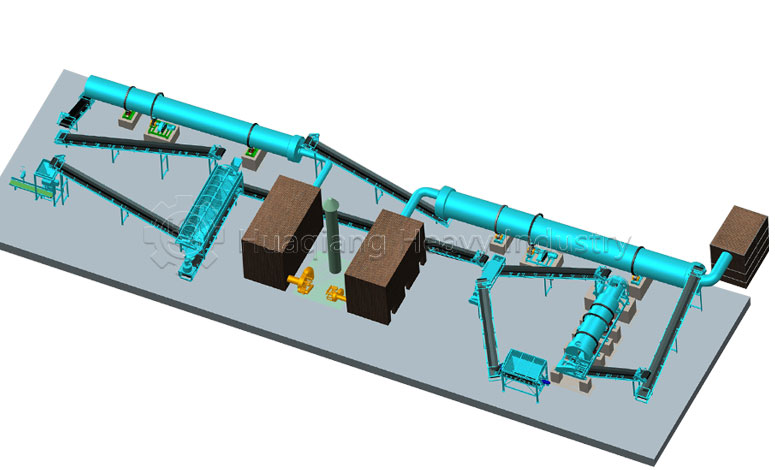
In modern organic fertilizer production, a complete and efficient organic fertilizer production line is not only a tool for processing agricultural waste, but also a key system for enhancing product standardization and commercial value. The core of this systematic production line lies in the precise matching and synergy of various specialized organic fertilizer production equipment. Together, they transform the loose raw materials after fermentation and decomposition into standardized, easy-to-use end products.

In the entire production process, the granulation stage is particularly important, directly determining the physical form and market competitiveness of the product. Among these, the organic fertilizer granulator, as the core forming equipment, offers flexible production options due to its technological versatility. Whether through extrusion, agglomeration, or rounding, modern granulators can efficiently transform powdery materials into solid, uniform granules, greatly improving fertilizer flowability and reducing dust loss during application.

Among numerous granulation solutions, the organic fertilizer disc granulator, with its unique working principle, exhibits specific technological advantages. This equipment has good adaptability to raw material moisture and fineness, and its granulation process is intuitive and controllable, making it a preferred solution in specific product areas.

With the increasing demands for product appearance in large-scale agriculture and the market, organic fertilizer granulators and their associated organic fertilizer production lines are playing an increasingly important role. They are propelling the organic fertilizer industry away from the era of coarse powder and towards a new stage of granulation and refinement, laying a solid material foundation for the large-scale promotion and mechanized application of organic fertilizer.
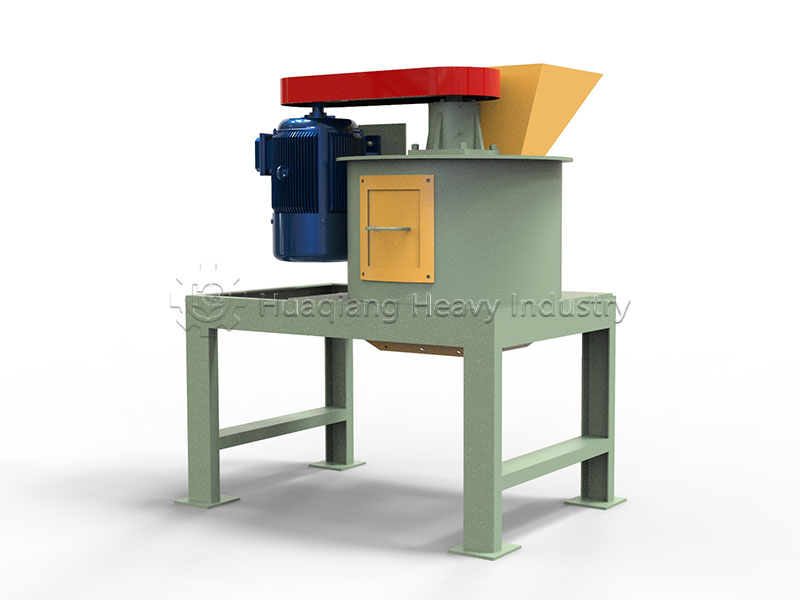
A deep dive into fertilizer crusher: Structure, Principle, and Core Advantages

As a crucial piece of equipment in the fertilizer production process, fertilizer crushers play an indispensable role in the production of organic fertilizers, NPK fertilizers, and other fertilizers. To fully maximize their performance, a thorough understanding of their structure, operating principles, and core advantages is essential.

Structurally, a fertilizer crusher primarily consists of a crushing chamber, crushing components, a feed inlet, a discharge outlet, and a drive system. The crushing chamber provides space for material crushing. The crushing components within, such as the blades, hammers, and toothed plates, are the core components that directly act on the material. The drive system provides power to the crushing components, ensuring stable operation. Some fertilizer crushers are also equipped with a screening system to select the particle size of the crushed material to meet different production requirements.

The operating principle is based on a combination of impact, cutting, and grinding. After material enters the crushing chamber through the feed inlet, the high-speed rotating crushing components cut and grind the material. This, combined with intense collision and friction between the material and the crushing components, ultimately breaks the material into particles of the desired quality before discharging through the discharge outlet.

The core advantages of a fertilizer crusher lie in its high processing efficiency, adaptability, and ease of maintenance. It can quickly crush a variety of fertilizer raw materials, and its structural design facilitates routine maintenance and cleaning, significantly reducing production downtime and providing strong support for fertilizer manufacturers to increase production capacity.

Key technologies for dry forming in organic fertilizer production lines

In modern organic fertilizer production lines, the double roller press granulator, as an important type of organic fertilizer granulator, demonstrates significant advantages among various organic fertilizer production equipment due to its unique dry forming process.

As a key piece of equipment in organic fertilizer production lines, the double roller press granulator’s most significant feature is its non-drying process. This process characteristic allows it to significantly reduce energy consumption throughout the entire organic fertilizer production line, especially when processing organic materials with suitable moisture content, where its energy-saving effect is even more pronounced.

Practical production shows that this equipment exhibits broad raw material adaptability in organic fertilizer production lines. Whether it’s fully fermented livestock and poultry manure or pulverized straw, as long as its physical properties meet the requirements, it can achieve good forming through roller extrusion. This flexibility makes it uniquely valuable in processing diverse organic waste.

In terms of finished product quality, the organic fertilizer granules produced by the double roller press granulator are characterized by high density and high strength. These physical properties allow the product to maintain good integrity during subsequent packaging, transportation, and storage. Meanwhile, by changing the specifications of the pressure roller dies, granular products that meet different agricultural application needs can be produced.

With the organic fertilizer industry trending towards energy conservation and environmental protection, the role of double roller press granulators in organic fertilizer production lines is becoming increasingly prominent. In the selection of modern organic fertilizer production equipment, this granulation technology is providing organic fertilizer production enterprises with a more economical and environmentally friendly solution due to its unique advantages.

Applicable to multiple industries, disc granulators offer a wide range of applications

Disc granulators are not limited to fertilizer production. Their outstanding granulation capabilities make them a valuable tool for a variety of industries, including metallurgy, building materials, and chemicals.

In the metallurgical industry, metal ore powders such as iron ore and manganese ore are processed into granules by disc granulators, facilitating subsequent sintering and smelting processes. This not only improves resource utilization, but also reduces production waste and lowers production costs.

In the building materials industry, disc granulators are used to produce cement raw material granules, ceramsite sand, and other building material granules. The granulation of cement raw materials improves their combustion properties, thereby enhancing cement quality.

In the chemical industry, disc granulators can granulate a variety of chemical raw materials, including catalysts, pigments, and detergents. The resulting chemical products exhibit improved flowability and stability, significantly enhancing product performance and meeting the high standards of chemical production.

The core role of chain crushers in organic fertilizer production

In the organic fertilizer production process, material crushing is a critical pretreatment step, and chain crushers, with their outstanding performance, are the preferred equipment for this purpose. Organic fertilizer raw materials often contain lumps or medium-hard impurities. Inadequate crushing can affect the efficiency of subsequent granulation and mixing processes, as well as the quality of the finished product. It can even lead to problems such as material jamming in the granulator and uneven granulation in the finished fertilizer.

Designed specifically for the characteristics of organic fertilizer, chain crushers can efficiently crush a wide range of organic fertilizer raw materials, including those with a certain degree of moisture and viscosity, addressing the clogging and incomplete crushing issues of traditional crushing equipment. High-speed rotating chains and hammers impact and shear the material, while an adjustable screen allows for easy control of the crushed material’s particle size, meeting the stringent fineness requirements of organic fertilizer production.

Furthermore, the equipment’s sturdy structure, with core components made of wear-resistant steel, can withstand long-term, intensive operation, minimizing production interruptions. This provides a strong guarantee for the stable operation of organic fertilizer production lines, helping companies improve the yield rate of finished fertilizers and production efficiency.

How does a large wheel compost turning machine ensure fermentation quality in organic fertilizer production?

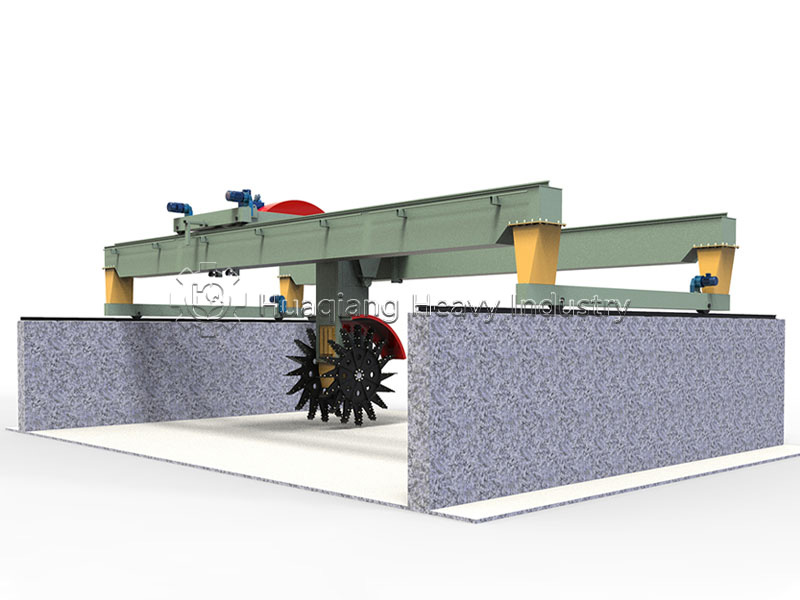
On an organic fertilizer production line, several core pieces of equipment set the tone for production. In the vast composting yard, you’ll see a silent, massive steel machine—the large wheel compost turning machine. As a crucial piece of organic fertilizer production equipment, it exists in the most direct and powerful way.

Its work is a cyclical dance, the cornerstone of the entire organic fertilizer production line’s efficient operation. The huge disc rotates at a uniform speed, its heavy teeth digging deep into the material. The originally compacted pile is easily broken up, lifted, and traces a parabola in the air, remixing into a loose new pile. Each turn is a forced breath, laying a uniform material foundation for subsequent deep processing, including the fine operation of the organic fertilizer granulator.

Without a complex control system, its power stems from the most direct mechanical transmission. The steel frame remains motionless under continuous heavy loads, demonstrating the reliability expected of heavy-duty organic fertilizer production equipment. Wherever it passes, the pile temperature becomes uniform and the texture consistent, supplying qualified semi-finished products for the next stage of the production line.

Day after day, it travels along the organic fertilizer production line, transforming waste organic matter into fertile “black gold” through the most physical means. These well-rotted raw materials are finally fed into the organic fertilizer granulator, shaping them into neat, uniform granules of fertilizer.

Drum screener machines are an ideal choice for material screening in various industries

When it comes to high-efficiency screening equipment, drum screener machines, with their outstanding performance advantages, play a vital role in material screening operations in various industries, including mining, building materials, chemicals, food, and agriculture. In fertilizer production, they are particularly crucial for ensuring material quality.

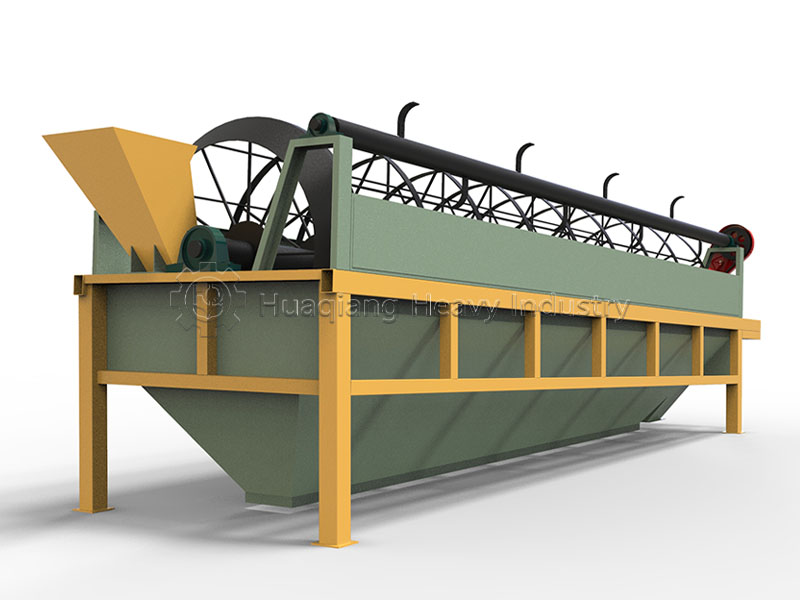
In terms of structural design, drum screener machines are built around the core requirement of “high-efficiency screening” and primarily consist of a drum body, a vibrating device, a drive unit, a support system, and a feed and discharge ports. The drum body’s screen mesh diameter can be customized to meet the screening standards of various industries, ensuring precise separation of materials of varying particle sizes. The vibrating device utilizes a scientifically designed vibration frequency to evenly distribute material within the drum, preventing localized accumulation that could affect screening performance. The drive unit provides stable and continuous rotational power to the drum, and together with the support system, ensures the equipment’s long-term operational stability.

Its high efficiency is reflected in multiple dimensions. Not only does it rapidly separate materials, its processing capacity can accommodate production scales ranging from small workshops to large factories, but it also boasts strong environmental adaptability—maintaining stable screening efficiency for both dry ore particles and wet organic materials, and exhibiting high tolerance to moisture and viscosity.

Furthermore, the drum screener machine’s core components are constructed of wear-resistant materials, reducing wear over time, extending its service life, and lowering ongoing maintenance costs, making it an ideal choice for material screening across multiple industries.

The strength champion in organic fertilizer granulators: A detailed explanation of doublr roller press technology

In a corner of industrial production, raw materials are undergoing a quiet transformation. Whether on a complex organic fertilizer production line or in other powder processing fields, this transformation embodies the same industrial wisdom.

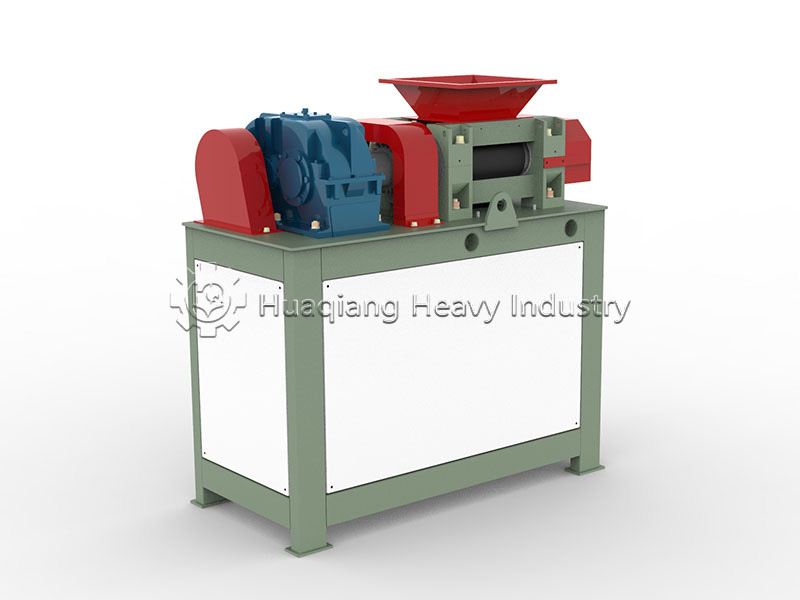
As a key piece of equipment in organic fertilizer production, the double roller press granulator exhibits a unique working method. In stark contrast to the organic fertilizer disc granulator, which relies on tumbling and agglomeration, it takes a more direct approach. Loose, airy powder is evenly fed into the gap between two parallel rollers.

The metal rollers approach each other with stable pressure, tightly enveloping and compacting the powder. There is no high-temperature melting, no chemical change; only pure physical force at work. This compaction method makes it unique among organic fertilizer granulators, particularly suitable for scenarios requiring higher particle strength.

These newly formed granules possess unique value—they have higher density and better flowability, facilitating subsequent packaging, transportation, and application. In modern organic fertilizer production lines, this granulation method works in conjunction with other organic fertilizer production equipment to collectively improve the overall quality and efficiency of production.

The allure of double roller press granulation lies in its ability to transform intangible powder into tangible granules. In this seemingly simple process, we witness how industrial technology elegantly solves practical problems and allows materials to serve human production activities in a more ideal form.

What kind of equipment will your next batch of fertilizer come from?

When people think of organic fertilizer production, many might still picture open-air composting and shoveling. But a complete organic fertilizer production line is completely transforming this process.

The core shift is that the entire organic fertilizer production line is no longer just a collection of “tools,” but rather a highly efficient and controllable miniature factory. Starting with waste processing, crushing equipment quickly breaks down coarse materials like straw and branches into uniform, fine pieces—a crucial first step in improving subsequent fermentation efficiency.

Fermentation is the soul of the process. The core of modern fermentation equipment is creating and maintaining optimal fermentation conditions. Turning equipment, through its specialized structure, achieves mixing, oxygenation, and temperature control, working in conjunction with an intelligent aeration system to ensure that aerobic microorganisms are always at their most active state.

The post-processing stage determines the commercial value of the fertilizer. After efficient screening equipment separates the fully decomposed fine materials, the crucial shaping stage begins—organic fertilizer granulation. Depending on the desired finished product, the organic fertilizer disc granulator uses a tilting, rotating disc to form uniform spherical particles. When higher density and strength particles are required, the double roller press granulator directly compresses the powder into regular lumps. This core organic fertilizer granulator gives the powder a regular shape, making the fertilizer easier to transport, store, and apply mechanically.

Therefore, the picture of modern organic fertilizer production equipment is a sophisticated organic fertilizer production line encompassing crushing, fermentation, screening, and granulation.

Advantages and applications of the flat die pelleting machine

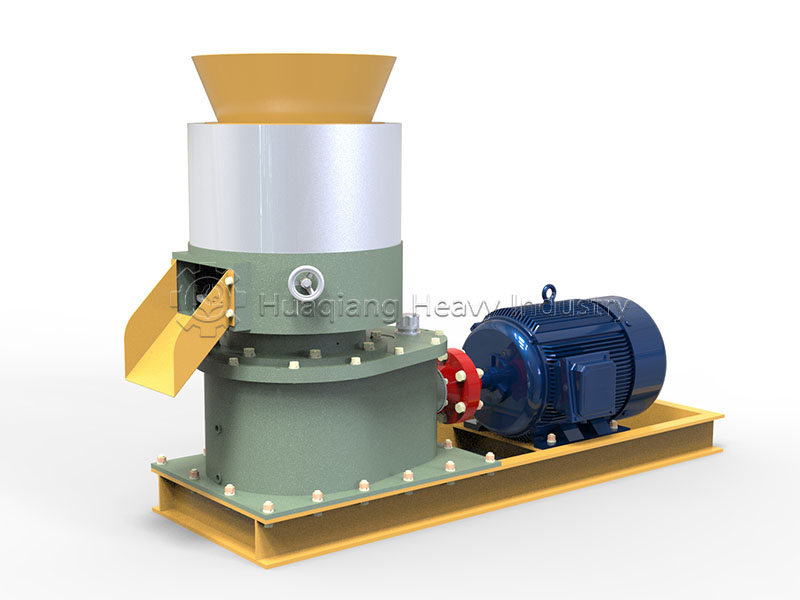
The flat die pelleting machine offers significant advantages, with the larger pressure wheel being a key feature. This larger pressure wheel also increases the bearing’s ability to withstand pressure, making the equipment more stable and reliable, and reducing failures caused by pressure. Furthermore, the larger pressure wheel prevents heat generated by extrusion friction from being transmitted to the bearing chamber, ensuring the bearing operates at a low temperature and preventing lubricant leakage, thus extending bearing life. Furthermore, the larger pressure wheel can be repaired two to three times, reducing maintenance costs and increasing project profitability, offering significant advantages over similar equipment.

The flat die pelleting machine is suitable for a wide range of materials. In agriculture, crop straw, such as corn stalks, wheat straw, and rice husks, can be processed into biomass pellet fuel or organic fertilizer. In the domestic sector, some household waste, after sorting and processing, can also be used for pelletizing, achieving resource recycling. In industry, the flat die pelleting machine can easily handle materials such as biofertilizer, coal, carbon black, kaolin, and stone powder, demonstrating its strong material adaptability.

Flat die pelleting machines also play a positive role in environmental protection. On the one hand, they can process large amounts of agricultural and forestry waste, reducing environmental pollution and enabling resource recycling. On the other hand, by converting degradable materials into biodegradable plastic pellets, they provide a new approach to addressing white pollution, promoting the development of environmentally friendly materials and facilitating the achievement of sustainable development goals.

Back To Top