Tag: organic fertilizer granulation machine

The Secrets of the Double Roller Press Granulator in an Organic Fertilizer Production Line

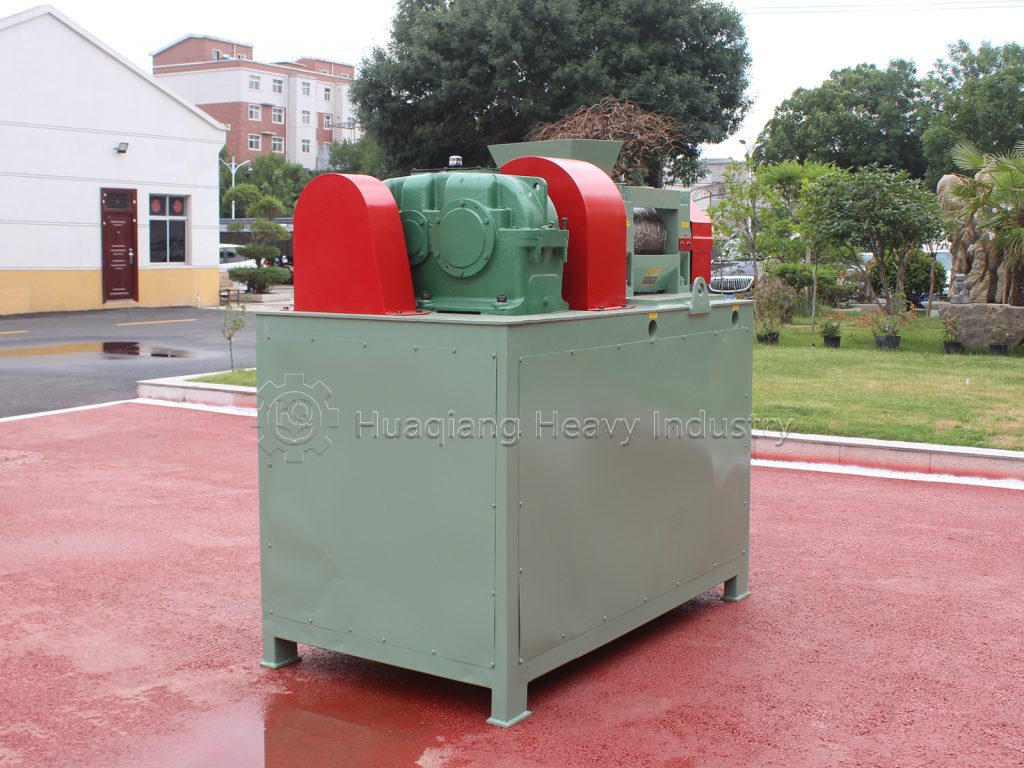
In the granulation process of an organic fertilizer production line, the double roller press granulator, due to its high efficiency and environmentally friendly features, is a core piece of equipment. It uses the principle of physical extrusion to transform loose organic fertilizer raw materials into uniform granules, meeting the needs of fertilizer storage, transportation, and application. Its operation process can be divided into three stages: raw material pretreatment, extrusion molding, and granulation.
Raw material pretreatment is the foundation of granulation. Fermented and crushed organic fertilizer raw materials first enter the batching system, where they are mixed with auxiliary materials in a controlled ratio to achieve a moisture content of 20%-30% and a particle size uniformity of over 80%. The raw materials are then conveyed to the feed inlet of the double-roller extrusion granulator, where they are pushed at a constant speed between two counter-rotating extrusion rollers by a screw feeder. The feeder speed can be adjusted according to the raw material characteristics to ensure a stable feed rate and avoid overloading the equipment due to excessive raw materials or affecting granulation efficiency due to insufficient raw materials.

Extrusion molding is the core step. The surfaces of the two rollers of a double-roller extrusion granulator are equipped with evenly distributed depressions of the same shape. Common shapes include circular and oval. A motor drives the rollers in counter-rotating motion through a reduction gear, generating a strong extrusion force between the rollers, compressing the raw material into the depressions. Under this pressure, the organic particles in the raw material are tightly bound together, forming lumps that conform to the shape of the depressions. This process requires no binder, relying entirely on the raw material’s inherent viscosity and extrusion force to form the product. This reduces costs while ensuring the natural properties of the organic fertilizer. The extrusion force can be adjusted to the desired granule hardness, typically within a range of 15-30 MPa.

The final stage is granulation. After the lumps fall through the gap between the rollers, they enter the crushing and screening system. The crusher breaks down the lumps, and the screen separates the organic fertilizer granules into acceptable particle sizes (generally 2-8 mm). Unacceptable large lumps or fines are returned to the raw material system for recycling, increasing raw material utilization to over 95%.

The double roller press granulator plays a key role in the organic fertilizer production line with its advantages of continuous operation, low energy consumption and high particle strength, and provides equipment support for promoting the development of green agriculture.

How to Improve the Efficiency of the Granulator in an Organic Fertilizer Production Line

As the core equipment in an organic fertilizer production line, the efficiency of the granulator directly determines the production capacity and product quality of the entire line. Improving granulator efficiency requires precise attention to multiple aspects, including raw materials, equipment, operation, and maintenance, to overcome common production bottlenecks.

Proper raw material pretreatment is fundamental. Organic fertilizer raw materials have complex compositions. Improper moisture and particle size can easily lead to clogging or loose granules. Moisture content should be controlled between 25% and 35%. If the moisture content is too high, a dryer should be used for dehydration; if it is too low, water spraying should be used for conditioning. A pulverizer should be used to control the particle size to 80-100 mesh to prevent impurities from entering the machine. Binders such as bentonite and starch should be added in appropriate proportions to enhance raw material cohesion, reduce powder waste, and increase granulation success rates.

Scientifically controlling equipment parameters is a key measure. Different granulators (such as rotary drum granulators and double roller press granulators) require matching parameters. For rotary drum granulators, the drum speed (usually controlled at 15-25 rpm) and tilt angle (3-5°) must be adjusted according to the raw material characteristics; for double roller press granulators, the roller pressure and gap must be appropriately set. Furthermore, the feeder must ensure a uniform feed rate to prevent material fluctuations that could cause the granulator to “run out” or “stuck,” maintaining stable equipment operation.

Enhanced routine maintenance is essential. During granulator operation, clean the inner wall of the drum or the extrusion die of residual material every shift to prevent scaling that could affect performance. Check bearing lubrication weekly and refill with high-temperature grease to prevent friction overheating and reduce the speed. Replace worn scrapers and liners monthly to prevent component aging and reduced molding efficiency. Maintain an equipment maintenance log to record parameters and faults to facilitate troubleshooting and reduce downtime.

Optimizing supporting processes can further improve efficiency. Linking the pelletizer with upstream and downstream processes, using sensors to monitor raw material data in real time, and adjusting upstream equipment parameters to ensure quality raw materials. Optimizing the drying and pelletizing speeds prevents pellet accumulation and moisture, minimizing secondary processing, and maximizing pelletizer efficiency.

In summary, improving pelletizer efficiency requires a balanced approach of “source control, process optimization, and ongoing maintenance.” Through refined management, production and quality can be increased while extending equipment life, ultimately creating greater profitability for the production line.

How does a rotary drum granulator work in an organic fertilizer production line?

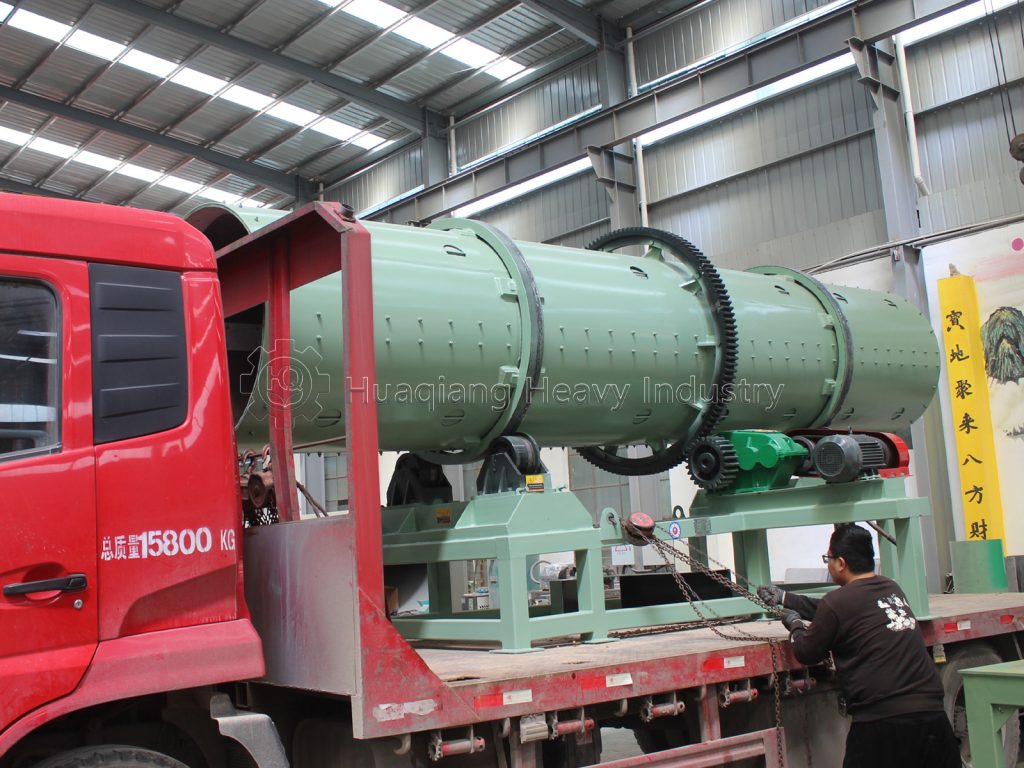
In organic fertilizer production lines, a rotary drum granulator is the core equipment for raw material formation. It has become a mainstream choice because it meets the cohesiveness and granularity requirements of organic fertilizers such as livestock and poultry manure and composted straw. Its operation revolves around “raw material mixing – granule agglomeration – screening and output,” resulting in an efficient and stable mechanism.

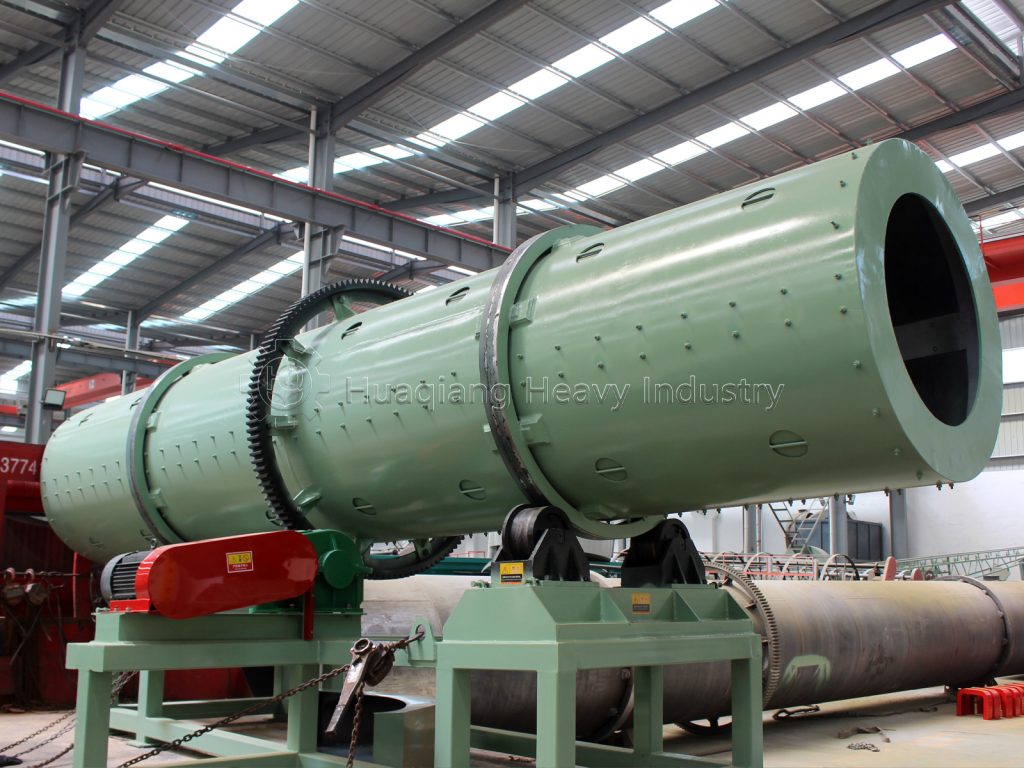
The equipment primarily consists of an inclined drum (3°-5° inclination), a transmission system, a spray system, and a scraper assembly. Scrapers on the inner wall of the drum drive the material to tumble, while the spray system regulates moisture. The scraper removes material adhering to the drum wall to prevent clogging.

The first step is “raw material pretreatment and feeding.” Composted and crushed organic fertilizer raw materials (25%-35% moisture) are mixed with auxiliary materials such as clay in a suitable proportion and then fed into the drum through the feed port. The motor drives the drum to rotate at a low speed of 10-15 rpm. The scrapers repeatedly lift and drop the material, forming a uniform layer.

The second step is the core “granule agglomeration and formation” phase. A spray device applies a metered amount of water or adhesive, depending on the moisture content of the raw materials, to create a sticky surface. As the drum rotates continuously, the material particles agglomerate into small particles through collision, friction, and compression. These small particles further absorb the raw materials and grow to qualified granules of 2-5mm. The tilted design of the drum allows the particles to naturally move toward the discharge end, enabling continuous production.

The final step is “granule screening and optimization.” The formed granules are screened to separate fine powder from bulky material. The fine powder is returned to the granulator, while the bulky material is crushed and reused to ensure acceptable yields. Furthermore, a scraper cleans the drum wall of any residue in real time to ensure efficiency and prevent hardened residue from affecting subsequent production.

In short, the rotary drum granulator uses gentle physical agglomeration to adapt to the characteristics of organic fertilizer raw materials, efficiently producing uniform granules and providing a key guarantee for the stable operation of organic fertilizer production lines.

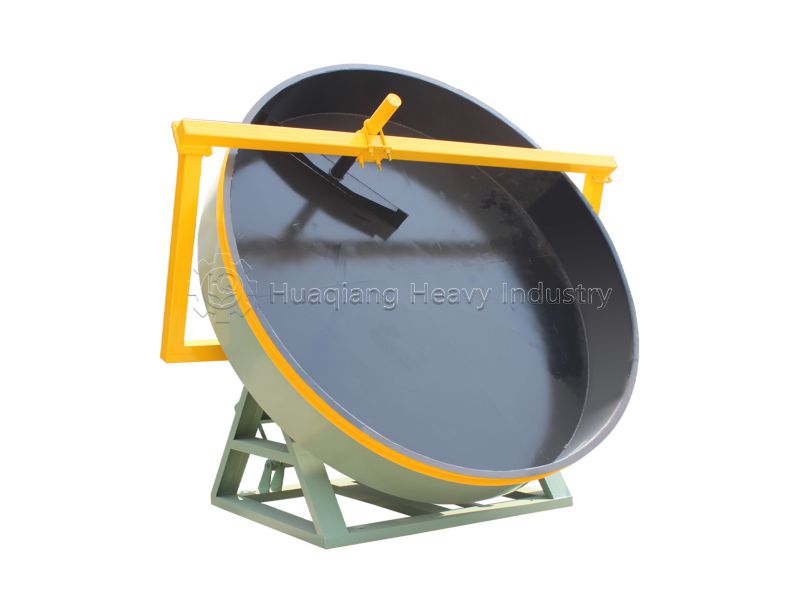
Fertilizer Processing Process with a Disc Granulator

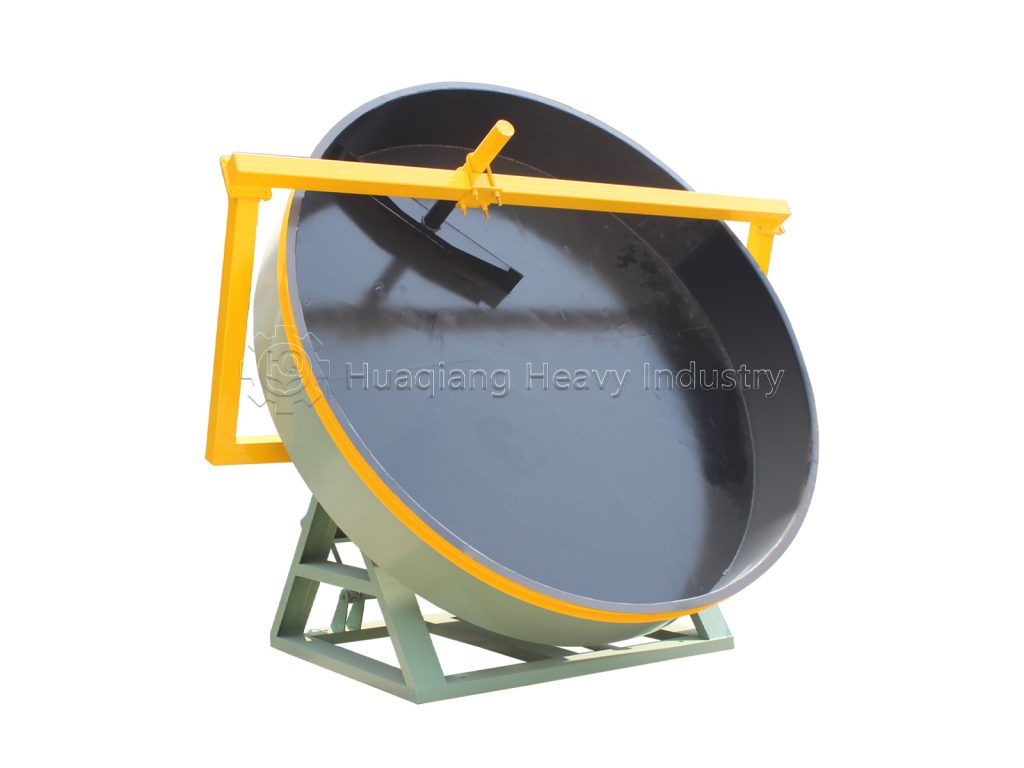
The disc granulator is the core equipment in a fertilizer production line, and its standardized processing flow is crucial for producing high-quality fertilizer.

The first step is raw material preparation. Raw materials include organic materials such as animal manure and plant residues, as well as inorganic materials such as urea and ammonium phosphate. These raw materials must be crushed to reduce particle size for subsequent mixing and granulation. Furthermore, they must be accurately weighed according to the formula to ensure an accurate nutrient ratio, and the humidity must be adjusted to 20%-30% to facilitate granule formation.

The second step is raw material loading. The disc is driven by a motor, and the speed can be set according to the raw material characteristics and the desired particle size. The raw material is evenly distributed on the disc, spread toward the edges due to centrifugal force, and then rises along the inner wall due to friction. After reaching a certain height, it falls back due to gravity, forming a circular motion.

The third step is the application of a binder. As the raw materials circulate, a nozzle above the disc sprays the binder onto the raw materials. The binder is usually a natural polymer or inorganic substance. When it comes into contact with water, it develops viscosity, causing the fine particles to bind together. The spraying rate must be precisely controlled: too much will result in oversized and dense granules, while too little will make them difficult to form.

The fourth step is granule growth. As the disc rotates continuously, the already bonded small granules continuously absorb the raw materials, growing larger as they rotate. The collision and friction between the granules also make them more compact. The operator must observe the granule state and adjust the rotation speed and tilt angle promptly. The rotation speed affects the residence time and granule size, while the tilt angle changes the movement trajectory and helps shape the granules.

The fifth step is discharge. When the granules reach the desired size and quality, they overflow from the edge of the disc. Freshly formed granules contain moisture, which requires drying to reduce the moisture content and improve stability and storage performance.

Through this series of rigorous processes, the disc granulator machine transforms various raw materials into high-quality granular fertilizers, providing strong support for agricultural production.

How does a rotary drum granulator work in an organic fertilizer production line?

In organic fertilizer production lines, a rotary drum granulator is the core equipment for raw material formation. It has become a mainstream choice because it meets the cohesiveness and granularity requirements of organic fertilizers such as livestock and poultry manure and composted straw. Its operation revolves around “raw material mixing – granule agglomeration – screening and output,” resulting in an efficient and stable mechanism.

The equipment primarily consists of an inclined drum (3°-5° inclination), a transmission system, a spray system, and a scraper assembly. Scrapers on the inner wall of the drum drive the material to tumble, while the spray system regulates moisture. The scraper removes material adhering to the drum wall to prevent clogging.

The first step is “raw material pretreatment and feeding.” Composted and crushed organic fertilizer raw materials (25%-35% moisture) are mixed with auxiliary materials such as clay in a suitable proportion and then fed into the drum through the feed port. The motor drives the drum to rotate at a low speed of 10-15 rpm. The scrapers repeatedly lift and drop the material, forming a uniform layer.

The second step is the core “granule agglomeration and formation” phase. A spray device applies a metered amount of water or adhesive, depending on the moisture content of the raw materials, to create a sticky surface. As the drum rotates continuously, the material particles agglomerate into small particles through collision, friction, and compression. These small particles further absorb the raw materials and grow to qualified granules of 2-5mm. The tilted design of the drum allows the particles to naturally move toward the discharge end, enabling continuous production.

The final step is “granule screening and optimization.” The formed granules are screened to separate fine powder from bulky material. The fine powder is returned to the granulator, while the bulky material is crushed and reused to ensure acceptable yields. Furthermore, a scraper cleans the drum wall of any residue in real time to ensure efficiency and prevent hardened residue from affecting subsequent production.

In short, the rotary drum granulator uses gentle physical agglomeration to adapt to the characteristics of organic fertilizer raw materials, efficiently producing uniform granules and providing a key guarantee for the stable operation of organic fertilizer production lines.

Scientific Maintenance of Organic Fertilizer Production Equipment

The stable operation of organic fertilizer production equipment is key to ensuring fertilizer quality and production efficiency. A scientific maintenance system can effectively extend equipment life and reduce the risk of failure. Targeted maintenance measures are required for equipment throughout the entire process, from pretreatment to finished product packaging, tailored to its characteristics.

Maintenance of pretreatment equipment focuses on preventing blockage and wear. As the first step in processing raw materials such as straw and manure, the crusher requires daily inspection for blade wear and weekly sharpening to prevent blunting and reduced pulverization efficiency. Screening machines require regular cleaning of residual fiber debris and monthly inspection of screen tension to prevent vibration-induced loosening that reduces screening accuracy. For conveying equipment, special attention should be paid to the tightness of the conveyor belt and the lubrication of the rollers to prevent failures caused by frictional overheating.

Granulating equipment requires timely cleaning and maintenance. The disc granulator‘s disc should be cleaned of residual particles daily and coated weekly with an anti-stick coating to prevent material from clumping and sticking. Bearings should be lubricated with high-temperature resistant grease monthly to ensure smooth rotation. The roller surface of the roller granulator should be regularly inspected for wear and any dents should be repaired promptly to avoid compromising pellet quality.

Maintenance of post-processing equipment focuses on precision and safety. The hot air ducts of the drum fertilizer dryer should be cleaned of dust monthly to prevent blockages that affect thermal efficiency. The temperature sensor should be calibrated weekly to ensure precise control of the drying temperature. The fan filter of the cooler should be cleaned regularly to prevent debris from entering and affecting heat dissipation. The metering device of the packaging machine should be calibrated weekly, and the drive chain of the conveyor belt should be lubricated monthly to ensure accurate quantitative packaging.

Establishing an equipment maintenance mechanism provides long-term protection. Recording the time, content, and troubleshooting of each maintenance session can help identify recurring problems promptly. Operators should also receive professional training to ensure early resolution of minor faults and early prevention of major problems. Scientific maintenance not only reduces equipment failure rates but also ensures the continuity and stability of the organic fertilizer production line, providing reliable support for the green development of agriculture.

Back To Top