Tag: fertilizer compaction machine

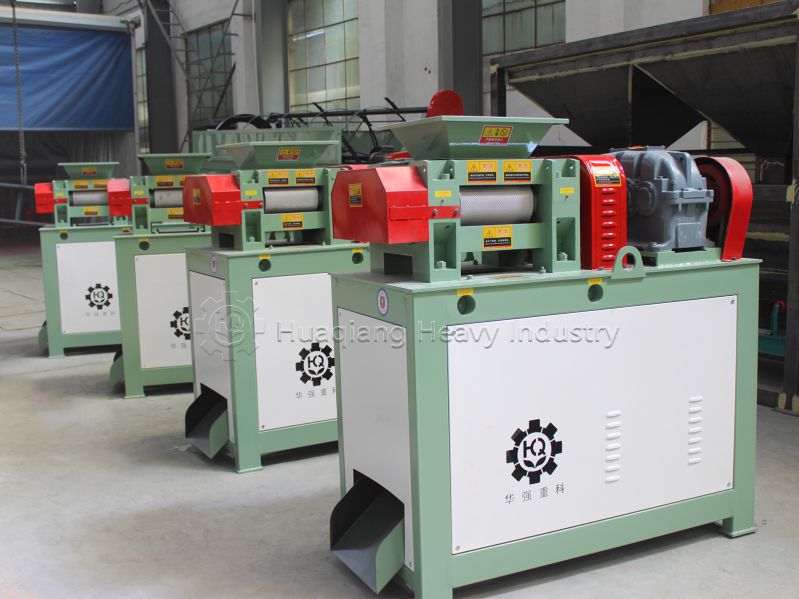
Flat die granulator: Solving the problem of fiber entanglement in organic fertilizer

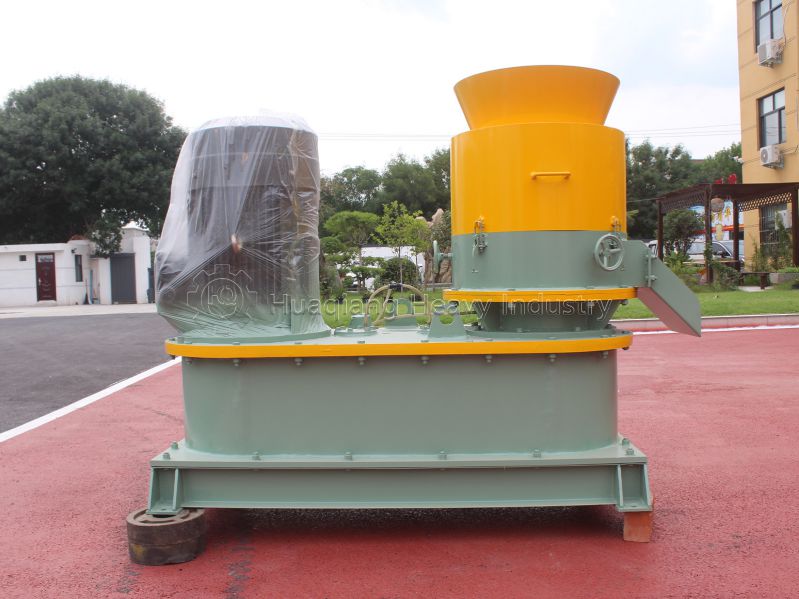
Fiber raw materials such as straw, mushroom residue, and rice husks are common components in organic fertilizer production. However, these materials are prone to fiber entanglement with the rollers during pelletizing, leading to equipment stalls and a sharp drop in pelletizing efficiency. The flat die granulator, with its targeted structural design, is an ideal solution for this problem.

The core cause of fiber entanglement is insufficient cleavage of long fibers in the raw material, or a smooth roller surface that causes fibers to entangle as the rollers rotate. The flat die granulator’s design addresses this problem by focusing on two key points: First, the flat die holes feature a “deep straight hole” layout (15-20mm depth). This shortens the vertical force path when the fiber raw material is squeezed into the hole, reducing the fiber’s residence time between the rollers and the flat die.

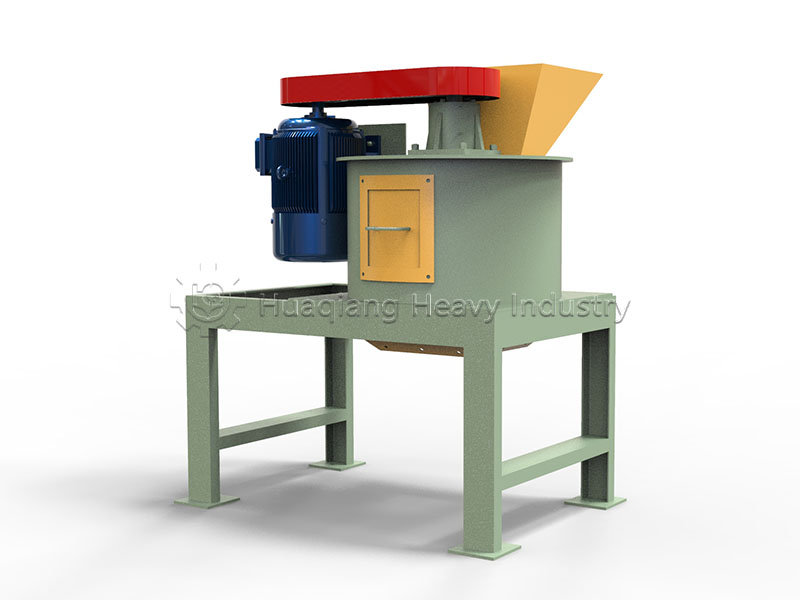
Second, a pre-crushing pretreatment is recommended, with the fiber raw material pulverized to 0.5-1mm to ensure that long fibers are cut, thus reducing the likelihood of entanglement at the source.

In actual production, if slight entanglement still occurs, the gap between the roller and the flat die can be adjusted to maintain 0.2-0.3mm, or 1%-2% bentonite can be added to the raw materials for further optimization. This solution can increase the smoothness of granulation of fiber raw materials to over 90%, avoiding frequent downtime for cleaning and ensuring stable operation of the organic fertilizer production line.

Bio-organic fertilizer equipment selection and maintenance: Helping reduce costs and increase efficiency

For bio-organic fertilizer manufacturers, selecting and effectively utilizing bio-organic fertilizer equipment is crucial for achieving sustainable profitability.

When selecting equipment, consider your production capacity and the characteristics of your raw materials. If your company uses livestock manure as its primary raw material, you should prioritize equipment with strong pretreatment capabilities to avoid high moisture content that could affect fermentation. If your production capacity is under 5,000 tons/year, you can choose small or medium-sized complete sets of equipment to reduce initial investment. If your production capacity exceeds 10,000 tons, you should consider highly automated production lines to reduce labor costs.

Secondly, pay attention to the bio-organic fertilizer equipment’s durability. Equipment for core processes like fermentation and granulation should be constructed of corrosion and wear-resistant materials to withstand the corrosive nature of organic fertilizer raw materials and extend their service life.

Daily maintenance is equally crucial. After use, promptly clean any residual material from components like fermentation tanks and granulators to prevent it from clumping and becoming moldy, potentially contaminating the raw materials during the next use. Regularly check the lubrication of the equipment’s transmission components. Oil depletion can lead to increased wear and tear, increasing the likelihood of failure.

Scientific selection and operation and maintenance can not only reduce the downtime of bio-organic fertilizer equipment and ensure production continuity, but also reduce maintenance costs and improve product qualification rate.

Key points for daily maintenance of BB fertilizer mixers to extend equipment life

As a long-term operating equipment in fertilizer production, BB fertilizer mixers require scientific daily maintenance to effectively reduce downtime, extend their service life, and ensure stable production. Maintenance should focus on the core components of the BB fertilizer mixer, with the mixing mechanism being the key. Regularly inspect the agitator shaft and blades for wear. Deformed or damaged blades should be replaced promptly to prevent poor mixing performance. Regular lubrication of the agitator shaft bearings is also crucial to reduce friction and minimize the risk of damage.

Maintenance of the drive system, including the motor and reducer, is also crucial. Regularly monitor the motor’s temperature and noise during operation. Any abnormal heating or noise should be promptly investigated to prevent motor burnout. Reducer lubrication should be regularly replaced to ensure transmission efficiency and avoid excessive wear due to insufficient lubrication.

Maintenance of the feed and discharge systems is equally critical. After each run, check the feed and discharge ports for residual material blockages and clean them promptly to ensure smooth material flow. Also, check the seal of the discharge valve to prevent material leakage that could cause waste or pollute the production environment.

In addition, after each production, the inside of the mixing drum needs to be thoroughly cleaned to avoid residual raw materials from clumping and to prevent contamination of new raw materials during the next production. With the help of the easy-to-clean design features of the BB fertilizer mixer, the cleaning work can be completed efficiently.

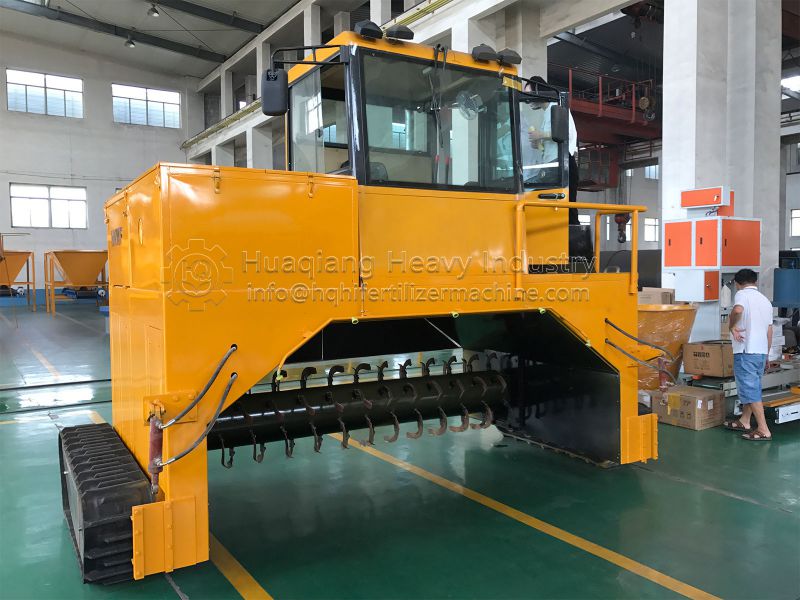
Double screws compost turning machine routine maintenance extends equipment life

Double screws compost turning machines are high-frequency equipment for organic fertilizer fermentation. Proper routine maintenance directly impacts their service life and operational stability.

1.Precise Maintenance of Spiral Blades

After each operation, clean any sticky material from the blades (a high-pressure water jet can be used to prevent wear and tear from hardening). Check the blade fastening bolts weekly and tighten any loose bolts immediately to prevent vibration and increased wear. Derust the blades and apply a wear-resistant coating quarterly to extend double screws compost turning machine’s service life.

2.Transmission and Travel System Maintenance

Check the lubricating oil level in the motor and reducer monthly and add specialized lubricant to prevent wear and tear on gears and bearings due to lack of oil. Regularly clean debris from the travel tracks and crawler tracks to prevent jamming. If the double screws compost turning machine deviates, adjust the track parallelism or crawler track tension promptly to ensure smooth movement.

3.Electrical System Safety

Fermentation workshops are characterized by high humidity. Regularly check the seals of motors and control cabinets to prevent moisture-induced short circuits. Clean dust from electrical components, check for loose connections, and tighten terminal blocks. Perform a no-load test run monthly to test the operating status of motors and inverters. Detect and address any anomalies promptly to avoid prolonged downtime caused by electrical failures.

How does a large wheel compost turner adapt to large-scale organic fertilizer production lines?

With the large-scale development of the organic fertilizer industry, production lines are placing increasingly stringent demands on equipment adaptability. With its exceptional integration capabilities, large wheel compost turners have become core equipment for large-scale organic fertilizer production lines.

Within the production line process, they seamlessly connect pre-treatment and processing. During pre-treatment, raw materials such as livestock and poultry manure processed by a solid-liquid separator and pulverized straw from a pulverizer are piled into windrows 5-8 meters wide and 1.5-2 meters high. The large wheel compost turner slowly moves along the windrows, turning and fermenting the material. The fermented material is then conveyed by conveyor to equipment such as granulators, screens, and dryers, forming a complete production chain from pre-treatment to fermentation, enabling continuous production.

For large-scale production lines with an annual output of over 100,000 tons, the equipment rotates through multiple windrows: one receiving fresh raw material, one performing high-temperature fermentation, and one completing cool-down composting. This fixed cycle allows for a daily processing capacity of 800-1,500 tons, meeting the needs of large-scale production.

In addition, its electronic control system flexibly adjusts the turning and travel speeds, adjusting the fermentation progress based on the raw material supply and pelletizing capacity, ensuring a stable production line. Furthermore, compared to tank fermentation, it improves site utilization by over 30%, saving valuable land resources for large-scale production lines.

Double screws compost turning machine: The “Core of Efficient Turning” for organic fertilizer fermentation

In organic fertilizer production, the quality of compost turning during the fermentation process directly determines fertilizer maturity and nutrient retention. The double screws compost turning machine, with its unique structural design, is a key device for addressing uneven compost turning and slow fermentation. Its dual helical operation ensures sufficient oxygen and uniform heat dissipation within the fermentation tank, significantly improving fermentation efficiency.

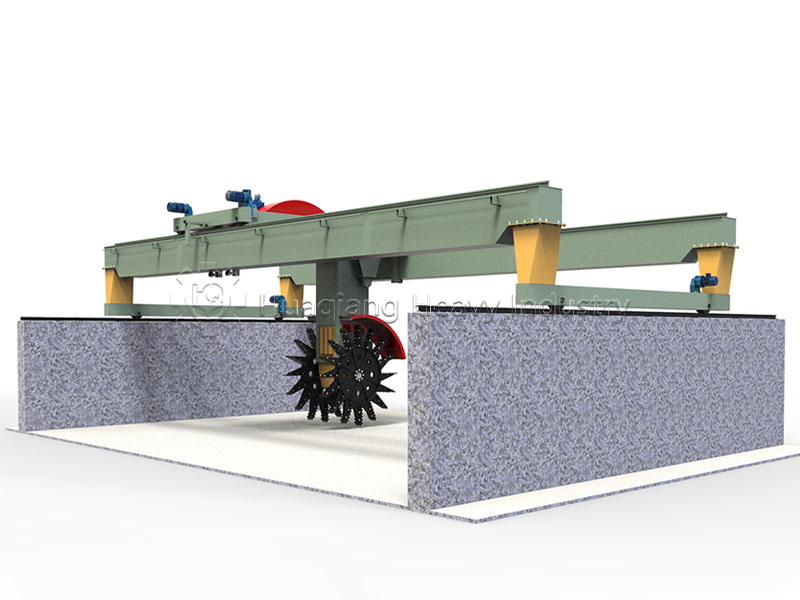
The core working components of the double screws compost turning machine are two sets of parallel spiral blades. As the device moves along the fermentation tank track, the blades rotate clockwise, tossing the bottom material upward while simultaneously dispersing it to the sides. This turning method creates a “rolling up and down, mixing left and right” motion pattern for the material.

During the fermentation process, turning the compost not only provides sufficient oxygen for microorganisms but also quickly dissipates heat generated by the fermentation process, preventing nutrient loss due to localized high temperatures. For different raw materials such as livestock and poultry manure, straw, etc., the spiral speed and double screws compost turning machine movement speed can be adjusted to control the turning depth (up to 1.5-3m) and frequency, ensuring that the materials are fully composted within 7-15 days. Compared with manual turning, the efficiency is increased by more than 10 times.

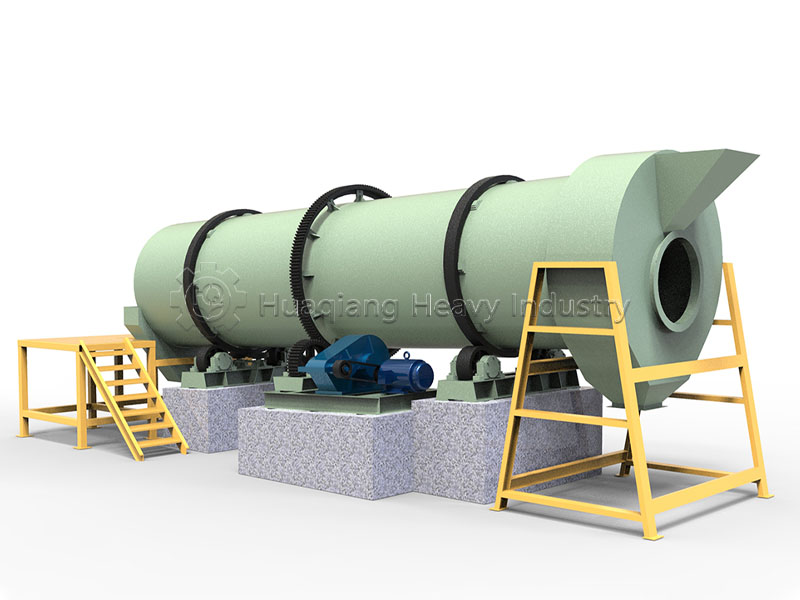
How can routine drum fertilizer dryer operation and maintenance achieve energy savings and cost reduction?

Drum fertilizer dryers account for 25%-30% of a fertilizer production line’s total energy consumption. Whether routine operation and maintenance are effective directly impacts a company’s operating costs.

  1. Accurate Maintenance of Thermal Efficiency

Hot air is the core energy source of a drum fertilizer dryer. The pipes connecting the hot air furnace and the drum must be regularly inspected. Damaged pipe insulation can lead to heat loss (up to 10% or more) and require prompt repair or replacement. Clean accumulated slag in the hot air furnace to ensure complete fuel combustion, increase thermal efficiency to over 75%, and reduce fuel waste.

  1. Dynamic Adjustment of Drum Operating Parameters

Adjusting operating parameters based on changes in raw material moisture content can avoid inefficient energy consumption. When the moisture content of the wet material is low, appropriately reduce the hot air temperature and increase the drum fertilizer dryer speed (shortening the dwell time). When the moisture content is high, adjust the opposite direction. This ensures that every unit of energy consumed is used for effective dehydration, avoiding the waste of high energy consumption processing low-moisture materials.

  1. Preventive Replacement of Wear Parts

Worn drum seals (such as the seals at the feed and discharge ports) can cause cold air to infiltrate and hot air to leak, increasing the heating load. Check the seals monthly and replace any signs of aging or deformation. Also, regularly inspect the lift plate. If loose or worn, tighten or replace it promptly. Simple preventive maintenance can significantly reduce future failures and energy costs.

Rotary drum granulator selection guide: Focus on core structure and match production line requirements

When selecting a rotary drum granulator, companies should pay close attention to its core structure to ensure it precisely matches their production line requirements. A rotary drum granulator primarily consists of a rotating drum, transmission, support system, and spray system. The performance of each component directly impacts the overall performance of the equipment.

The rotating drum, as the core working component, is constructed from rolled steel plate. Lifting plates or spiral blades on the inner wall enhance the tumbling and collision effect of the material. When selecting a granulator, consider whether the steel plate thickness and blade design are compatible with the characteristics of the production material. The transmission provides power, and the power and quality of the motor and reducer affect the equipment’s operational stability and should be selected based on production capacity.

The support system bears the weight and rotation of the drum. The selection of rolling or sliding bearings should be considered based on the equipment load and operating environment. Furthermore, the atomization effect of the spray system determines the accuracy of humidity control, ensuring uniform spraying of water or adhesive. Only by comprehensively considering these structural details can you select a rotary drum granulator that is compatible with your production line and operates efficiently.

Key considerations for drum fertilizer dryer selection

For fertilizer companies, choosing the right drum fertilizer dryer not only ensures effective drying but also reduces subsequent energy consumption and maintenance costs.

1. Suitable Heating Method for Fertilizer Type

For organic fertilizer production (including fiber-based fermented materials), the preferred option is “hot air heating.” Direct contact between the hot air and the material results in faster drying and prevents fiber sticking to the wall. For compound fertilizer production (wet granules after granulation), the “steam heating” option offers a milder temperature and reduces granule breakage. For low-temperature drying of biofertilizers (to prevent inactivation of microbial inoculants), the “low-temperature hot air” option is recommended to preserve microbial activity.

2. Matching Drum Specifications to Production Capacity

The drum diameter and length directly determine the processing capacity. When selecting a drum fertilizer dryer, calculate the hourly processing capacity based on the daily production capacity, allowing for a 10%-15% margin to ensure sufficient material residence time.

3. Targeted Selection of Anti-Stick Designs

High-humidity organic fertilizers tend to stick to the inner wall of the drying drum. When selecting a drum fertilizer dryer, confirm whether it features an anti-sticking skimmer or polished inner wall treatment to reduce material residue and avoid frequent downtime for cleaning. When processing highly sticky wet compound fertilizer pellets, a combination of a guide plate and skimmer can be used to guide material flow smoothly.

4. Energy Consumption and Environmental Parameters

Prioritize equipment with high thermal efficiency to reduce fuel waste. Also, consider the suitability of exhaust gas treatment. The hot and humid exhaust gas generated during the drying process requires dust removal and desulfurization equipment to ensure compliance with environmental emission standards in the fertilizer industry.

What are the advantages of flat die granulators in specialty fertilizer production?

As the fertilizer industry moves toward precision and functionalization, demand for specialty fertilizers such as organic-inorganic compound fertilizers, functional biofertilizers, and fertilizers for fruits and vegetables has surged. With its unique design, flat die granulators have become a powerful tool for specialty fertilizer production.

  1. Suitable for the granulation of multi-component raw materials

Specialty fertilizers often require the mixing of multiple raw materials, each with significantly varying density and viscosity. The flat die granulator’s low-speed extrusion prevents raw material separation caused by high-speed rotation, allowing the multi-component raw materials to fully blend during the extrusion process, ensuring uniform nutrient content in each granule.

  1. Low-temperature granulation ensures the preservation of functional ingredients

The core requirement for functional biofertilizers (such as those containing Bacillus subtilis) is to preserve the activity of the inoculum, which can be inactivated by high temperatures. The flat die granulator generates minimal frictional heat during the extrusion process, enabling low-temperature granulation without the need for additional cooling equipment, thus ensuring the fertilizer’s functional effects.

  1. Flexible Adaptation to Special Particle Shape Requirements

Specialty fertilizers often require customized granule shapes (for example, fruit and vegetable fertilizers require oblate granules to prevent rolling during watering). The flat die granulator can be customized with various die hole shapes (round, oblate, and square). Changing the die takes only 30 minutes, eliminating the need to adjust the drive system. This allows for quick changes in granule shape to meet diverse market demands.

Back To Top