Tag: fertilizer compaction machine

Disc granulator: High-efficiency granulation equipment for fertilizer production

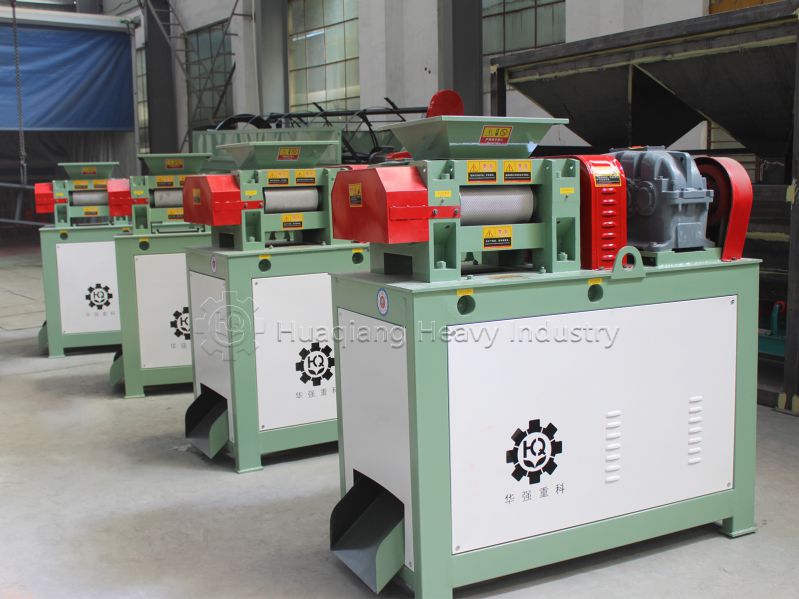
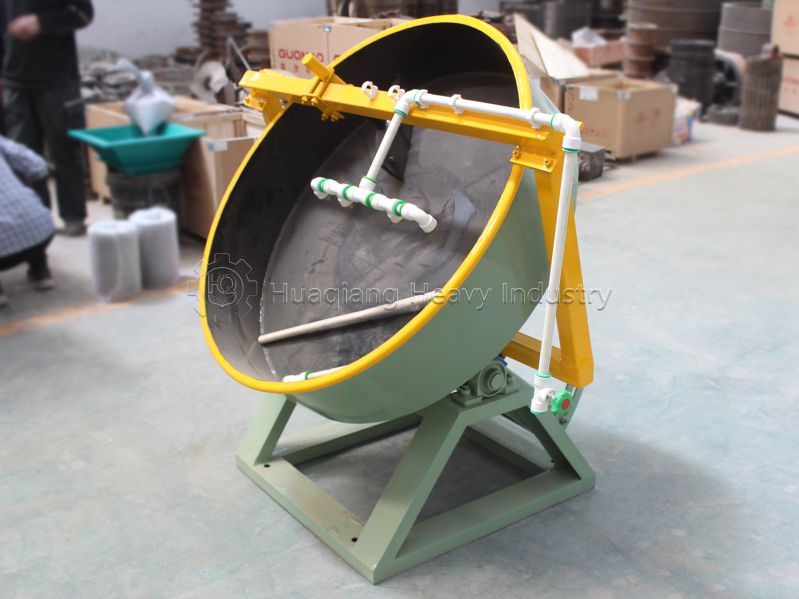
In fertilizer production, selecting the right granulation equipment directly impacts product quality and production efficiency. Disc granulators, with their outstanding advantages, have become the preferred choice for many companies. As a common fertilizer granulator, they boast a granulation rate exceeding 95%. They can convert powdered or lumpy fertilizer raw materials into granules. The resulting granules have excellent sphericity and high strength, making them easy to store and transport, while also improving fertilizer utilization.

Disc granulators are highly adaptable to fertilizer raw materials, efficiently processing everything from organic fertilizers like livestock and poultry manure and fermented straw to inorganic compound fertilizers containing nitrogen, phosphorus, and potassium. Operating them simply, they easily control the granulation process by adjusting the disc’s tilt angle, rotation speed, and the amount of water or binder applied, meeting the production requirements of diverse fertilizer specifications.

At the same time, compared with other granulation equipment, the disc granulator has lower energy consumption, can effectively reduce the production and operation costs of enterprises, bring significant economic benefits to fertilizer production enterprises, and is an important equipment to promote the efficient development of the fertilizer industry.

Beyond NPK: Other important nutrients in organic fertilizers and their effects

In modern agricultural Production, we often hear the term “Fertilizer Production Line,” which covers the production of a range of fertilizers, from nitrogen fertilizer to phosphate fertilizer to potassium fertilizer. However, in addition to these well-known NPK fertilizers, other important nutrients in organic fertilizers are equally indispensable. Today, we talk about these unsung heroes.
First, let’s introduce the Organic Fertilizer Production Line. Imagine that you are a farmer and your land needs a special kind of nourishment. At this time, the Organic Fertilizer Production Line is like a chef. It converts various organic raw materials, such as livestock manure and crop stalks, into nutrient-rich organic fertilizers through a series of processing processes, such as compost treatment. These fertilizers not only provide a variety of trace elements needed for plant growth, but also improve the soil structure and enhance the soil’s water retention and permeability.
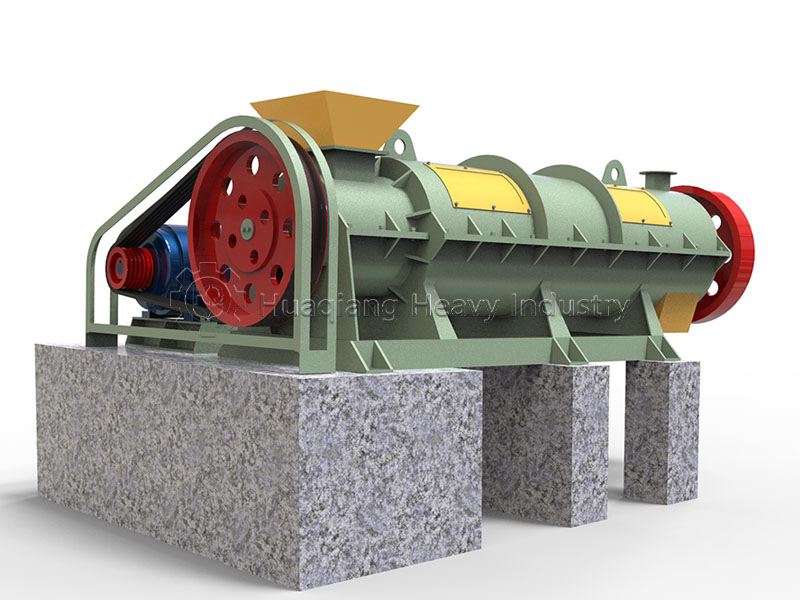
Next, let’s talk about Rotary Drum granulators. The Rotary Drum Granulator plays a vital role in the production of organic fertilizers. It extrudes the mixed raw materials into pellets through a rotating drum, which not only facilitates the storage and transportation of fertilizers, but also improves the application efficiency of fertilizers. Granular organic fertilizers can be more evenly distributed in the soil when applied, thus better promoting plant absorption.
12_1
Now, let’s look at what Cage Crusher does. Cage Crusher is an integral part of the production line of organic fertilizers. It is able to crush large chunks of urea or other fertilizer raw materials into fine particles, which helps to improve the dissolution rate of fertilizer and the absorption efficiency of plants. In this way, the fertilizer can be used more quickly by the plants, thus increasing the yield and quality of the crops.
Finally, let’s talk about the Horizontal Ribbon Mixer. In the fertilizer production process, the Horizontal Ribbon Mixer plays an important role in ensuring the uniform mixing of raw materials. It fully mixes various raw materials through a horizontal rotating spiral belt, ensuring the uniform distribution of various nutrients in the fertilizer. This even mixing is essential to improve the effectiveness of the fertilizer, as it ensures that each grain of fertilizer provides a balanced amount of nutrients.
Through the above introduction, we can see that other important nutrients in organic fertilizers and their roles are multi-faceted. They not only provide rich nutrients for plants, but also contribute to the health of the soil and the growth of crops. Equipment such as fertilizer production lines, Rotary Drum Granulator, Cage Crusher and Horizontal Ribbon Mixer are key tools to achieve this goal. Understanding these devices and their role is important for improving the efficiency and sustainability of agricultural production.

How do I establish an organic fertilizer production line?

With the increasing attention to environmental protection and sustainable development, organic fertilizer has been widely concerned because of its ability to improve soil structure and crop quality. The establishment of an efficient Organic Fertilizer Production Line can not only meet the market demand, but also promote the green development of agriculture.
 

1. Planning and design

 
First, you need detailed planning and design of the Organic Fertilizer Production Line. This includes determining the size of the production line, the capacity, the process flow and the equipment required. In the planning process, factors such as the source, cost and transportation of raw materials should be fully considered to ensure the economic benefits and sustainability of the production line.

2. Selection of fertilizer production line

 
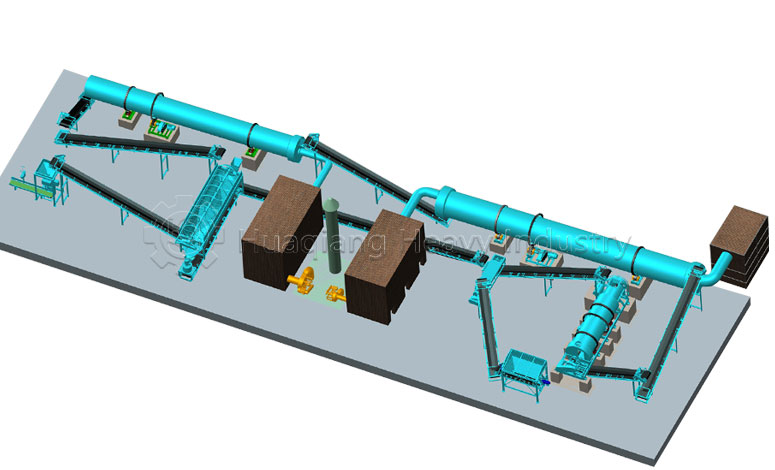
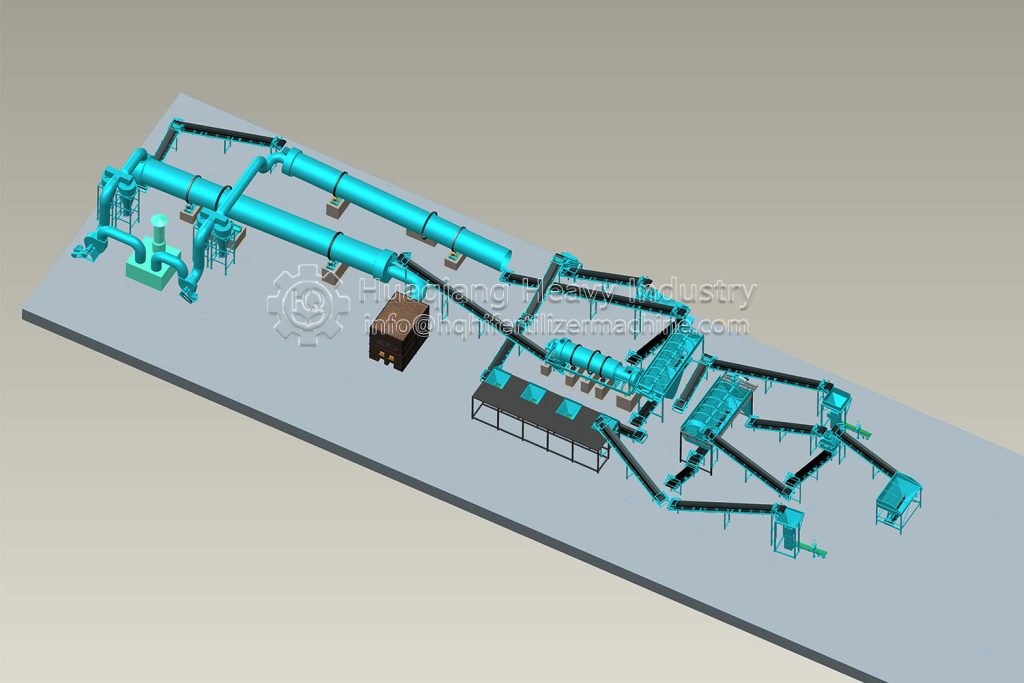
The fertilizer production line is the core part of the entire production process. Depending on your Production needs, you can choose from different types of Fertilizer Production lines, such as NPK Fertilizer Production Line, Organic Fertilizer Production Line, etc. These lines typically include raw material handling, mixing, granulation, drying, cooling and packaging. Choosing the right production line can greatly improve production efficiency and product quality.

3. Application of Rotary Drum Granulator

 
Rotary Drum Granulator is one of a series of fertilizer granulators that granulates raw materials through a rotating drum. The granulator is suitable for a variety of raw materials, including organic and Complex fertilizers. The advantages of Rotary Drum Granulator are its efficient granulation capacity and low energy consumption, which can meet the needs of large-scale production.
12_1

4. The importance of Windrow Compost Turning Machine

 
In the production process of organic fertilizer, the Windrow Compost Turning Machine plays a vital role. By turning the compost, it promotes the decomposition of organic matter and the activity of microorganisms, thus accelerating the maturation process of the compost. This equipment not only improves the quality and efficiency of the compost, but also helps to reduce undesirable odors and environmental pollution.

5. Innovation of Organic-Inorganic Fertilizer Compound Fertilizer

 
Organic-Inorganic Fertilizer Compound Fertilizer is a product that combines the advantages of organic and inorganic fertilizers. It can provide a variety of nutrients needed by plants, while improving the soil structure and improving the resistance of crops to disease. When establishing Organic Fertilizer Production Line, considering the production of organic and inorganic compound fertilizers can increase the market competitiveness of your products.
 

Conclusion

 
The establishment of Organic Fertilizer Production Line is a systematic project, which requires comprehensive consideration of many factors such as raw materials, equipment, process and market. By selecting the right Fertilizer Line, pelletizer, tiller and compound fertilizer technology, you can build an efficient, environmentally friendly and market-competitive Organic Fertilizer Production Line. This can not only meet the needs of modern agriculture for fertilizer, but also contribute to the sustainable development of agriculture.

Back To Top