Tag: bio-organic fertilizer equipment

Fertilizer granules compaction technology: Enabling flexible production in fertilizer production lines

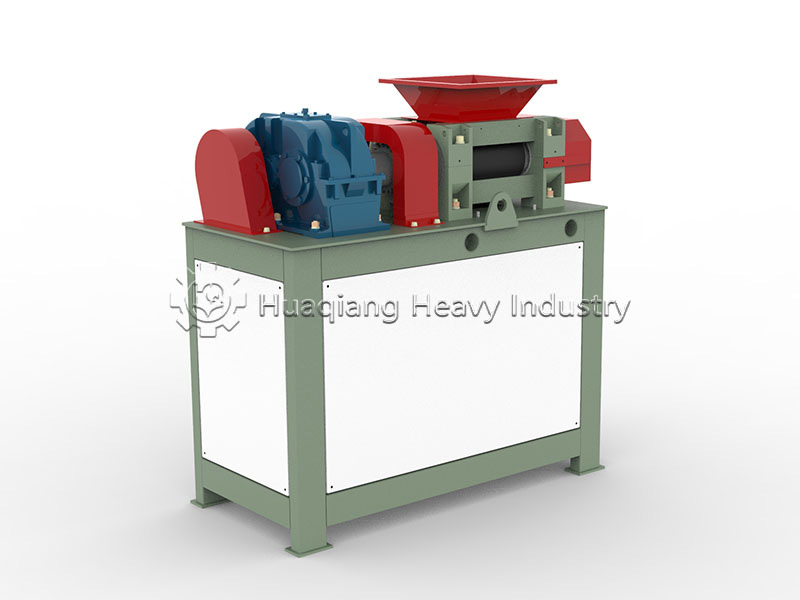
In the large-scale production of bio-organic fertilizers, flexible adaptation to diverse raw materials and product requirements is crucial for enhancing competitiveness. As a core piece of bio-organic fertilizer equipment, the fertilizer compaction machine, relying on fertilizer granules compaction technology, precisely addresses production pain points in multiple scenarios, providing crucial support for the efficient and flexible operation of bio-organic fertilizer production lines.

When dealing with diverse raw materials, the advantages of fertilizer granules compaction technology are significant. Bio-organic fertilizer raw materials include livestock and poultry manure, straw, and fungal residue, with varying moisture content and fiber content. The fertilizer compaction machine can adapt to different raw materials by adjusting parameters such as extrusion pressure and rotation speed: strengthening shear force for high-fiber materials and optimizing anti-sticking design for high-moisture materials. This allows for granulation of multiple raw materials without changing equipment, significantly broadening the range of raw materials suitable for bio-organic fertilizer production lines.
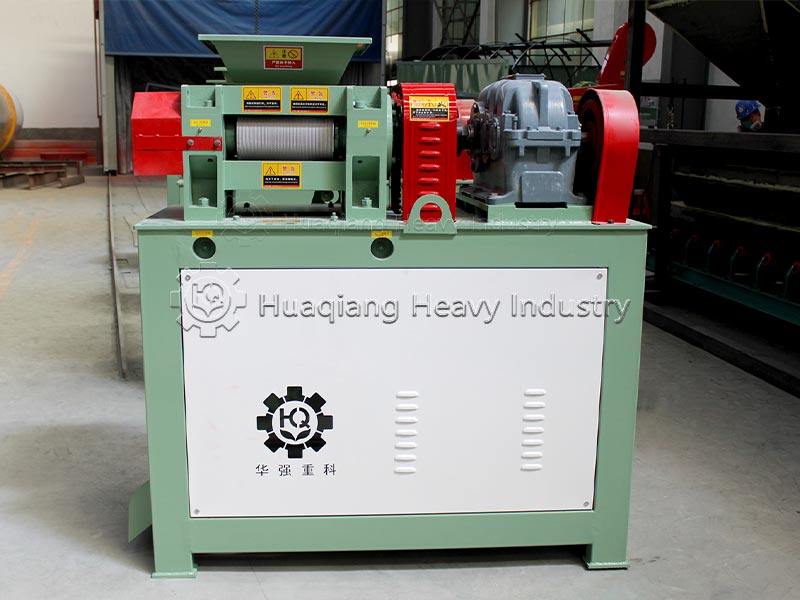
In terms of product form optimization, this technology can precisely control granule specifications. Different scenarios require different particle sizes and hardness for organic fertilizers; for example, field fertilizers require large, hard granules for mechanical application, while seedling fertilizers require fine, soft granules. By changing molds and adjusting technical parameters, the fertilizer granules compaction machine can mass-produce products of different specifications, allowing bio-organic fertilizer production lines to flexibly respond to market demands and enhance product competitiveness.

Furthermore, the low energy consumption and low pollution characteristics of this technology align with green production requirements. It requires minimal binders, ensuring both high molding efficiency and preservation of raw material nutrients, while minimizing dust and wastewater emissions. This contributes to the environmentally friendly and efficient operation of bio-organic fertilizer production lines, demonstrating the empowering value of advanced technology for bio-organic fertilizer equipment and industry development.

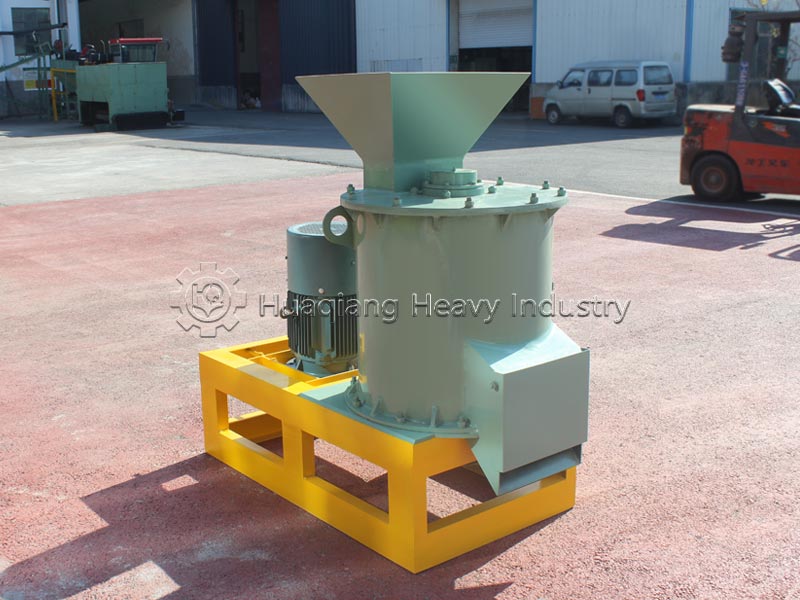
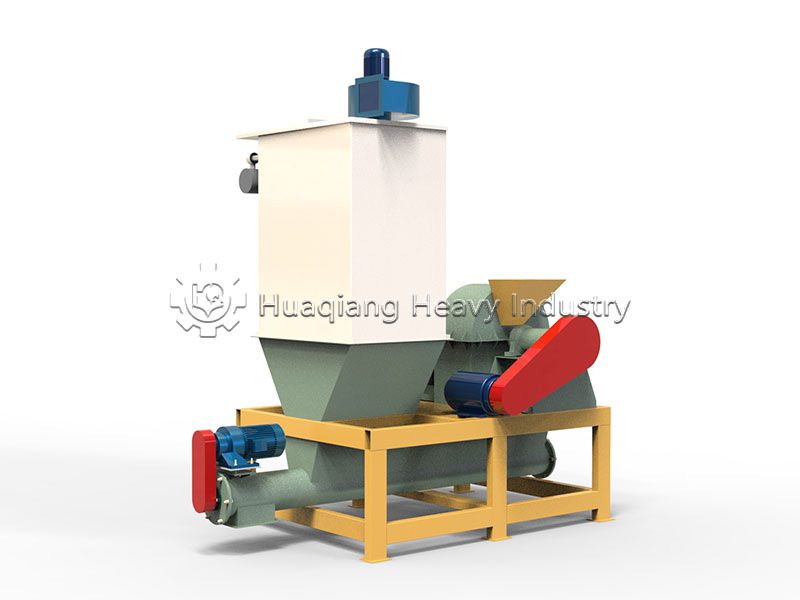
These scenarios necessitate the use of a half-wet material crusher to meet the needs of the production line!

In the field of bio-organic fertilizer production, the half-wet material crusher, as a specialized piece of bio-organic fertilizer equipment, is not required for all production lines. Its core application scenarios are concentrated in addressing the pain points of half-wet material processing.

First scenario: The raw materials mainly consist of high-moisture organic materials. If the core raw materials of the production line are poultry and livestock manure, kitchen waste, municipal sludge, etc., these materials usually have a moisture content of 30%-60%, are highly cohesive, and prone to clumping. The anti-sticking blades and special chamber design of the half-wet material crusher can precisely solve the problem of wet material processing and ensure a smooth crushing process.

Second scenario: The production line requires refined pre-treatment. Fermentation is crucial in bio-organic fertilizer production. When the production line aims for efficient fermentation and improved nutrient uniformity in the final product, a half-wet material crusher is needed to refine the half-wet raw materials into uniform particles, laying a solid foundation for the subsequent fermentation process.

Third scenario: Processing special half-wet waste residue raw materials. Some production lines use industrial waste residues such as traditional Chinese medicine residue, distiller’s grains, and sugar residue as raw materials. These waste residues are mostly in a semi-wet state and contain fibrous or viscous components. The shear + compression dual crushing mode of the half-wet material crusher can efficiently decompose these special materials.

Fourth scenario: Large-scale bio-organic fertilizer production lines have high requirements for process continuity. If semi-wet materials are not properly processed, it can easily cause blockage and downtime of subsequent equipment. In this case, configuring a half-wet material crusher can stably process wet materials, prevent clumping and blockage, and ensure efficient and continuous operation.

Core equipment for bio-organic fertilizer production lines adapted to complex working conditions

The raw materials for bio-organic fertilizer production often contain half-wet materials such as livestock and poultry manure and kitchen waste. These materials are highly viscous and difficult to process, and the fermentation process often faces challenges such as large piles and complex sites. The half-wet material crusher and windrow compost turner, as specialized equipment for bio-organic fertilizer production, are precisely adapted to these complex working conditions and are key to ensuring the stable and efficient operation of the bio-organic fertilizer production line.

The half-wet material crusher is the core equipment for the pretreatment of half-wet raw materials. With its special blade structure and anti-sticking design, it can effectively overcome the problem of wet material adhesion, crushing half-wet raw materials with a moisture content of 30%-60% into uniform particles through shearing and extrusion. This not only prevents material clumping from hindering subsequent processes but also improves the uniformity of the mixture of raw materials and fermentation agents, laying the foundation for efficient composting. It is the ideal equipment for processing half-wet raw materials in bio-organic fertilizer production lines.

After pretreatment, the raw materials enter the fermentation stage, where the windrow compost turner demonstrates its unique advantages in adapting to complex working conditions. Its crawler-type walking structure can easily handle uneven fermentation sites and can deeply turn over large areas and high piles of material, breaking up compacted layers to ensure ventilation and aeration, and uniformly regulating the pile temperature to accelerate microbial decomposition and improve fermentation efficiency. In large-scale bio-organic fertilizer production lines, its flexible movement and efficient turning capabilities make large-scale fermentation smoother.

Working together, these two pieces of equipment precisely solve the industry pain points of half-wet raw material processing and large-scale fermentation, fully demonstrating the important role of bio-organic fertilizer equipment in improving the adaptability and efficiency of bio-organic fertilizer production lines.

Key aspects of synergistic operation of core equipment in bio-organic fertilizer production

The production of high-quality bio-organic fertilizer relies on the efficient synergy of a complete set of bio-organic fertilizer equipment. From raw material composting to finished product molding, each stage is supported by dedicated core equipment.

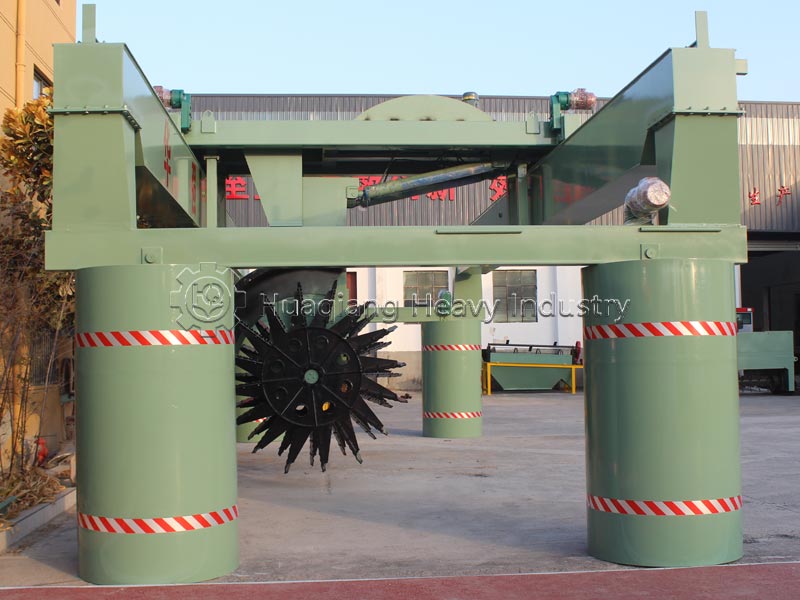
In the raw material fermentation stage, the large wheel compost turning machine plays a crucial role. Through the rotation and turning of the large wheel, it effectively breaks up the raw material piles, allowing the material to fully contact the air. This not only rapidly increases the fermentation temperature and inhibits the growth of harmful bacteria, but also ensures uniform composting of the raw materials, laying a high-quality foundation for subsequent production. Insufficient turning can easily lead to insufficient composting of raw materials, directly affecting the subsequent mixing and granulation effects.

The composted raw materials need to be precisely mixed by a fertilizer mixer machine. At this stage, the composted raw materials, beneficial microbial agents, and auxiliary materials are added to the equipment in proportion. Mixing ensures the even distribution of each component, preventing localized nutrient enrichment or deficiency. Uniform material mixing is an important prerequisite for ensuring the quality of subsequent granulation and a key step in improving the effectiveness of bio-organic fertilizer.

In the granulation stage, the fertilizer granulator is the core equipment, and the flat die pelleting machine, due to its strong adaptability, is a commonly used type in bio-organic fertilizer production. The flat die pelleting machine produces high-strength, uniformly sized granular products through mold extrusion. During operation, the pressure and speed of the flat die pelleting machine need to be precisely adjusted according to the moisture content and particle size of the mixed materials to ensure stable granule formation and reduce material waste.

The synergistic effect of chain crushers and ring die pelleting machines in fertilizer production

In the core stage of the bio-organic fertilizer production line, chain crushers and ring die pelleting machines, as key bio-organic fertilizer equipment, have a highly efficient connection that directly determines the molding rate and quality of the granular product. Unlike the initial crushing and fermentation stages of raw materials, these two pieces of equipment focus on fine processing and molding before granulation, and are important supports for achieving large-scale production.

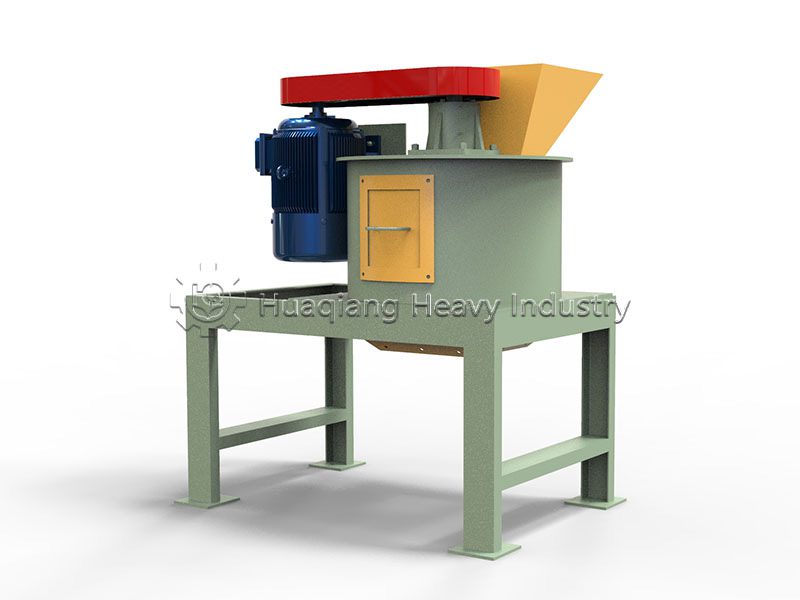
The chain crusher undertakes the task of secondary fine crushing before granulation in the production line. Although the organic fertilizer raw materials have been initially composted after fermentation, some lumps or coarse particles may still remain. If these are directly fed into the granulation stage, it will lead to uneven particle formation and insufficient hardness.

The finely processed raw materials from the chain crusher are then transported to the ring die pelleting machine for molding. As the core granulation equipment in the bio-organic fertilizer production line, the ring die pelleting machine, with its unique ring die and roller structure, processes the raw materials into regular granules through extrusion molding. Its advantages lie in its high molding rate, moderate particle hardness, and adaptability to a variety of composted organic fertilizer raw materials. The resulting granules are not only easy to store and transport but also ensure slow nutrient release. In the entire production line, it forms a seamless connection of “crushing →granulation” with the chain crusher, effectively improving production efficiency.

The synergistic operation of the chain crusher and the ring die pelleting machine demonstrates the advantages of professional equipment matching in bio-organic fertilizer production and provides strong support for standardized and high-quality production in the bio-organic fertilizer production line.

Core control of key equipment in bio-organic fertilizer production

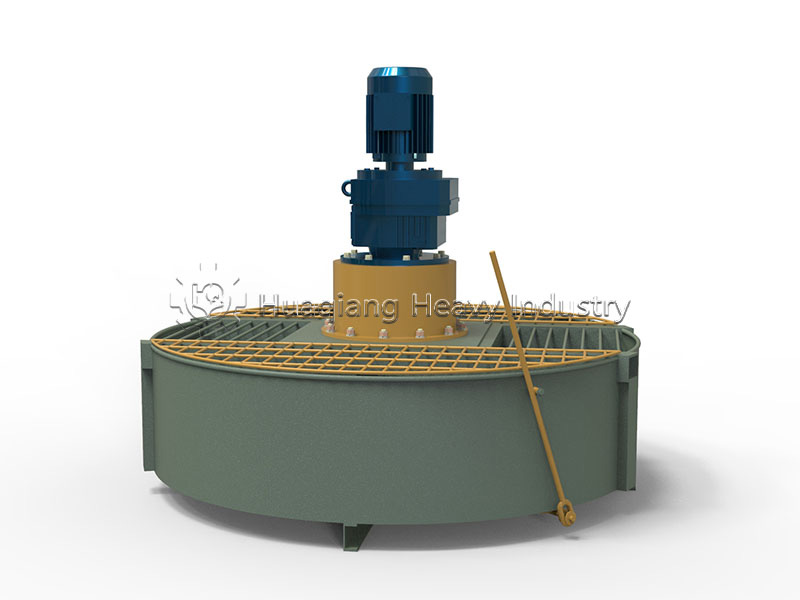
Bio-organic fertilizer production relies on the coordinated operation of a complete set of bio-organic fertilizer equipment, among which mixing and granulation are the core links that determine product quality. As an important piece of equipment in the mixing process, the vertical disc mixer has become the preferred choice for many production lines due to its unique structural advantages.

In bio-organic fertilizer production, the fertilizer mixer plays a crucial role in mixing raw materials. The vertical disc mixer, as a mainstream type, features high mixing uniformity and low energy consumption. During operation, the composted organic fertilizer raw materials, auxiliary materials, and beneficial microbial agents are added in proportion, and the materials are thoroughly mixed through the rotation of the disc. It is necessary to control the feeding speed to avoid material accumulation affecting the mixing effect, and to adjust the mixing speed according to the material humidity to prevent clumping or uneven mixing.

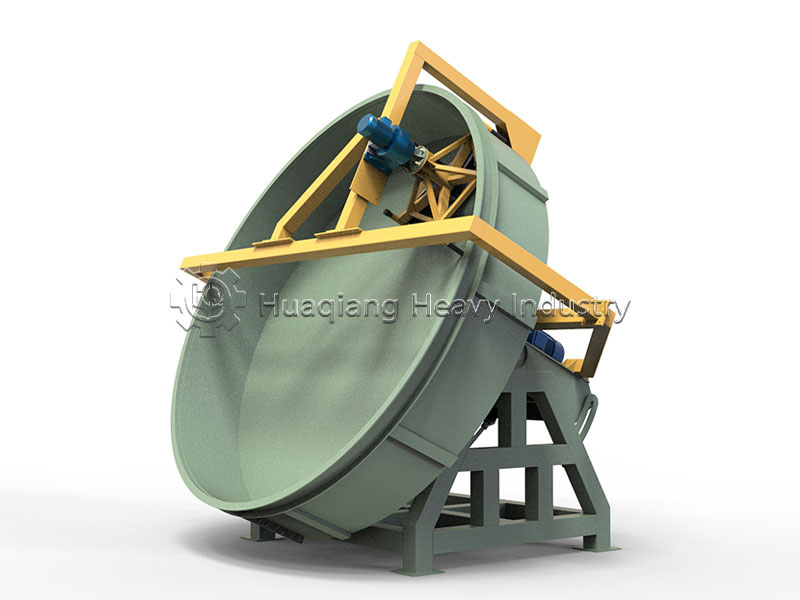
The uniformly mixed materials processed by the vertical disc mixer and other fertilizer mixer machines then need to enter the fertilizer granulator for shaping. The quality of the granulation process is closely related to the mixing effect; uniformly mixed materials ensure consistent nutrient content and sufficient strength of the granules. During production, it is necessary to accurately adjust the speed, pressure, and other parameters of the fertilizer granulator according to the characteristics of the mixed materials, and to use an appropriate moisture content to produce regular, easy-to-store and transport bio-organic fertilizer granules.

In summary, in a bio-organic fertilizer production line, it is necessary to precisely control the operating details of the fertilizer mixer and ensure proper coordination with the fertilizer granulator to consistently produce high-quality bio-organic fertilizer products.

The core contribution of cage crushers and double screws compost turning machines

The efficient operation of a bio-organic fertilizer production line relies on the precise coordination of bio-organic fertilizer equipment at each stage. Among these, cage crushers and double screws compost turning machines play indispensable roles in raw material pretreatment and fermentation, directly impacting the quality and production efficiency of the final product.

The cage crusher, as an important pretreatment equipment in bio-organic fertilizer production, primarily functions to refine raw material particles. Raw materials for bio-organic fertilizer production often include straw, poultry and livestock manure, and fallen leaves. These materials have uneven textures and contain large impurities. If directly introduced into the fermentation process, this can lead to insufficient fermentation and uneven nutrient distribution. The cage crusher can refine large materials into uniform particles, laying the foundation for subsequent fermentation and preventing damage to subsequent equipment caused by impurities.

After processing by the cage crusher, the raw materials enter the fermentation stage, where the double screws compost turning machine becomes a core piece of bio-organic fertilizer equipment. Fermentation is a critical step in bio-organic fertilizer production, requiring proper ventilation and uniform temperature to promote microbial activity and achieve complete composting. The double screws compost turning machine, with its unique double-screw structure, ensures stable overall fermentation temperature, significantly improving composting efficiency and shortening the fermentation cycle.

In a complete bio-organic fertilizer production line, the cage crusher and double screws compost turning machine are closely integrated and work collaboratively, forming the core force that ensures a smooth production process and high-quality products. This highlights the important supporting role of high-quality bio-organic fertilizer equipment in the development of the industry.

Fertilizer granules compaction technology: Boosting the efficient operation of bio-organic fertilizer equipment

In the field of bio-organic fertilizer production, the coordinated operation of bio-organic fertilizer equipment is crucial for ensuring production capacity and quality. The fertilizer granulator, as a core piece of equipment, directly determines the granule formation effect. The fertilizer granules compaction machine, with its mature fertilizer granules compaction technology, has become one of the most favored granulation devices in bio-organic fertilizer production lines.

The fertilizer granules compaction machine is an important type of fertilizer granulator, and its core advantage stems from advanced fertilizer granules compaction technology. This technology uses mechanical extrusion to compress and shape pre-treated organic fertilizer raw materials. It requires minimal addition of binders, preserving the organic matter and nutrients in the raw materials while improving the granule formation rate. The resulting granules have moderate hardness, are not easily broken, and meet the quality requirements of bio-organic fertilizers.

In a complete bio-organic fertilizer production line, the fertilizer compaction machine works seamlessly with other bio-organic fertilizer equipment. After fermentation, crushing, and screening, the raw materials are transported to the fertilizer compaction machine by conveying equipment, where granulation is completed through extrusion technology. Subsequent processing by cooling and screening equipment ultimately produces qualified bio-organic fertilizer products.

Compared to other granulation methods, fertilizer granules compaction machines using fertilizer granules compaction technology are more adaptable and can process a variety of organic fertilizer raw materials, including fermented materials such as poultry and livestock manure and crop straw, achieving efficient granulation. It is not only a high-quality fertilizer granulator but also an important support for achieving large-scale and standardized production in bio-organic fertilizer production lines.

Choosing the right cow dung is crucial! A guide to selecting cow dung suitable for fertilizer granulation

In the selection of raw materials for bio-organic fertilizer production lines, cow dung is one of the core raw materials, and its quality directly determines the granulation effect and product quality of the organic fertilizer. Not all cow dung is suitable for granulation; strict selection from multiple dimensions is necessary to ensure the smooth operation of the granulation process in the bio-organic fertilizer production line and that the product meets the standards.

First, prioritize fresh cow dung from healthy beef or dairy cattle. The manure of healthy cows is free from pathogens and insect eggs, and the organic matter, nitrogen, phosphorus, and potassium nutrients are fully preserved. It is the core source of nutrients for bio-organic fertilizer and lays a solid foundation for subsequent stages of the bio-organic fertilizer production line. Avoid manure from sick cows or cows undergoing medication. This type of cow dung may contain residual pathogens or drug components, which not only affects the safety of the granulated organic fertilizer but may also cause abnormalities in the fermentation process of the bio-organic fertilizer equipment.

Secondly, control the degree of cow dung decomposition. Uncomposted raw cow dung should never be directly granulated. Raw cow dung will continue to ferment and heat up after granulation, easily leading to granule expansion and cracking, and may burn crop roots when applied. It is recommended to use fully composted cow dung, which is dark brown, odorless, and has a loose texture. The organic matter has been fully decomposed, which not only facilitates the formation of uniform granules but also improves the stability of the organic fertilizer’s effectiveness.

In addition, strictly control the impurity content of the cow dung. Cow dung used for granulation needs to be cleaned of impurities such as stones, plastics, metals, and weed roots beforehand to prevent damage to the granulation components of the bio-organic fertilizer equipment, affecting the granule formation rate and uniformity, and slowing down the overall efficiency of the bio-organic fertilizer production line. The moisture content should also be adjusted to 25%-35%. Too high a moisture content can cause sticking and clumping, leading to blockages in the bio-organic fertilizer equipment, while too low a moisture content makes granulation difficult. This can be adjusted by drying or adding auxiliary materials.

Key considerations for material handling during fertilizer mixer machines operation

During the operation of a fertilizer mixer machine, the state and handling of the materials directly determine the mixing effect, equipment lifespan, and ultimately the quality of the final fertilizer product. Especially for organic and compound fertilizer production, controlling material-related considerations is a core prerequisite for ensuring a smooth overall production process of the bio-organic fertilizer equipment.

Material particle size uniformity must be prioritized. Materials fed into the mixer should be crushed and screened beforehand to avoid excessive mixing of coarse and fine particles—large particles tend to settle at the bottom of the equipment and cannot be fully mixed, while excessively fine powder may generate dust due to the mixing airflow and can easily lead to localized clumping. It is recommended to control the material particle size within a uniform range based on mixing requirements.

Material moisture content must be precisely controlled. The appropriate moisture content varies for different fertilizer materials, but generally needs to be controlled between 20% and 30%: excessively high moisture content can cause materials to stick to the mixing blades and machine walls, affecting mixing uniformity and potentially increasing equipment load; excessively low moisture content results in excessive material fluidity, making it difficult to achieve a stable mixing state, and may even cause dust pollution.

Mixing of impurities and incompatible materials is strictly prohibited. Materials must be thoroughly cleaned before feeding to remove hard impurities such as stones, metal fragments, and plastics; at the same time, mixing of materials with conflicting properties should be avoided to prevent chemical reactions during the mixing process, which could affect fertilizer quality or create safety hazards. In addition, feeding should be uniform and steady, avoiding large-scale feeding at once to prevent material accumulation, ensuring an orderly mixing process, and thus guaranteeing the stable operation of the subsequent fertilizer granulators.

Back To Top