Tag: bio-organic fertilizer equipment

Energy consumption optimization for BB fertilizer mixers: Cost reduction from adjustment to operational details

In BB fertilizer production, BB fertilizer mixers account for 20%-30% of total energy consumption. Through equipment adjustment and operational optimization, energy consumption can be reduced by 15%-20% without compromising mixing quality.

For BB fertilizer mixer upgrades, variable-speed motors are preferred over traditional fixed-speed motors. The speed is adjusted according to the mixing stage: in the initial feeding phase (when the raw materials have not yet filled the barrel), a low speed of 15 rpm is used to avoid idling energy waste; in the middle mixing phase (when the raw materials are fully tumbling), the speed is increased to 22-25 rpm for efficient mixing; and in the later stages (when the mixing is nearly uniform), the speed is reduced to 18 rpm to reduce energy consumption from excessive mixing. Furthermore, adjusting the mixer’s blade angle from 45° to 30° (for granular raw materials) reduces blade resistance, reduces motor load by 10%-12%, and reduces energy consumption accordingly.

There are three key aspects to optimizing operational details: First, “full load but not overload”—feeding the equipment at 75% of its rated capacity to avoid wasted idling caused by underfeeding (<60%) or motor overload and energy consumption caused by overfeeding (>90%). Second, “centralized batch production”—concentrating fertilizer production of the same formula within 2-3 hours to reduce energy consumption from frequent equipment starts and stops. Third, “reasonable cleaning cycles”—changing “clean every batch” to “clean every three batches”—reduces the equipment’s idle time during cleaning. Furthermore, an anti-stick coating on the drum wall ensures that residue remains within standards.

In addition, regularly inspect the wear of the BB fertilizer mixer’s blades. If the blade edge is worn by more than 1/4, repair or replace it promptly to avoid extended mixing time due to insufficient blade power.
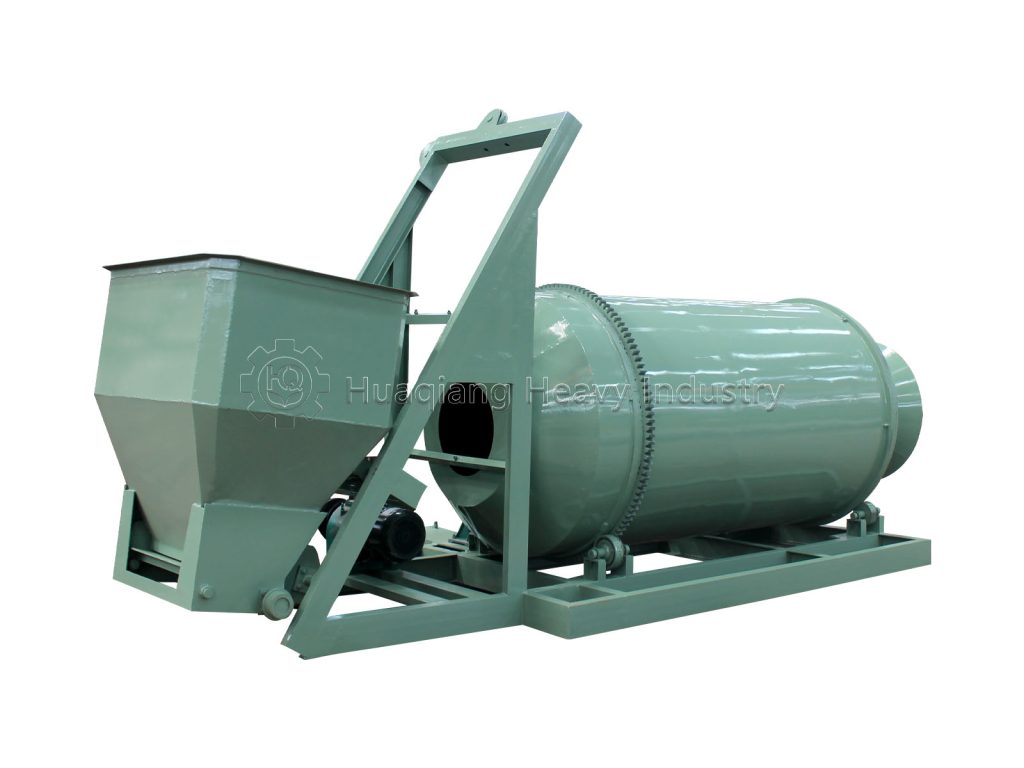
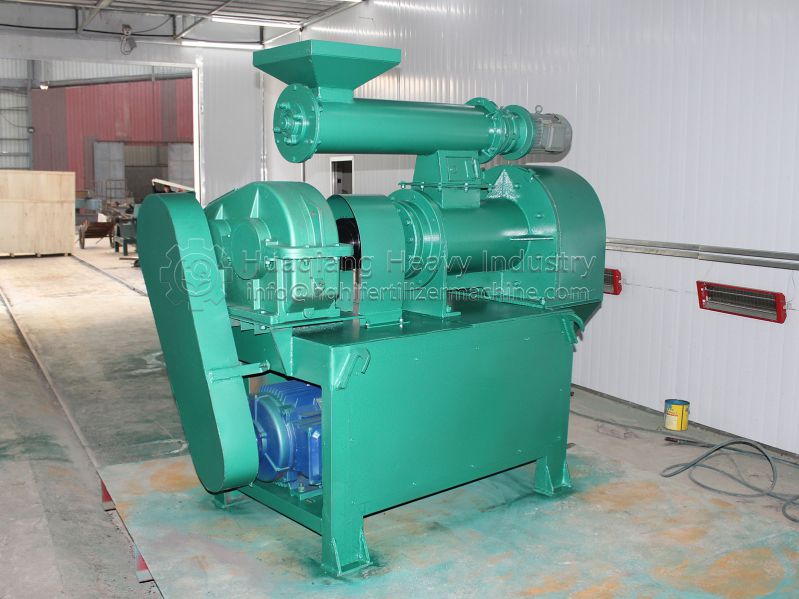
How can we ensure that the effects of BB fertilizer containing functional additives are not lost through a blender?

When adding functional ingredients such as slow-release agents, biological agents, and trace elements to BB fertilizer, the BB fertilizer blender requires special adjustments to prevent the additive effects from being lost or unevenly distributed during the blending process.
Biological agents (such as Bacillus subtilis) are sensitive to high temperatures and easily inactivated. Therefore, two key controls must be implemented during blending: first, the blending temperature. By installing a cooling jacket on the BB fertilizer blender barrel, the chamber temperature can be kept below 35°C to prevent frictional heating from the blades, which could reduce the activity of the agent. Second, the mixing order: pre-mix the agent with 10 times the amount of carrier (such as humus powder) to form a “mother powder.” This should then be added after the blender has been running for 5 minutes. This minimizes direct friction between the agent and other ingredients and ensures a viable bacterial count retention rate exceeding 90%.

If adding a slow-release agent, to avoid damaging the coating during mixing, use a “low-shear” impeller (with blunted blade edges), reduce the speed to 15-18 rpm, and control the mixing time to ≤8 minutes. This prevents the slow-release agent particles from excessively colliding and causing the coating to crack, thereby losing its slow-release effect.
For trace elements, they should first be crushed to a size of 100 mesh or larger, pre-diluted with five times the amount of powdered fertilizer (such as monoammonium phosphate powder), and then added to the BB fertilizer blender using a “multi-point feeding” method to ensure even distribution of the trace elements and avoid localized high concentrations that could cause fertilizer damage to the crop.

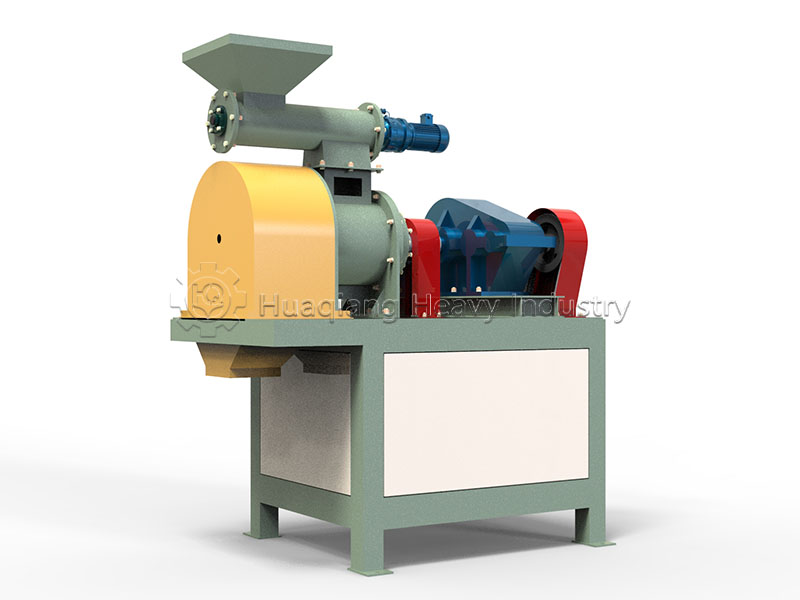
Practical methods for reducing raw material waste in ring die granulators

In fertilizer production, raw material waste in ring die granulators primarily stems from substandard pellets and die blockage. Targeted measures can increase raw material utilization by 5%-8%.

First, substandard pellets are recycled. After screening in the pelletizer, broken and large particles are collected and crushed to the required particle size (consistent with new raw material) using a dedicated fertilizer crusher. These particles are then mixed with new raw material at a ratio of 1:5 for re-pelletization. Care should be taken to control the moisture content during mixing. If the moisture content of the recycled material exceeds 18%, it should be air-dried to 14%-16% before mixing to prevent moisture absorption and impact on the overall pelletizing effect. Furthermore, the recycled material mix ratio should not exceed 20% to prevent it from affecting the strength of the new pellets.

Secondly, reduce ring die blockage losses. Before each shutdown, empty the pelletizing chamber of any remaining raw material. Then, introduce a small amount of talcum powder (5-8 kg per ton of raw material). Run the ring die granulator at no load for 5 minutes to allow the talcum powder to adhere to the inner wall of the ring die, forming a protective film to prevent residual raw material from solidifying and clogging. During daily production, check the ring die holes for blockage every four hours. If a small blockage is detected, clear it with a special needle (0.5 mm smaller in diameter than the die hole) to prevent further blockage and material waste.

In addition, polish the edges of the ring die holes every 100 hours to remove burrs and minimize material loss caused by material being stuck in the holes. A magnetic separator should be installed at the pelletizer feed inlet to remove metallic impurities from the raw material, preventing them from damaging the ring die and causing pelletizing problems, further reducing material waste.

Optimizing the linkage between the ring die granulator and front-end raw material processing

The granulation performance of a ring die granulator isn’t solely determined by the equipment itself. Linkage optimization with the front-end crushing, mixing, and conditioning processes can significantly improve production efficiency and pellet quality.
During the crushing process, the raw material particle size must be matched to the ring die aperture. For an 8mm ring die aperture, the raw material particle size should be controlled below 2mm, with a particle size deviation of no more than 0.5mm, to prevent large particles from clogging the die aperture. A grading screen can be installed at the pulverizer outlet, with the screen aperture set to 1/4 the ring die aperture, to ensure uniform particle size and reduce the frequency of granulator downtime for cleaning. If the raw material contains a high amount of coarse fiber (such as straw powder), the pulverizer should use a hammer-type mechanism to enhance crushing efficiency.


The mixing process must ensure uniformity among the raw materials, binders, and nutrients. Uneven mixing can result in insufficient nutrients or insufficient strength in some pellets. A typical requirement for uniformity is a coefficient of variation of ≤7%. This can be achieved by adjusting the mixer speed (30-40 rpm) and mixing time (5-8 minutes). Sampling points should be set up at the fertilizer mixer outlet for hourly testing.
During the conditioning process, the steam supply should be adjusted according to the production speed of the ring die granulator. For example, if the pelletizer processes 5 tons of raw materials per hour, the steam supply should be maintained at a stable 0.3-0.4 tons/hour, monitored in real time by a flow meter. If the pelletizer speed is increased to 6 tons/hour, the steam supply should be increased to 0.45-0.5 tons/hour to prevent the raw materials from being too dry or too wet.
By coordinating the speed and flow of the front-end and pelletizer, production efficiency can be increased by 10%-15%, reducing downtime caused by process disconnects.

Practical optimization directions for energy saving and consumption reduction in fertilizer coating machines

Currently, fertilizer companies are focusing on controlling production costs. Through proper optimization, coating machines can achieve energy savings and consumption reduction, helping companies lower operating costs.

First, energy saving in the heating system. Some coating machines utilize a waste heat recovery design. A heat exchanger is installed at the heat sealing channel outlet to collect the exhaust hot air and preheat the incoming cold air, reducing heat consumption in the heating tubes. This design reduces heating energy consumption and is particularly suitable for companies with continuous production, with significant energy savings over the long term. Furthermore, variable frequency heating tubes are used, which automatically adjust power based on particle flow rate. For example, when production capacity drops to 50%, heating power is also reduced, avoiding high-temperature operation and wasting energy during idle periods.

Second, motor frequency conversion modification. The equipment’s conveyor belts, film reels, and other motors utilize variable frequency control. During production, the PLC system is linked to a particle flow sensor to automatically adjust motor speed based on particle flow rate. Compared to traditional fixed-speed motors, variable-frequency motors can save 10%-12% of electricity, operate more smoothly, and reduce noise by 5-10 decibels, improving the workshop working environment.

Third, film utilization is improved. Some coating machines support adaptive film width adjustment. When changing films of different widths, manual adjustment of the film guide mechanism is eliminated, and the optimal wrapping width is automatically matched. This reduces material loss during the commissioning process. Long-term use can significantly reduce raw material procurement costs, supporting enterprises in reducing costs and increasing efficiency.

How do fertilizer coating machines solve the problem of pellet clumping?

Fertilizer pellets are prone to clumping during storage and transportation. Through scientific design, coating machines address this issue at its root, focusing on the following key aspects.
First, uniform film coating and protection. The coating machine uses vibrating feeders, combined with guide plates, to evenly distribute pellets. Even pellets of varying sizes are diverted by the guide plates, ensuring that every pellet contacts the film. The symmetrical film guide mechanism wraps the pellets from all sides, creating a complete seal that blocks moisture from reaching the pellets and prevents moisture absorption and clumping. Furthermore, the film tension is precisely controlled, with an error within ±2N. This prevents over-tightening of the pellets, keeping them loose and facilitating even spreading during subsequent fertilization.

Second, precise temperature control is crucial. During the heat-sealing stage, the coating machine uses an intelligent thermostat to maintain a stable temperature of 100-150°C and monitors temperature fluctuations in real time, with fluctuations within ±5°C. This ensures that the film adheres tightly to the pellets, forming a strong protective layer. It also prevents high temperatures from damaging anti-caking components in the fertilizer (such as the coating agents in some slow-release fertilizers), preserving the pellets’ inherent anti-caking properties. The hot air circulation design also ensures a uniform temperature throughout the packaging, preventing uneven shrinkage of the film and damaging the protective layer. Even the slightest movement of the pellets within the package prevents the film from rupturing.

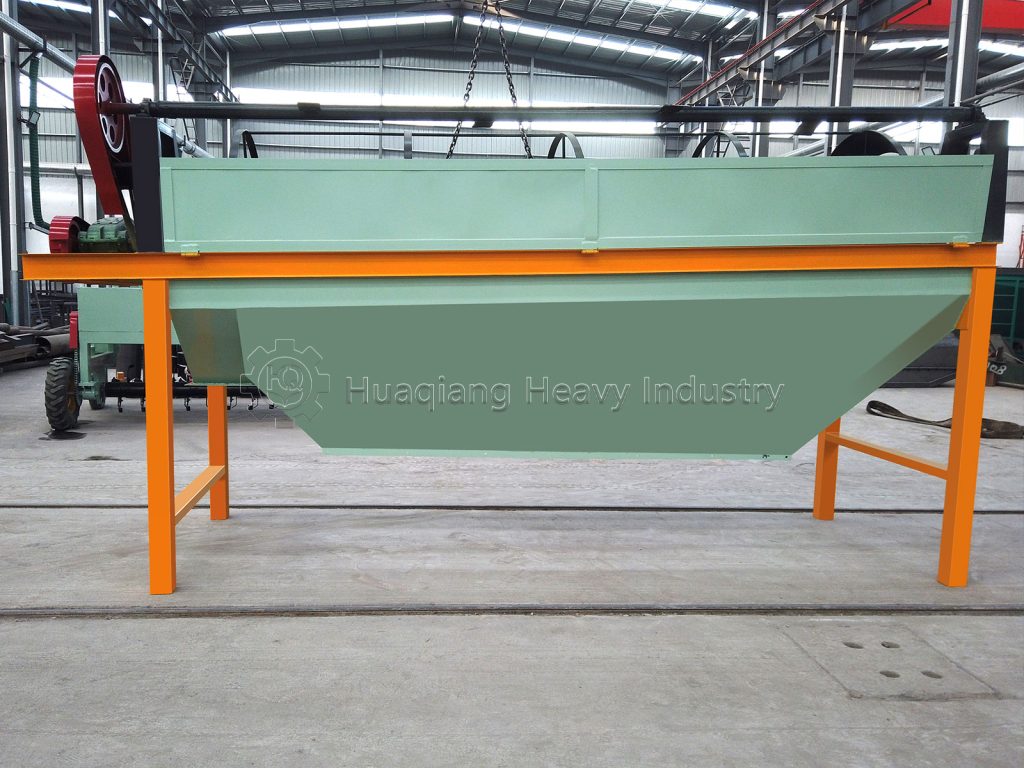
Tips for maintaining drum screener machine and extending their service life

Drum screener machines are a versatile screening equipment used across multiple industries. The quality of their routine maintenance directly determines their operational stability and service life. Mastering effective maintenance techniques not only reduces equipment failures but also lowers maintenance costs.

Regular inspection and replacement of the screen mesh is essential. The screen mesh is the core component of a drum screen for precise screening and is prone to wear, deformation, and clogging over time. A comprehensive inspection is recommended at least weekly. If damage or holes are found in the screen mesh, it should be replaced promptly to prevent unscreened material from entering the finished product. If the mesh mesh is clogged, high-pressure water jets or specialized cleaning tools can be used, depending on the material characteristics, to ensure unobstructed mesh. Careful cleaning should be applied to avoid damaging the screen mesh surface, which could affect screening accuracy.

Equipment cleaning and seal maintenance are also crucial. After production, the drum should be cleaned promptly to prevent material accumulation, which could lead to agglomeration and corrosion of the drum wall. The exterior of the drum screener machine should also be wiped regularly to prevent dust and oil accumulation that could affect heat dissipation. The seal is a crucial component in preventing dust leakage. Its integrity should be inspected quarterly. If any seal is found to be aged, deformed, or damaged, it should be replaced promptly to prevent dust from entering the equipment and increasing component wear, while also ensuring a clean workshop environment.

Finally, operators must strictly follow the operating specifications of the drum screener machine to avoid overloading or improperly adjusting parameters to minimize equipment damage caused by human error.

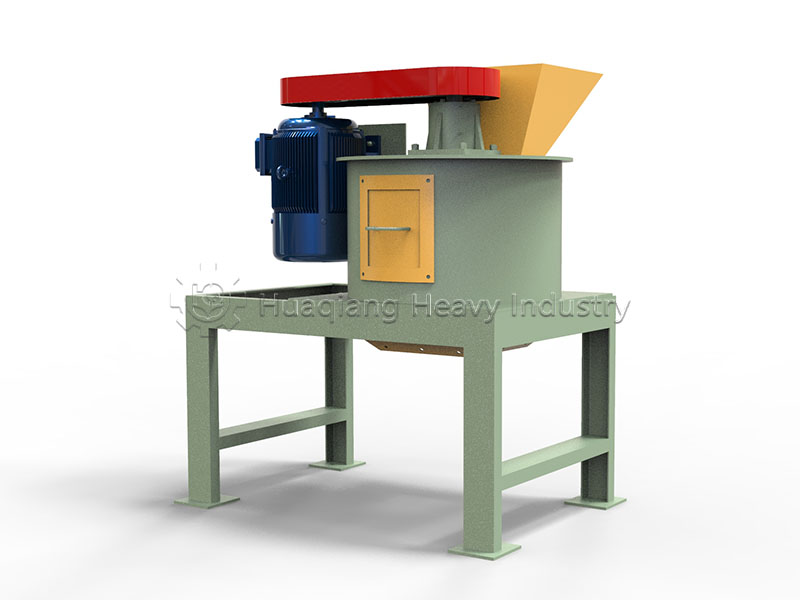
Chain crusher selection: Focus on core needs and match equipment characteristics

When selecting a chain crusher to meet production needs, companies must prioritize their core needs and match equipment characteristics to avoid blindly selecting equipment that could lead to idle equipment or inefficient production. The following key considerations require particular attention.

First, clarify the material characteristics. Crushing materials vary across industries in hardness, moisture, and viscosity. While chain crushers are highly adaptable, their suitability must be determined based on the specific material conditions. For example, when processing high-moisture materials, confirm that the equipment features anti-clogging features to prevent material from sticking to the crushing chamber or screen, impacting production. If the material contains a high concentration of impurities, consider the wear resistance of the equipment components and choose a model made of wear-resistant materials.

Second, determine the crushing requirements. Based on the final product particle size requirements of the production process, select equipment with appropriate screen adjustment capabilities to ensure that the crushed material meets the requirements of subsequent processes. Furthermore, consider the equipment’s processing capacity based on the production scale to avoid production delays caused by insufficient capacity or increased energy consumption caused by excessive capacity.

Finally, pay attention to equipment durability and energy consumption. Choose chain crushers with a sturdy structure and high-quality materials to ensure long-term stability. Also, compare equipment energy consumption and choose energy-efficient equipment. Check the matching of motor power and production capacity. While ensuring production capacity, reduce long-term production energy costs and improve the cost-effectiveness of equipment use.

The value of BB fertilizer mixers in organic fertilizer production lines

BB fertilizer mixers play a vital role in organic fertilizer production lines, providing strong support for high-quality organic fertilizer production. Organic fertilizer raw materials come from a wide range of sources, such as livestock and poultry manure and fermented straw. These materials are complex and contain varying nutrient content, requiring uniform mixing to ensure a balanced nutrient profile in the final fertilizer. BB fertilizer mixers precisely meet this core requirement.

During the production process, the fermented raw materials, processed by the organic compost turner, need to be mixed with auxiliary materials (such as humic acid and trace elements). The BB fertilizer mixer uses a stirring mechanism within a closed mixing drum to thoroughly mix the raw materials, preventing significant nutrient variations in the organic fertilizer due to uneven mixing and ensuring consistent product quality. The enclosed mixing environment also minimizes contact between the organic raw materials and the outside world, reducing the risk of contamination by impurities, aligning with the green and environmentally friendly production philosophy of organic fertilizers.

The BB fertilizer mixer also effectively integrates with other equipment in the organic fertilizer production line. The mixed raw materials are conveyed via a conveyor to the organic fertilizer granulation equipment, where they are then processed through dryers and coolers. Its easy-to-clean design prevents residual organic raw materials from deteriorating, potentially affecting the quality of the next batch of fertilizer. This helps companies build a complete and efficient organic fertilizer production system, meet market demand for green agricultural fertilizers, and enhance product competitiveness.

Back To Top