Author: organic fertilizer production line

A brief discussion on the key role of extrusion in the organic fertilizer industry

In organic fertilizer production lines, there’s a seemingly simple yet crucial process: extrusion granulation. It transforms loose, uneven powdered organic raw materials into uniform, solid granules. This isn’t just a change in form; it’s a crucial step in improving the quality and modernizing the development of organic fertilizer.

Although rich in nutrients, unprocessed powdered organic fertilizer faces numerous challenges in practical application. First, its low density and bulk increase storage and transportation costs. Second, during application, powdered fertilizer is easily dispersed by the wind, resulting in fertilizer loss and environmental pollution. Extrusion technology specifically addresses these issues.

The extrusion process applies tremendous pressure to a fertilizer granulator, forcing the fine fertilizer powder through a specialized die, where it is squeezed into uniform, high-density, and strong granules.
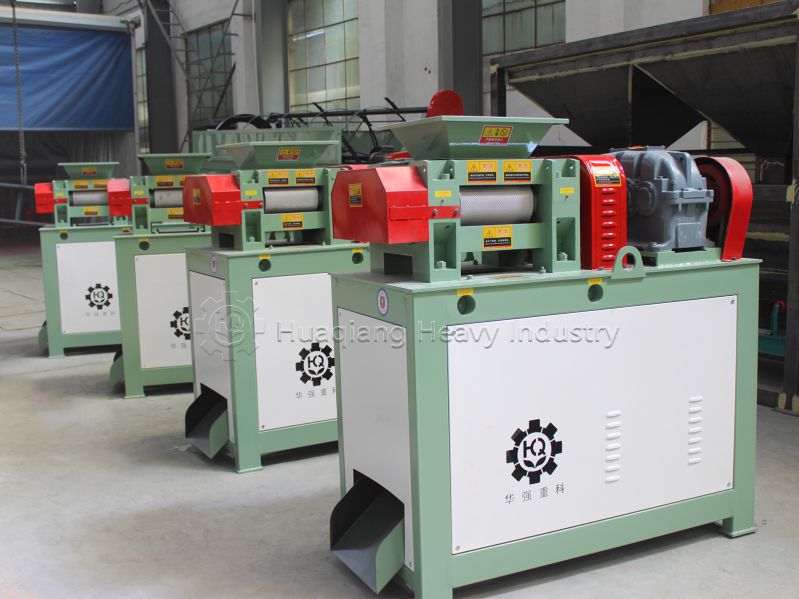
The widespread adoption of extrusion granulation technology marks a significant shift in the organic fertilizer industry from extensive to refined, and from traditional to modern. This enables the standardization and commercialization of organic fertilizer products, shedding their image as “earth-based fertilizer” and making them more readily accepted and trusted by large-scale farms and specialized agricultural practitioners.

In short, these tiny fertilizer pellets embody not only rich organic matter but also the wisdom of modern processing technology. Extrusion molding, as a core component, continues to provide solid technical support for improving quality, increasing efficiency, and promoting green development in the organic fertilizer industry.
Small pellets, big impact: The evolution of organic fertilizer through granulation

In organic fertilizer production, granulation is more than just a cosmetic enhancement. Its primary purpose lies in practicality. Powdered organic fertilizers have a low density and are bulky, taking up a lot of space during storage and transportation. They are also prone to generating dust, leading to nutrient loss and environmental pollution. Granulation compacts the material, significantly reducing its volume, making long-distance transportation and economical storage possible.

More importantly, granulation profoundly impacts the ease and efficiency of fertilization. Uniform granules facilitate mechanized spreading, adapting to the operational needs of modern large-scale farms. Furthermore, their compact structure regulates the release rate of nutrients into the soil, preventing rapid decomposition and providing a more stable and long-lasting nutritional supply for crops.

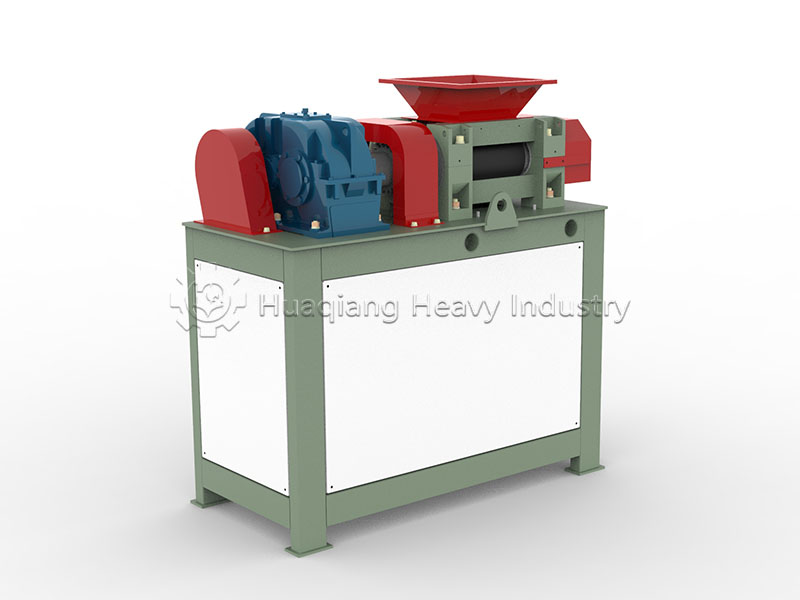
So, how are various agricultural and forestry wastes transformed into uniform granules? Currently, mainstream granulation processes, such as disc granulators and double roller press granulators, each have their own advantages.

The advancement of granulation technology, from dusty powder fertilizer to uniform, uniform granules, is a significant step toward the modernization and standardization of traditional organic fertilizers. It has transformed organic fertilizer from a traditional “homegrown” method into a standardized commodity that can be integrated into modern agricultural production systems. These tiny granules embody the industry’s unwavering pursuit of efficiency, environmental protection, and practicality.

The “Competition” between large wheel compost turners and traditional compost turning equipment

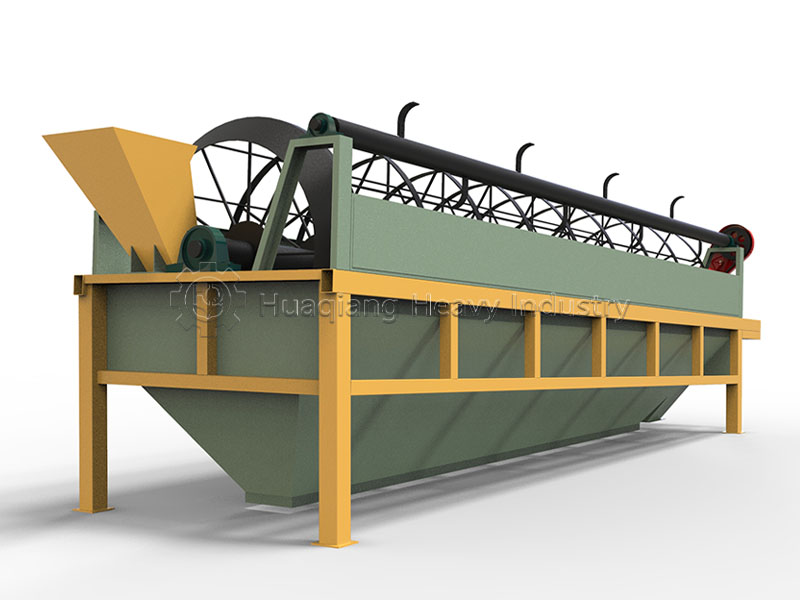
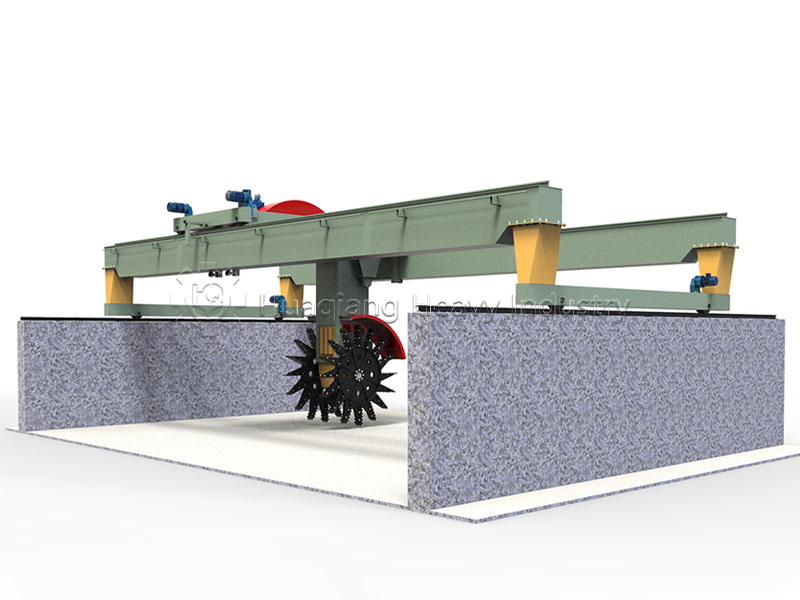
In the field of organic waste treatment, compost turning equipment is a critical tool. The emergence of large wheel compost turning machines has disrupted the traditional compost turning system, creating a fierce competition with it.

Traditional trough compost turning machines typically require the construction of fixed fermentation tanks, which not only limits the equipment’s flexibility but also takes up a significant amount of site space. For example, a small organic waste treatment project with a daily processing capacity of 10 tons would require the construction of at least two fermentation tanks, each 10 meters long and 3 meters wide. Including the spacing between the tanks and the operating space, the total area required is approximately 100 square meters.

Large wheel compost turning machines, on the other hand, have relatively low site requirements. Without the need for fixed fermentation tanks, they can operate in more open areas. To process the same 10 tons of organic waste, a large wheel compost turning machine may only require approximately 60 square meters of site space, significantly saving space.

Traditional compost turning equipment has a relatively limited turning range, typically 5-10 meters wide and 1-1.5 meters deep. Large-wheel compost turning machines, on the other hand, can reach widths of up to 30 meters and depths of 1.5-3 meters, enabling them to cover a wider area and greater depths.

Conventional equipment can have blind spots, resulting in incomplete fermentation of some materials. Large wheel compost turning machines, through symmetrical turning and a speed-adjustable, shifting trolley, achieve seamless turning, ensuring more even mixing and more complete fermentation.

Disc granulator: An efficient “Pellet Former” in fertilizer production

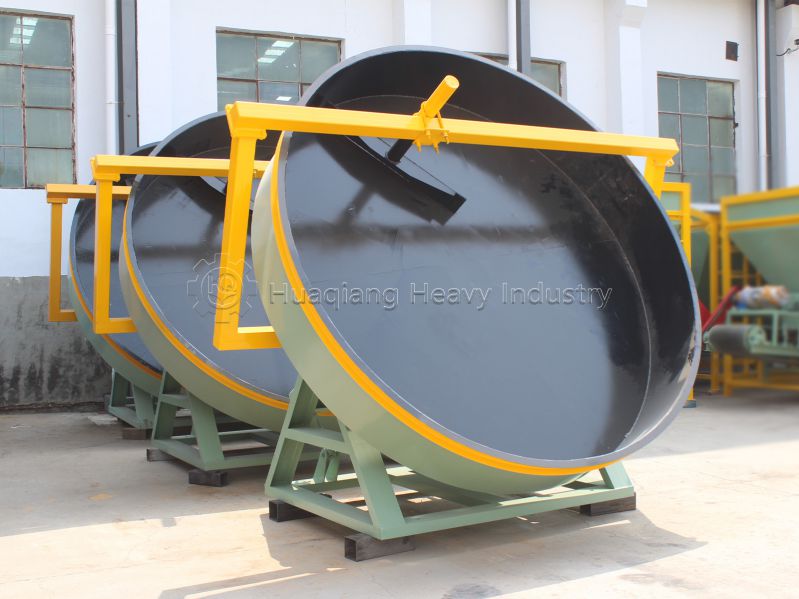
In fertilizer granulation production, disc granulators, with their simple structure and easy operation, have become a common tool for small and medium-sized fertilizer companies. They are particularly widely used in granulating compound and organic fertilizer raw materials.

In terms of its core structure, a disc granulator primarily consists of an inclined disc, a transmission system, a distributor, a spray system, and a frame. The disc’s tilt angle and rotational speed are key parameters. Typically, the tilt angle is controlled between 15° and 30°, and the rotational speed is maintained between 15 and 30 rpm. By adjusting these two parameters, fertilizer raw materials of varying moisture and particle size can be accommodated. The transmission system often utilizes a gear reduction design to ensure smooth disc operation and prevent uneven particle size due to speed fluctuations.

During operation, the mixed fertilizer raw materials are evenly delivered by the distributor into the rotating disc. As the disc rotates, the raw materials roll along the inner wall of the disc under the combined effects of centrifugal force, gravity, and friction. At this point, the spray device precisely applies the binder, gradually agglomerating the raw materials into small particles. As the particles continue to roll, they absorb the raw materials and grow larger. Once they reach the desired particle size, they overflow from the edge of the disc and enter the subsequent stages.

This disc granulator offers advantages in highly uniform granulation, low energy consumption, and low maintenance costs; only regular inspections of the disc wear and lubrication of the transmission components are required.

Horizontal Fertilizer Mixer: A Comprehensive Guide

Introduction

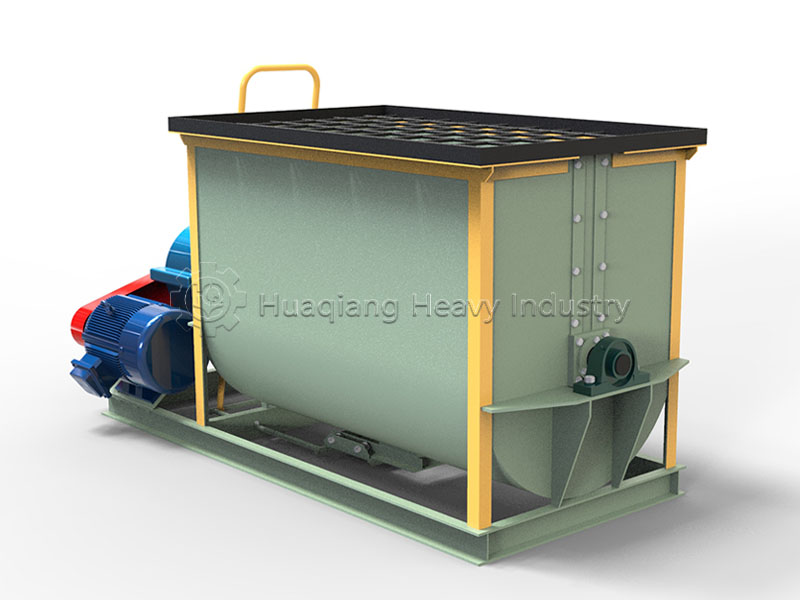
In the global fertilizer production industry, achieving a homogeneous mixture is crucial for product quality and efficiency. The Horizontal Fertilizer Mixer stands out as a foundational piece of equipment in this process, serving as a critical first step in both a comprehensive NPK fertilizer production line and a specialized organic fertilizer production line. Its robust design and efficient operation are indispensable for ensuring that raw materials are perfectly blended before subsequent processing. This thoroughly mixed material is then ready for granulation, where machinery like a versatile fertilizer granulator takes over. Depending on the production needs, this could be a disc granulator operating within a disc granulation production line for creating spherical pellets, or a double roller press granulator for a dry compaction method. In an NPK fertilizer line specifically, this mixer works in concert with NPK blending machines to create uniform nutrient profiles. The machine’s ability to consistently prepare a wide range of materials ensures that the entire granulation process, regardless of the technology used, produces blends that meet strict quality standards, thereby supporting global food production and sustainable agriculture practices.

Working Principle

The core operation of a horizontal mixer is elegantly simple yet highly effective. It relies on the rotational movement of a mixing device, typically a shaft with blades, inside a horizontally oriented drum.

  1. Feed:The process begins with the introduction of raw materials—which can include various powders, granules, and additives—through the feed inlet located on top of the mixing drum.
  2. Mixing:An electric motor drives the central mixing shaft, causing the strategically angled blades to rotate. These blades perform a complex, three-dimensional movement, pushing materials from the center towards the ends of the drum and back. This action creates a turbulent yet controlled environment where particles interact through multiple mechanisms:
    • Shearing:Breaking up clumps and ensuring fine particles are incorporated.
    • Diffusion:Allowing particles to spread evenly throughout the mixture.
    • Convection:Creating bulk movement for large-scale homogeneity.
  3. Discharge:Once a uniform blend is achieved, which typically takes just a few minutes, the mixed product is discharged through an outlet at the bottom. Many models feature slide gates, butterfly valves, or even screw conveyors for controlled and complete discharge, minimizing residue and cross-contamination between batches.

Key Equipment Features

The horizontal design confers several distinct advantages that make it a preferred choice across industries.

  • Superior Mixing Uniformity:The combination of the blade geometry and the horizontal drum orientation ensures that even minor components are distributed evenly throughout the entire batch. This is critical in fertilizer production, where nutrient consistency directly impacts crop yield.
  • Remarkable Versatility:This mixer is not limited to fertilizers. It can efficiently handle moist powders, sticky materials, and fragile granules with minimal degradation. Its applicability extends to animal feed, chemicals, pharmaceuticals, and food processing.
  • High Capacity for Large-Scale Production:Unlike vertical mixers, the horizontal configuration allows for a much larger volume capacity within a comparable footprint. This makes it ideal for continuous or large-batch production lines, significantly boosting overall plant throughput.
  • Ease of Cleaning and Maintenance:The internal components are often easily accessible. Many blades are designed to be removable, and the smooth, uncluttered interior of the drum allows for quick wash-downs, which is essential when switching between different product formulations.
  • Excellent Sealing Performance:Advanced sealing systems, such as lip seals or mechanical seals, are employed at the shaft openings. This prevents dust emission, protects the bearings from abrasive particles, and ensures a clean, safe working environment compliant with health and safety regulations.

Conclusion

The Horizontal Fertilizer Mixer is a testament to efficient and reliable industrial design. Its straightforward working principle, coupled with features like high uniformity, large capacity, and easy maintenance, makes it a cornerstone of modern material processing. For any operation requiring consistent, high-volume blending of dry or moist solids, investing in a well-designed horizontal mixer is a strategic step towards optimizing production quality, efficiency, and profitability on a global scale.

Keywords: Fertilizer Mixer, Horizontal Mixer, Mixing Equipment, Industrial Mixer, Fertilizer Production

Drum Granulation Technology

Working Principle and Process

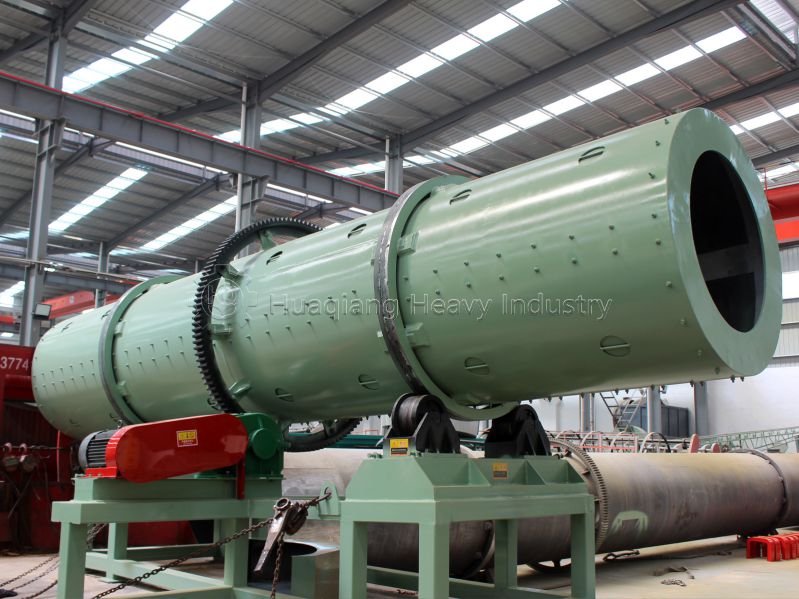
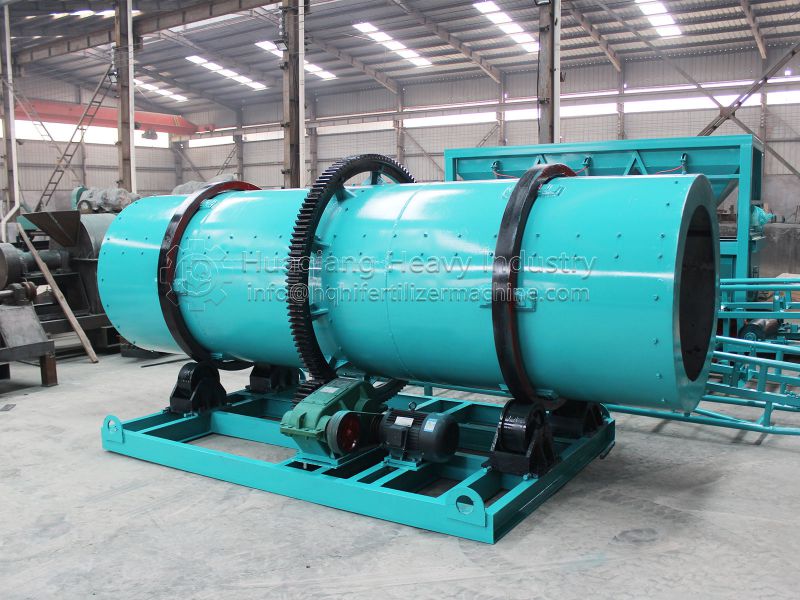
In the NPK fertilizer production process, the rotary drum granulator achieves efficient granulation through unique mechanical motion. Unlike traditional fertilizer compaction processes, drum granulation employs the principle of agglomeration: powdered raw materials and binding liquid are lifted and tumbled within the rotating drum, gradually forming uniform granules through coalescence.

Compared to the high-pressure forming of fertilizer compaction machines, the drum granulation process is gentler, preserving the chemical characteristics of raw materials, making it particularly suitable for processing heat-sensitive materials.

Key Components and Functions

The rotary drum granulator in modern fertilizer production machines includes several precision components:

· Drum system: Rotating shell with rubber lining to prevent material buildup

· Transmission device: Smooth drive system composed of big gear and pinion

· Spray system: Precise control of binder application

· Support wheel assembly: Bears drum weight and ensures smooth rotation

Application in NPK Production Lines

As the core equipment in NPK production lines, the drum granulator plays a crucial role in NPK fertilizer production technology. During the NPK manufacturing process, the equipment can handle various ratios of nitrogen, phosphorus, and potassium raw materials, producing compound fertilizers with uniform nutrient distribution through precise drum granulation control.

Compared to traditional fertilizer granules compaction methods, granules produced by rotary drum granulators have better solubility and nutrient release characteristics, better meeting the needs of modern agriculture.

Technical Advantages and Innovation

In the NPK fertilizer production processdrum granulation technology demonstrates multiple advantages: ability to process various raw material ratios, adaptability to different production scales; precise control of particle size by adjusting rotation speed and tilt angle; lower energy consumption and easier maintenance compared to fertilizer compaction machines.

Industry Applications and Development

Beyond its central position in NPK production lines, the rotary drum granulator is widely used in organic fertilizer and compound fertilizer production. With the continuous advancement of NPK fertilizer production technology, this fertilizer production machine is developing towards intelligent and efficient directions, providing better fertilizer solutions for global agriculture.

New type organic fertilizer granulator: Core equipment for efficient organic fertilizer conversion

With the development of organic agriculture, the diversification and high moisture content of organic fertilizer raw materials (such as straw, livestock and poultry manure, and mushroom residue) have driven technological upgrades in new type organic fertilizer granulators. Their optimized design, tailored to the characteristics of these raw materials, has significantly improved production efficiency and the quality of the finished product.

The new type organic fertilizer granulator features a new raw material conditioning system and an anti-sticking device. The conditioning system precisely controls the addition of steam or warm water to adjust the high-moisture organic fertilizer raw materials to a suitable moisture content for granulation (40%-50%), preventing clumping and loose granules. The anti-sticking device sprays a special wear-resistant coating on the inner wall of the granulation chamber, reducing the stickiness of the organic fertilizer raw materials and reducing cleaning frequency.

In terms of workflow, pre-treated organic fertilizer raw materials first enter the conditioning system for humidity and temperature adjustment before being transported to the granulation chamber. The spiral or extrusion mechanism within the granulation chamber mechanically compresses the raw materials into granules. The granules are then trimmed to a uniform size by a cutting device before entering a cooling system for final shaping.

The core value of the new type organic fertilizer granulator lies in its ability to efficiently process highly viscous and high-moisture organic fertilizer raw materials. The resulting granules are high in strength and water-solubility, while also reducing raw material waste. This equipment provides support for large-scale, high-quality production in the organic fertilizer industry.
Rotary drum granulator: The core “Shaping” equipment in fertilizer production

In fertilizer processing, the rotary drum granulator is a key piece of equipment for converting powder into granules. Its stable performance makes it a common choice for most fertilizer production scenarios.

Structurally, the core of a rotary drum granulator consists of an inclined drum, a drive system, a spray device, and a heating and insulation layer. The drum’s tilt angle can be adjusted based on the characteristics of the raw material, typically controlled at 3°-5°. This ensures adequate tumbling of the raw material while preventing the granules from clumping due to prolonged dwell time. The drive system drives the drum at a constant speed of 10-20 rpm via gears or belts, ensuring a stable and controllable granulation process.

During operation, mixed fertilizer raw materials enter the drum through the feed inlet. As the drum rotates, the raw materials continuously tumble and collide within the drum. Simultaneously, a spray device applies an appropriate amount of binder to the raw materials, gradually agglomerating them into small granules. The heating and insulation layer maintains the temperature inside the drum within an optimal range, helping the granules quickly solidify and form. Finally, the formed fertilizer granules are discharged from the discharge port and enter the subsequent screening and cooling stages.

This rotary drum granulator’s advantage lies in its wide adaptability. Whether it’s nitrogen-phosphorus-potassium compound fertilizer, organic fertilizer, or biological fertilizer, efficient granulation can be achieved by adjusting parameters. The highly uniform granulation and moderate granule strength facilitate subsequent storage and transportation, providing equipment support for the large-scale advancement of fertilizer production.

How to choose a suitable drum screener machine for organic fertilizer production?

In the organic fertilizer production process, the quality of material screening directly affects the particle uniformity and application effectiveness of the finished fertilizer. Therefore, selecting an appropriate drum screener machine is crucial. Considering the material characteristics and process requirements of organic fertilizer production, the following key aspects should be considered when selecting a suitable drum screening machine.

First, focus on the equipment’s processing capacity and screening efficiency. Organic fertilizer production is often a continuous process, so the equipment must be able to match the overall production line capacity to avoid material accumulation due to slow screening speeds. Furthermore, screening efficiency must meet industry standards to ensure rapid separation of materials of varying particle sizes and minimize unscreened material residue. When selecting a drum screener machine, pay particular attention to its ability to screen wet and easily agglomerated materials. The equipment must be able to effectively handle these materials and avoid clogging of the screen openings.

Second, consider the equipment’s wear and corrosion resistance. Organic fertilizer materials may contain corrosive components or hard impurities. A high-quality drum screener machine should use wear-resistant and corrosion-resistant materials for its core components, especially the screen and drum lining. This reduces the need for routine maintenance, extends the equipment’s lifespan, and minimizes the risk of production interruptions.

Finally, the equipment’s adjustable flexibility and ease of operation must also be considered. Different batches of organic fertilizer may require different screening accuracies, and the equipment should be able to flexibly adjust parameters such as mesh size and vibration frequency to accommodate diverse production needs.

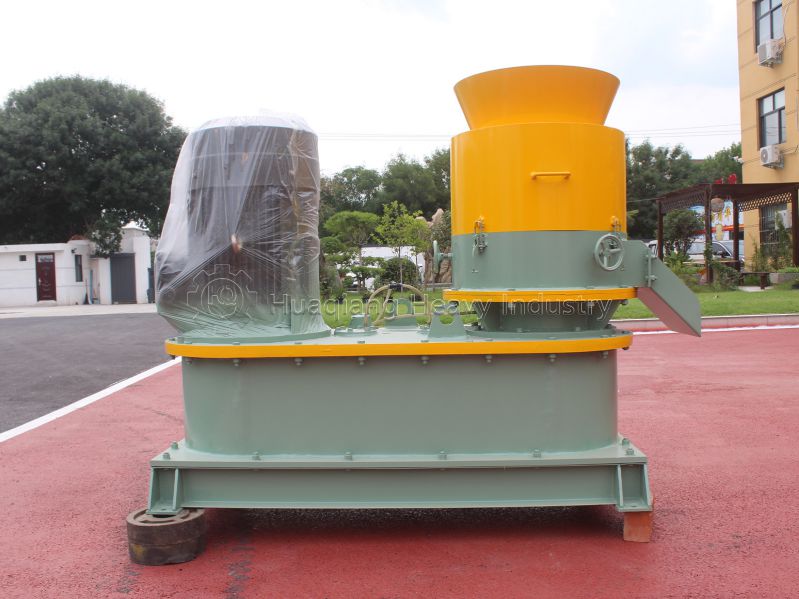
Flat die granulator: An eco-friendly tool for fertilizer pellet formation

In the production of organic and compound fertilizers, pellet formation is a key step in determining fertilizer quality. Flat die granulators, with their adaptability and low energy consumption, have become a mainstream piece of equipment in the industry.

This flat die granulator operates with a clear and efficient process: powdered raw materials fed from a hopper enter the granulation chamber, where they are squeezed into the die holes by the relative motion of a roller and a flat die. The exit cutter then cuts them into uniform cylindrical pellets, eliminating the need for complex pretreatment.

Its core advantages lie in three key areas: a granulation rate exceeding 90%, uniform pellet strength, and the preservation of nutrients such as nitrogen, phosphorus, and potassium. It is compatible with a wide range of organic materials, including livestock and poultry manure, straw, and humic acid, and can even successfully form crude fiber materials with low cohesiveness. Furthermore, it eliminates the need for additional drying, enabling direct pelletization with a moisture content of 20%-40%, significantly reducing energy costs.

Amid the trend toward green agriculture, flat die granulator environmental value is particularly prominent. Converting agricultural waste into structured granular fertilizer not only solves the pollution problem of straw and feces, but also improves fertilizer application efficiency. By using molds with different apertures, granule specifications can be flexibly adjusted to meet diverse fertilization needs.

Back To Top