Tag: windrow compost turning machine

Small pellets, big impact: The evolution of organic fertilizer through granulation

In organic fertilizer production, granulation is more than just a cosmetic enhancement. Its primary purpose lies in practicality. Powdered organic fertilizers have a low density and are bulky, taking up a lot of space during storage and transportation. They are also prone to generating dust, leading to nutrient loss and environmental pollution. Granulation compacts the material, significantly reducing its volume, making long-distance transportation and economical storage possible.

More importantly, granulation profoundly impacts the ease and efficiency of fertilization. Uniform granules facilitate mechanized spreading, adapting to the operational needs of modern large-scale farms. Furthermore, their compact structure regulates the release rate of nutrients into the soil, preventing rapid decomposition and providing a more stable and long-lasting nutritional supply for crops.

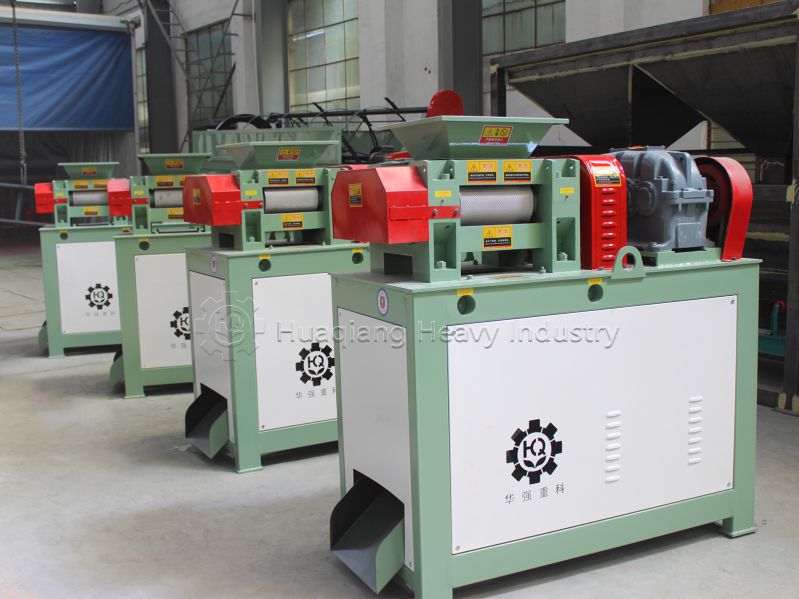
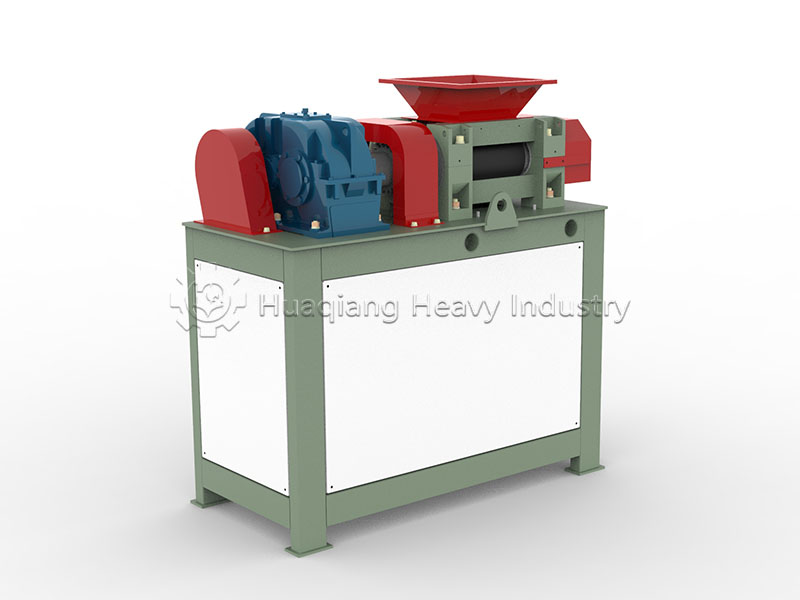
So, how are various agricultural and forestry wastes transformed into uniform granules? Currently, mainstream granulation processes, such as disc granulators and double roller press granulators, each have their own advantages.

The advancement of granulation technology, from dusty powder fertilizer to uniform, uniform granules, is a significant step toward the modernization and standardization of traditional organic fertilizers. It has transformed organic fertilizer from a traditional “homegrown” method into a standardized commodity that can be integrated into modern agricultural production systems. These tiny granules embody the industry’s unwavering pursuit of efficiency, environmental protection, and practicality.

New type organic fertilizer granulator: Core equipment for efficient organic fertilizer conversion

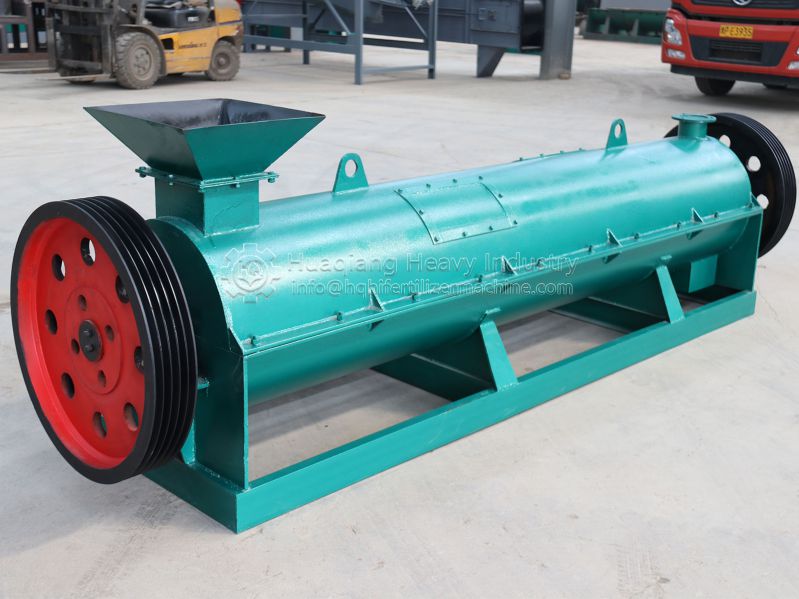
With the development of organic agriculture, the diversification and high moisture content of organic fertilizer raw materials (such as straw, livestock and poultry manure, and mushroom residue) have driven technological upgrades in new type organic fertilizer granulators. Their optimized design, tailored to the characteristics of these raw materials, has significantly improved production efficiency and the quality of the finished product.

The new type organic fertilizer granulator features a new raw material conditioning system and an anti-sticking device. The conditioning system precisely controls the addition of steam or warm water to adjust the high-moisture organic fertilizer raw materials to a suitable moisture content for granulation (40%-50%), preventing clumping and loose granules. The anti-sticking device sprays a special wear-resistant coating on the inner wall of the granulation chamber, reducing the stickiness of the organic fertilizer raw materials and reducing cleaning frequency.

In terms of workflow, pre-treated organic fertilizer raw materials first enter the conditioning system for humidity and temperature adjustment before being transported to the granulation chamber. The spiral or extrusion mechanism within the granulation chamber mechanically compresses the raw materials into granules. The granules are then trimmed to a uniform size by a cutting device before entering a cooling system for final shaping.

The core value of the new type organic fertilizer granulator lies in its ability to efficiently process highly viscous and high-moisture organic fertilizer raw materials. The resulting granules are high in strength and water-solubility, while also reducing raw material waste. This equipment provides support for large-scale, high-quality production in the organic fertilizer industry.

Rotary drum granulator: The core “Shaping” equipment in fertilizer production

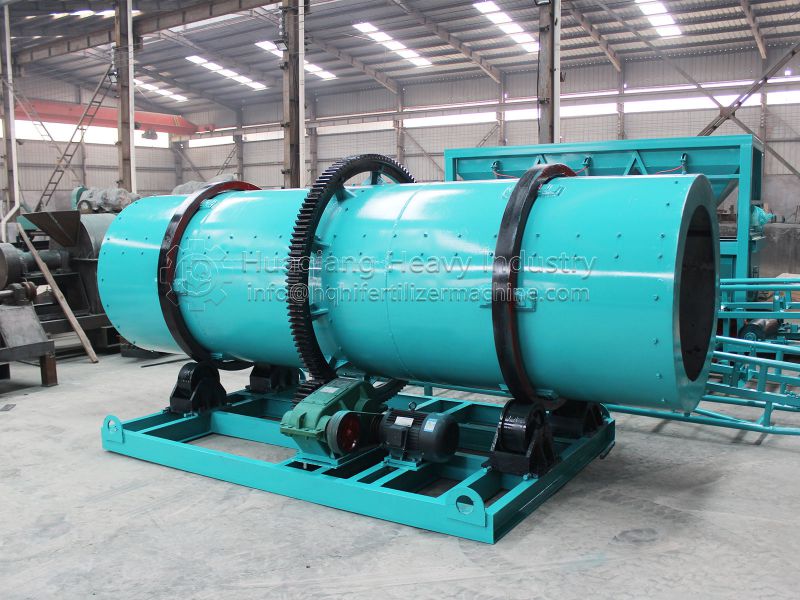
In fertilizer processing, the rotary drum granulator is a key piece of equipment for converting powder into granules. Its stable performance makes it a common choice for most fertilizer production scenarios.

Structurally, the core of a rotary drum granulator consists of an inclined drum, a drive system, a spray device, and a heating and insulation layer. The drum’s tilt angle can be adjusted based on the characteristics of the raw material, typically controlled at 3°-5°. This ensures adequate tumbling of the raw material while preventing the granules from clumping due to prolonged dwell time. The drive system drives the drum at a constant speed of 10-20 rpm via gears or belts, ensuring a stable and controllable granulation process.

During operation, mixed fertilizer raw materials enter the drum through the feed inlet. As the drum rotates, the raw materials continuously tumble and collide within the drum. Simultaneously, a spray device applies an appropriate amount of binder to the raw materials, gradually agglomerating them into small granules. The heating and insulation layer maintains the temperature inside the drum within an optimal range, helping the granules quickly solidify and form. Finally, the formed fertilizer granules are discharged from the discharge port and enter the subsequent screening and cooling stages.

This rotary drum granulator’s advantage lies in its wide adaptability. Whether it’s nitrogen-phosphorus-potassium compound fertilizer, organic fertilizer, or biological fertilizer, efficient granulation can be achieved by adjusting parameters. The highly uniform granulation and moderate granule strength facilitate subsequent storage and transportation, providing equipment support for the large-scale advancement of fertilizer production.

Windrow compost turning machines: Breaking site constraints and adapting to flexible fermentation

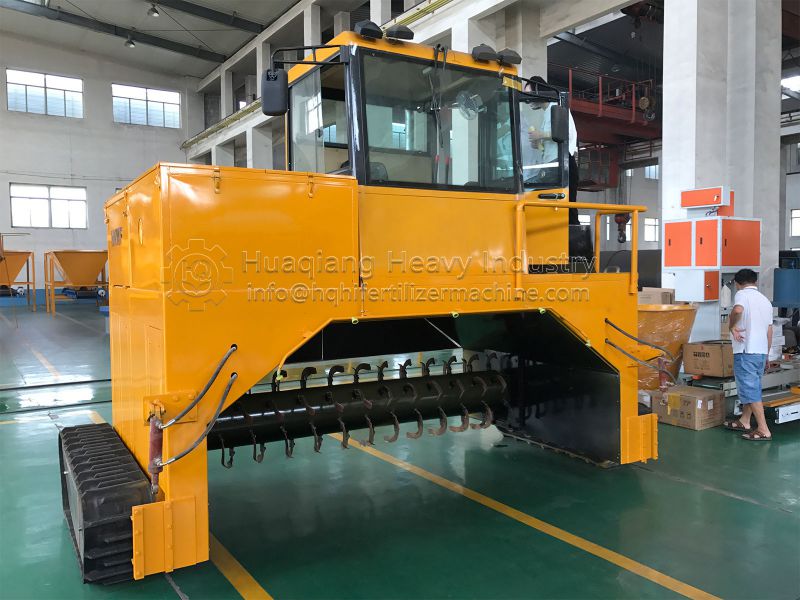
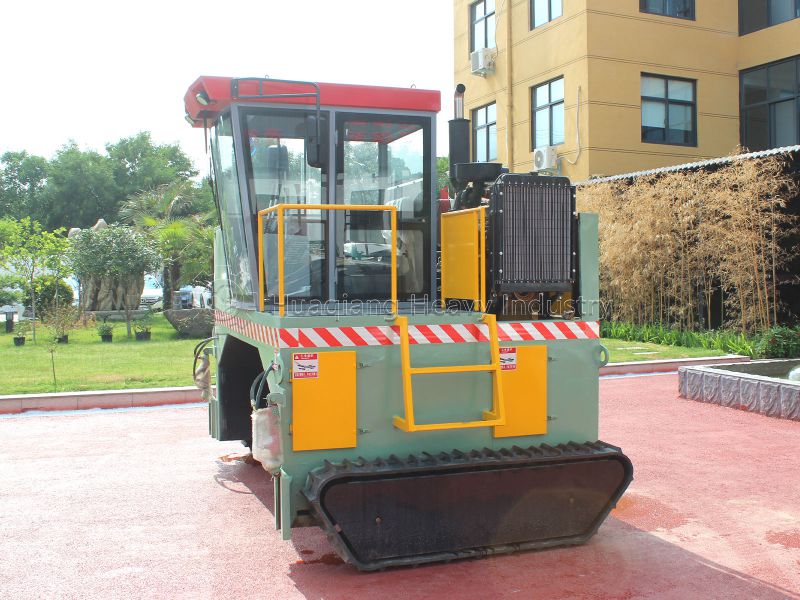
The core of aerobic fermentation of organic fertilizers lies in uniform oxygen supply and temperature-controlled composting. The site adaptability of compost turning equipment directly determines fermentation efficiency and production flexibility. Windrow compost turning machines, with their trackless mobility and all-terrain adaptability, are a perfect fit for the diverse fermentation scenarios in the fertilizer industry.

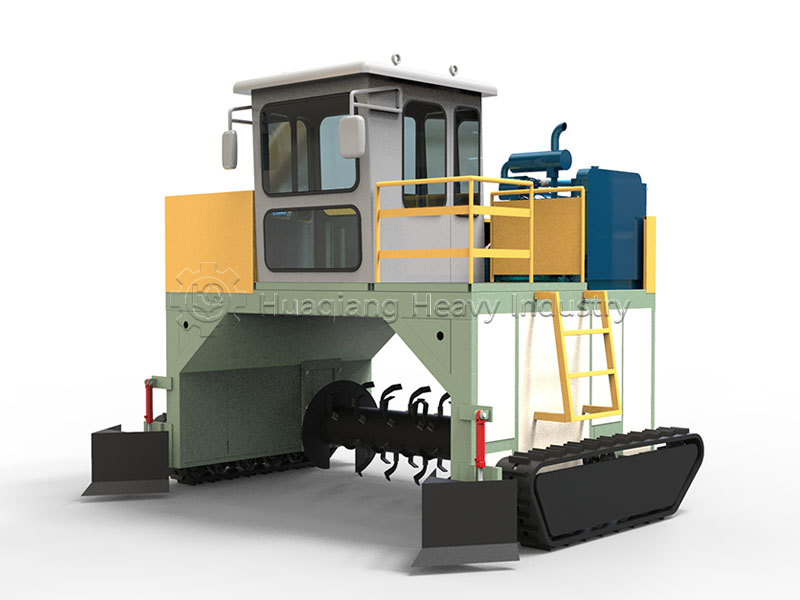
From a structural perspective, the core advantage of windrow compost turning machines lies in the synergy between their crawler chassis and flexible turning mechanism. Their wide rubber tracks provide a large contact area and low ground pressure, preventing the vehicle from getting stuck even in muddy composting areas or gravel surfaces after rain, eliminating the need for pre-leveling. The chassis’ steering system supports 360° steering, making it easy to navigate obstacles such as raw material piles and equipment around the fermentation area.

In terms of the turning mechanism, most windrow compost turning machines are equipped with double-auger or blade-type turning components, capable of turning compost up to 1.2-2 meters deep and covering compost piles up to 3-5 meters wide. During operation, the equipment slowly moves along the fermentation pile. The turning components throw the bottom material upward and disperse it to the sides, creating a “rolling up and down, mixing side to side” effect. This not only provides sufficient oxygen for aerobic bacteria but also quickly dissipates the heat generated by fermentation.

For fertilizer companies, the value of a windrow compost turning machine lies not only in its flexibility but also in its ability to accommodate multiple fermentation batches. For example, the same site can simultaneously process both a “fresh feed pile” and a “mature compost pile,” allowing the equipment to flexibly switch between different piles, resulting in fermentation efficiency improvements of over 30% compared to track-type compost turners.

New type organic fertilizer granulator: Empowering green production in the fertilizer industry

Amid the rise of ecological agriculture and the continued surge in demand for organic fertilizer, new type organic fertilizer granulators, leveraging technological innovations from traditional equipment, have become key equipment for the fertilizer industry, addressing challenges in organic fertilizer granulation and promoting green production.

The most prominent advantage of the new type organic fertilizer granulator is its adaptability to organic fertilizer raw materials. Organic fertilizer raw materials, primarily derived from livestock and poultry manure, straw, and food waste, often exhibit large moisture fluctuations, high fiber content, and prone to clumping. By optimizing the conditioning system and granulation structure, the new equipment can flexibly adjust the raw material moisture and temperature. This allows for uniform granulation even with high-moisture, high-fiber raw materials, significantly improving granulation efficiency and effectively reducing raw material waste.

The new type organic fertilizer granulator is also known for its “green and efficient” design. By upgrading its transmission system and adding a dust collection device, the new equipment achieves low energy consumption and low pollution while improving production efficiency.

Furthermore, the new type organic fertilizer granulator can help enhance the competitiveness of organic fertilizer products. The organic fertilizer particles it produces have uniform density, moderate hardness, and are not easy to break; more importantly, the low-temperature granulation process of the new equipment can maximize the retention of beneficial microorganisms and active ingredients in the organic fertilizer, ensuring a longer-lasting fertilizer effect.

Bio-organic fertilizer equipment selection and maintenance: Helping reduce costs and increase efficiency

For bio-organic fertilizer manufacturers, selecting and effectively utilizing bio-organic fertilizer equipment is crucial for achieving sustainable profitability.

When selecting equipment, consider your production capacity and the characteristics of your raw materials. If your company uses livestock manure as its primary raw material, you should prioritize equipment with strong pretreatment capabilities to avoid high moisture content that could affect fermentation. If your production capacity is under 5,000 tons/year, you can choose small or medium-sized complete sets of equipment to reduce initial investment. If your production capacity exceeds 10,000 tons, you should consider highly automated production lines to reduce labor costs.

Secondly, pay attention to the bio-organic fertilizer equipment’s durability. Equipment for core processes like fermentation and granulation should be constructed of corrosion and wear-resistant materials to withstand the corrosive nature of organic fertilizer raw materials and extend their service life.

Daily maintenance is equally crucial. After use, promptly clean any residual material from components like fermentation tanks and granulators to prevent it from clumping and becoming moldy, potentially contaminating the raw materials during the next use. Regularly check the lubrication of the equipment’s transmission components. Oil depletion can lead to increased wear and tear, increasing the likelihood of failure.

Scientific selection and operation and maintenance can not only reduce the downtime of bio-organic fertilizer equipment and ensure production continuity, but also reduce maintenance costs and improve product qualification rate.

Double screws compost turning machine routine maintenance extends equipment life

Double screws compost turning machines are high-frequency equipment for organic fertilizer fermentation. Proper routine maintenance directly impacts their service life and operational stability.

1.Precise Maintenance of Spiral Blades

After each operation, clean any sticky material from the blades (a high-pressure water jet can be used to prevent wear and tear from hardening). Check the blade fastening bolts weekly and tighten any loose bolts immediately to prevent vibration and increased wear. Derust the blades and apply a wear-resistant coating quarterly to extend double screws compost turning machine’s service life.

2.Transmission and Travel System Maintenance

Check the lubricating oil level in the motor and reducer monthly and add specialized lubricant to prevent wear and tear on gears and bearings due to lack of oil. Regularly clean debris from the travel tracks and crawler tracks to prevent jamming. If the double screws compost turning machine deviates, adjust the track parallelism or crawler track tension promptly to ensure smooth movement.

3.Electrical System Safety

Fermentation workshops are characterized by high humidity. Regularly check the seals of motors and control cabinets to prevent moisture-induced short circuits. Clean dust from electrical components, check for loose connections, and tighten terminal blocks. Perform a no-load test run monthly to test the operating status of motors and inverters. Detect and address any anomalies promptly to avoid prolonged downtime caused by electrical failures.

How can routine drum fertilizer dryer operation and maintenance achieve energy savings and cost reduction?

Drum fertilizer dryers account for 25%-30% of a fertilizer production line’s total energy consumption. Whether routine operation and maintenance are effective directly impacts a company’s operating costs.

  1. Accurate Maintenance of Thermal Efficiency

Hot air is the core energy source of a drum fertilizer dryer. The pipes connecting the hot air furnace and the drum must be regularly inspected. Damaged pipe insulation can lead to heat loss (up to 10% or more) and require prompt repair or replacement. Clean accumulated slag in the hot air furnace to ensure complete fuel combustion, increase thermal efficiency to over 75%, and reduce fuel waste.

  1. Dynamic Adjustment of Drum Operating Parameters

Adjusting operating parameters based on changes in raw material moisture content can avoid inefficient energy consumption. When the moisture content of the wet material is low, appropriately reduce the hot air temperature and increase the drum fertilizer dryer speed (shortening the dwell time). When the moisture content is high, adjust the opposite direction. This ensures that every unit of energy consumed is used for effective dehydration, avoiding the waste of high energy consumption processing low-moisture materials.

  1. Preventive Replacement of Wear Parts

Worn drum seals (such as the seals at the feed and discharge ports) can cause cold air to infiltrate and hot air to leak, increasing the heating load. Check the seals monthly and replace any signs of aging or deformation. Also, regularly inspect the lift plate. If loose or worn, tighten or replace it promptly. Simple preventive maintenance can significantly reduce future failures and energy costs.

What are the advantages of flat die granulators in specialty fertilizer production?

As the fertilizer industry moves toward precision and functionalization, demand for specialty fertilizers such as organic-inorganic compound fertilizers, functional biofertilizers, and fertilizers for fruits and vegetables has surged. With its unique design, flat die granulators have become a powerful tool for specialty fertilizer production.

  1. Suitable for the granulation of multi-component raw materials

Specialty fertilizers often require the mixing of multiple raw materials, each with significantly varying density and viscosity. The flat die granulator’s low-speed extrusion prevents raw material separation caused by high-speed rotation, allowing the multi-component raw materials to fully blend during the extrusion process, ensuring uniform nutrient content in each granule.

  1. Low-temperature granulation ensures the preservation of functional ingredients

The core requirement for functional biofertilizers (such as those containing Bacillus subtilis) is to preserve the activity of the inoculum, which can be inactivated by high temperatures. The flat die granulator generates minimal frictional heat during the extrusion process, enabling low-temperature granulation without the need for additional cooling equipment, thus ensuring the fertilizer’s functional effects.

  1. Flexible Adaptation to Special Particle Shape Requirements

Specialty fertilizers often require customized granule shapes (for example, fruit and vegetable fertilizers require oblate granules to prevent rolling during watering). The flat die granulator can be customized with various die hole shapes (round, oblate, and square). Changing the die takes only 30 minutes, eliminating the need to adjust the drive system. This allows for quick changes in granule shape to meet diverse market demands.

Key Points for Green Operation of Ring Die Granulators Under Environmental Protection Requirements

With increasingly stringent environmental protection policies, fertilizer companies must not only maintain production capacity but also meet the green requirements of “low dust, low noise, and low energy consumption.” As the core equipment in the production line, the ring die granulator’s operation directly impacts environmental performance.

First, dust source control. The ring die granulator’s fully sealed feed and discharge structure reduces dust spillage. The feed inlet utilizes a “soft-connected sealing sleeve” to prevent raw material leakage during conveying; the discharge outlet connects to a “sealed cooler,” ensuring pellet cooling within a sealed space.

Second, effective noise reduction is required. Mechanical friction and raw material impact during operation of the ring die granulator can easily generate noise, impacting the workshop environment. During routine maintenance, regularly checking the lubrication of the roller bearings and tightening the bolts connecting the ring die to the frame can reduce operating noise to below 75 decibels.

Third, optimizing energy consumption is essential. Green operation of the ring die granulator can be achieved through variable frequency speed regulation. Adjust the ring die speed according to the raw material characteristics and production needs to avoid the motor idling at full load; at the same time, regularly clean the residual raw materials in the ring die hole to ensure that the equipment always operates in the “high efficiency and low consumption” range.

Back To Top