Tag: organic fertilizer production line

Cost Analysis of Chicken Manure Fertilizer Processing in an Organic Fertilizer Production Line

Chicken manure is indeed a high-quality organic fertilizer raw material, rich in organic matter, nitrogen, phosphorus, potassium, various trace elements, enzymes, and microorganisms. Through standardized aerobic composting processes, it effectively degrades organic matter, kills parasite eggs and pathogens, and renders it harmless and stable. This can then be produced into commercial organic fertilizer through an organic fertilizer production line, creating economic benefits for chicken farms while fundamentally addressing environmental pollution.
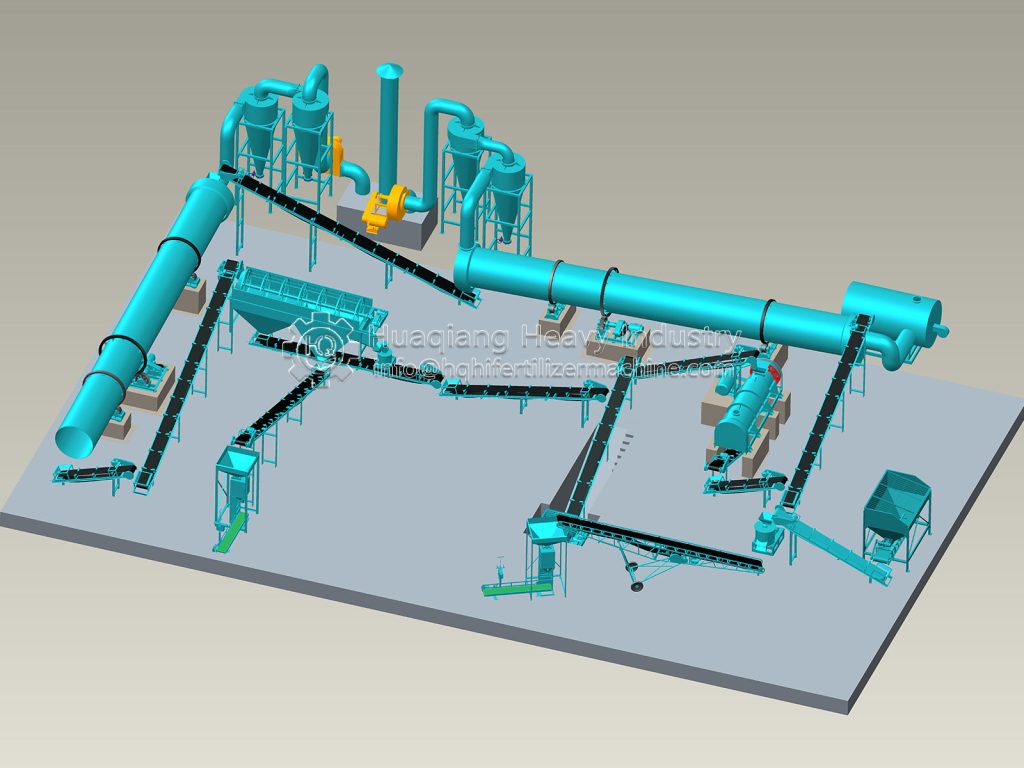
However, processing chicken manure into commercial organic fertilizer does involve certain production costs, which can be primarily categorized into the following aspects. First, equipment investment is the core, one-time investment. A complete production line typically includes fermentation and compost turning equipment, a crusher, a mixer, a granulator, a dryer, a cooler, a screener, and an automatic packaging machine. The choice of granulator significantly impacts cost and product form. For example, a rotary drum granulator offers high output, a disc granulator offers a high granulation rate, and a flat die granulator is suitable for organic materials. Different granulator models have varying prices and energy consumption. Secondly, the costs of the pretreatment and fermentation processes cannot be ignored. Fresh chicken manure is sticky and moist, typically with a moisture content exceeding 70%, while the optimal fermentation moisture content needs to be adjusted to 50%-60%. Therefore, a large amount of auxiliary materials (such as straw, sawdust, and mushroom residue) are often required to adjust the moisture and carbon-nitrogen ratios. The procurement, transportation, and crushing of these auxiliary materials all incur ongoing costs.

The initial equipment investment for processing chicken manure in an organic fertilizer production line is relatively high, and ongoing operations also require ongoing investment. The cost level depends largely on the production scale, the degree of automation, the availability and price of raw materials, and the positioning of the final product. For large-scale chicken farms, although the initial investment is high, in the long run, the comprehensive benefits of addressing environmental pressures and creating economic value by turning waste into resources are significant, making the cost acceptable.
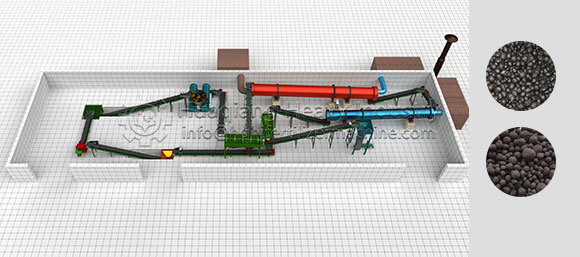
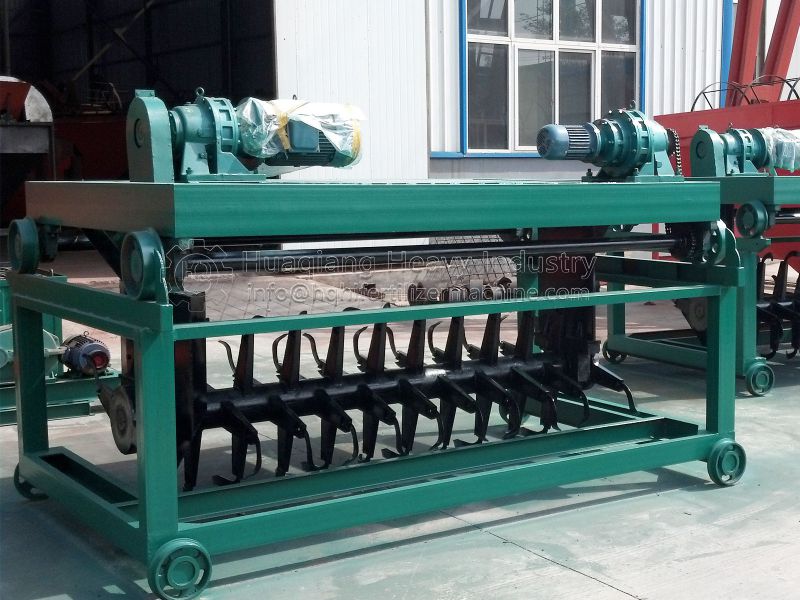
Organic fertilizer production line: An efficient solution to recycle waste, turning trash into treasure

An organic fertilizer production line is the core solution for turning agricultural and livestock waste into valuable resources. Through scientific processing, various organic wastes are converted into high-efficiency organic fertilizers, enabling a circular economy and reducing environmental pollution.

1.Agricultural Waste

Crop straw, rice husks, peanut shells, corn cobs, and similar waste are rich in cellulose and organic matter. The production line uses processes like crushing and fermentation to convert them into organic fertilizer rich in humus.

2.Livestock Manure

Manure from chickens, pigs, cattle, etc., contains high levels of nitrogen, phosphorus, potassium, and organic matter. The organic fertilizer production line uses high-temperature fermentation, odor removal, and sterilization to turn it into safe and highly effective bio-organic fertilizer.

3.Food Waste

Leftovers, fruit peels, vegetable scraps, and other kitchen waste have high organic content and easily decompose and smell. Using aerobic fermentation technology, the production line converts them into nutrient-rich organic fertilizer.

4.Food Processing Byproducts

Distiller’s grains, bean dregs, fruit pomace, sugar residue, and other industrial food processing leftovers contain abundant organic nutrients. The production line mixes these with straw or manure for fermentation to produce high-value-added organic fertilizer.

5.Garden Waste

Dead branches, fallen leaves, lawn clippings, and other green waste can be crushed and composted by the production line to make organic fertilizer for urban greening or home gardening.

The organic fertilizer production line is key technology for waste resource utilization. It transforms organic waste from agriculture, livestock, food processing, urban living, and other sectors into high-value fertilizer, supporting the growth of the circular economy.

Precautions for Using a Compost Turning Machine

As a core piece of equipment for material fermentation in an organic fertilizer production line, the proper use of a compost turning machine directly impacts production safety and fermentation efficiency. During daily operation, equipment inspection and parameter adjustment must be thoroughly monitored to ensure maximum performance.

A thorough pre-startup inspection is the first line of defense for safe operation. Check the tracks or running wheels for deviation and bolt connections for looseness. In particular, check for breakage or excessive wear on the turning blade assembly to prevent blades from falling off and causing damage to the equipment during operation. Also, clear the fermentation tank of hard objects such as rocks and metal to prevent them from becoming entangled in the turning mechanism and causing it to jam. Electrical system inspection is essential. Ensure cables are intact and grounding is reliable. Install a waterproof cover during rainy weather to prevent electrical leakage.

Parameter adjustment during operation is crucial for ensuring fermentation quality. Dynamically adjust the turning depth and frequency based on the material’s characteristics: High-protein materials like fresh livestock and poultry manure require more frequent turning to ensure ventilation and oxygen supply to prevent anaerobic decay. Crude fiber materials like straw can be turned more deeply to promote even mixing. The turning speed should be matched to the material’s moisture content. If the moisture content is too high, slow the turning speed to reduce clumping. Dry materials can be turned faster to improve efficiency.

Post-downtime maintenance determines the lifespan of the equipment.After each run, clean the blades and trough to prevent caking and compaction, which increases the load at the next start-up. Regularly lubricate bearings, chains, and other transmission components, and promptly replace severely worn parts. When the equipment is idle for extended periods, it should be stored in a dry location, the blades should be coated with anti-rust oil, and the electrical system should be disconnected from the power supply and dust-proofed.

Proper operation of a compost turning machine is not only essential for ensuring production safety, but also a scientific approach to improving fermentation efficiency and reducing operational costs, laying a solid foundation for the resource utilization of organic waste.

What is the production process of an organic fertilizer production line?

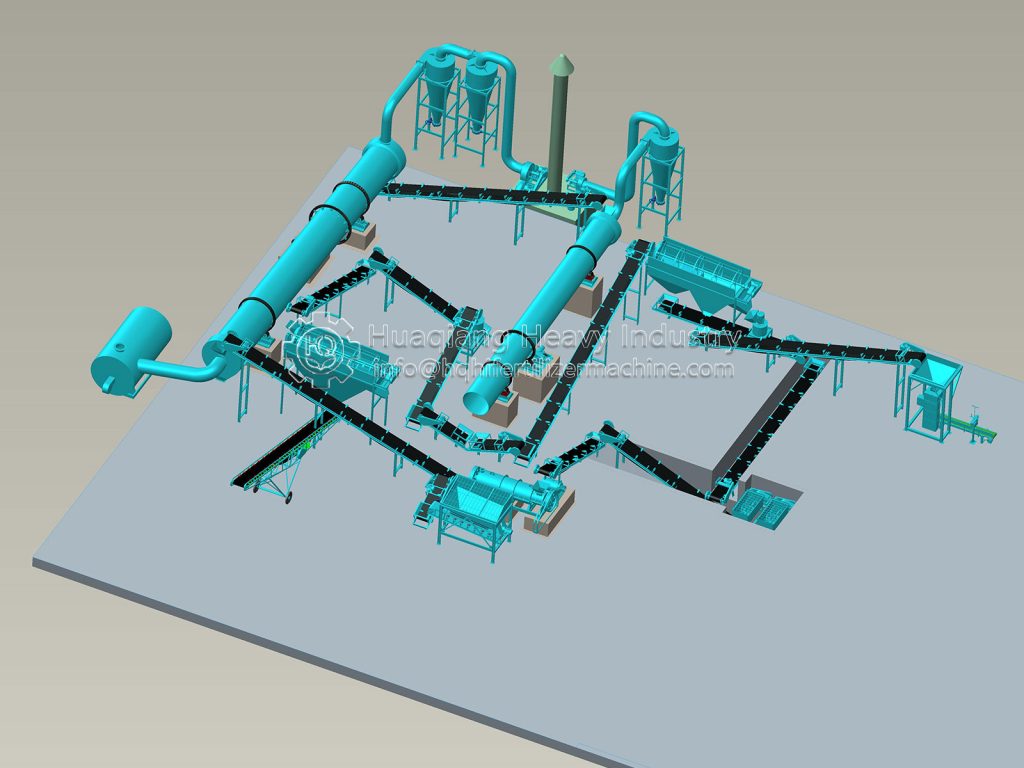
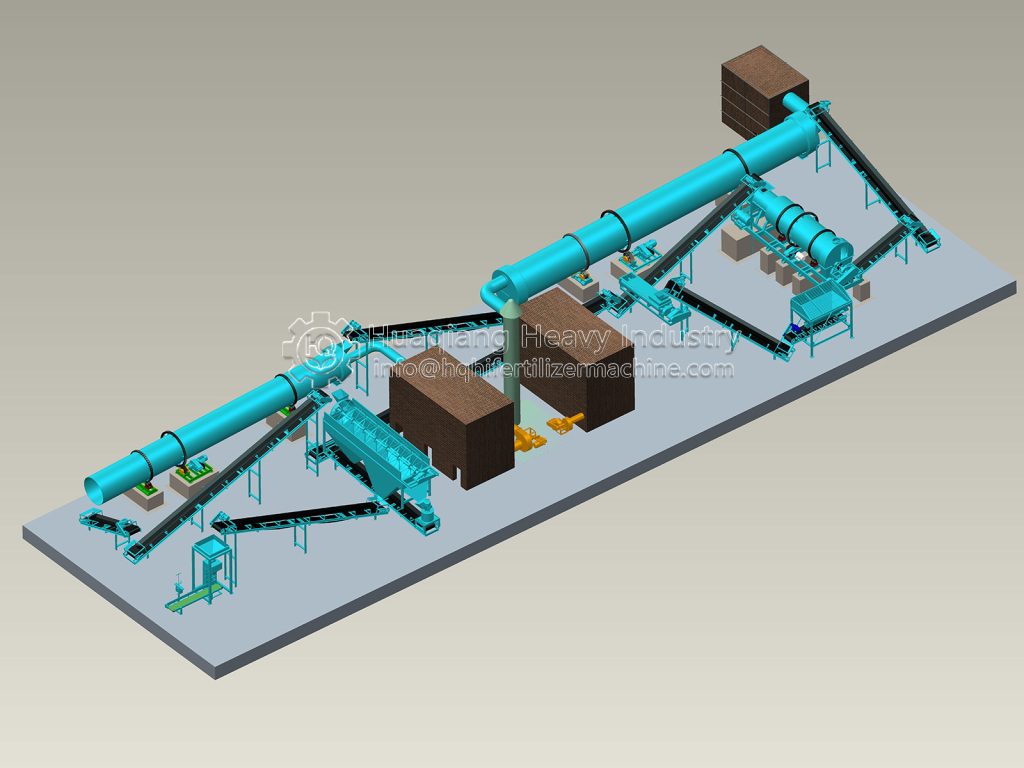
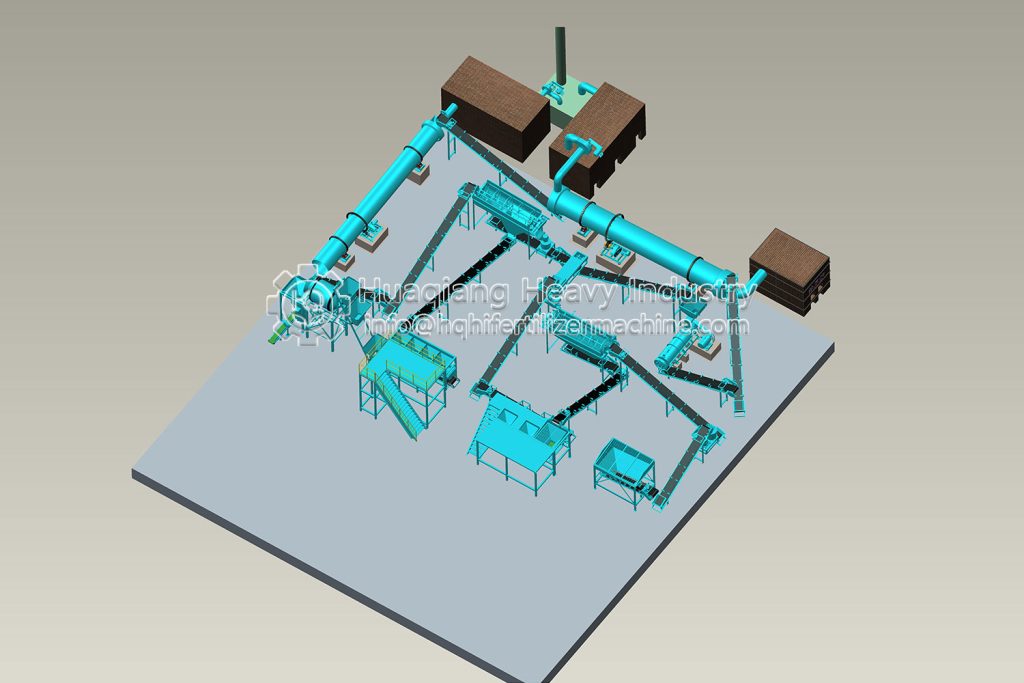
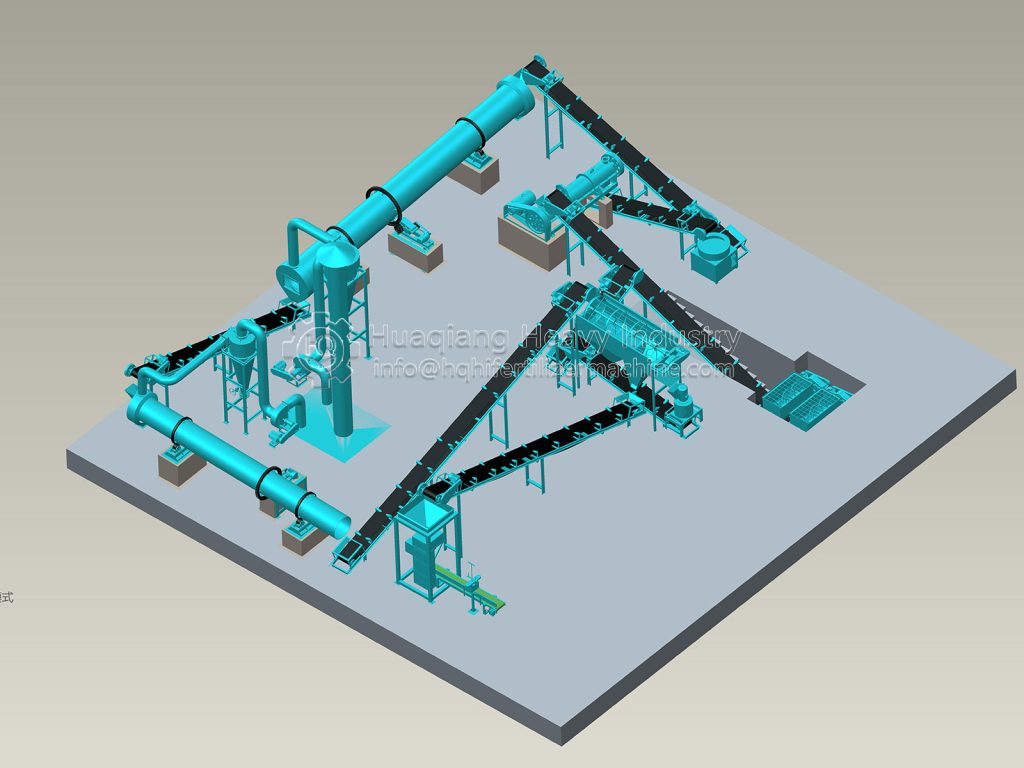
In terms of equipment, an organic fertilizer production line requires a fermentation compost turner, fertilizer crusher, fertilizer mixer, fertilizer granulator, fertilizer dryer, fertilizer cooler, fertilizer screening machine, fertilizer packaging machine, fertilizer conveyor, and fertilizer coating machine.

The raw materials used in organic fertilizer production vary widely, including livestock and poultry manure, municipal sewage sludge, and animal and plant residues. These raw materials are rich in organic matter, nitrogen, phosphorus, potassium, and other nutrients, providing essential nutrients for crop growth and are available at low prices.

How an organic fertilizer production line works:

Organic fertilizer processing primarily involves collecting, crushing, and mixing the raw materials. The raw materials are then mixed according to the desired formula, and the moisture content and carbon-nitrogen ratio are adjusted before the fermentation process begins.

Fermentation compost turning machines: Assist in turning the compost during the fermentation process, provide sufficient oxygen, and control the temperature to ensure uniform and thorough fermentation.

Fertilizer mixers: If the size and state of the fermented material are inconsistent, a semi-wet material grinder can be used for fine grinding.

Fertilizer Granulator: The crushed material is processed into uniformly sized organic fertilizer granules by the organic fertilizer granulator.

Fertilizer Cooler: After granulation, the organic fertilizer still contains approximately 30% moisture. To increase its strength, the granules need to be cooled for later storage and transportation.

Fertilizer Screening Machine: After granulation, a small number of unqualified granules, some too large and some too small, will be produced. The fertilizer screening machine is used to separate these granules. Oversized granules are returned to the fertilizer crusher, while undersized granules are returned to the fertilizer granulator for regranulation. Qualified granules are then sent to the automatic packaging machine.

Fertilizer Packaging Machine: The finished organic fertilizer granules are packaged by the automatic packaging machine, completing the entire process.

It should be noted that the above configuration is for a typical organic fertilizer production line and may not be suitable for all situations. In actual production applications, different manufacturers may have different requirements regarding site and raw materials, and adjustments may be required based on actual needs.  

What are the main components of an organic fertilizer production line?

Those familiar with organic fertilizer production lines can generally identify their components, but for those new to the industry, this may seem a bit vague. Today, Zhengzhou Huaqiang Heavy Industry will share with you the components of an organic fertilizer production line.

The crushing section of an organic fertilizer production line. Given the diversity of user raw materials, our organic fertilizer production line equipment is designed with a crushing section. During the equipment sales process, we found that many users use relatively dry chicken manure or pig manure as raw materials, and some even mix in other raw materials to reduce organic fertilizer production costs. Raw materials with excessively large particle sizes cannot be directly granulated. Therefore, before granulation, the raw materials must be crushed to achieve the desired granulation effect before they can be fed into the organic fertilizer granulator. Of course, for users with sufficiently fine raw materials, this step can be omitted when designing organic fertilizer equipment.
The granulator section of an organic fertilizer production line is the core component of the equipment, making it an essential component. The model of granulator to be selected depends on the user’s production volume. The drying section of the organic fertilizer production line. The granulation process requires that the material humidity be kept below 25%. Therefore, raw materials with an initial humidity above 25% should first enter the drying process, and then enter the granulation process after the dried material reaches the required humidity. Of course, users with sufficient material humidity can omit this step when designing organic fertilizer equipment.
In other parts of the organic fertilizer production line, after the pelletizer completes the processing, it is conveyed by a belt conveyor to a ball shaping machine for shaping, achieving a perfectly spherical shape and forming organic fertilizer granules. For users who require it, we can design a final packaging process to directly package the final product, thus achieving perfect automation of the entire fertilizer granulation process.

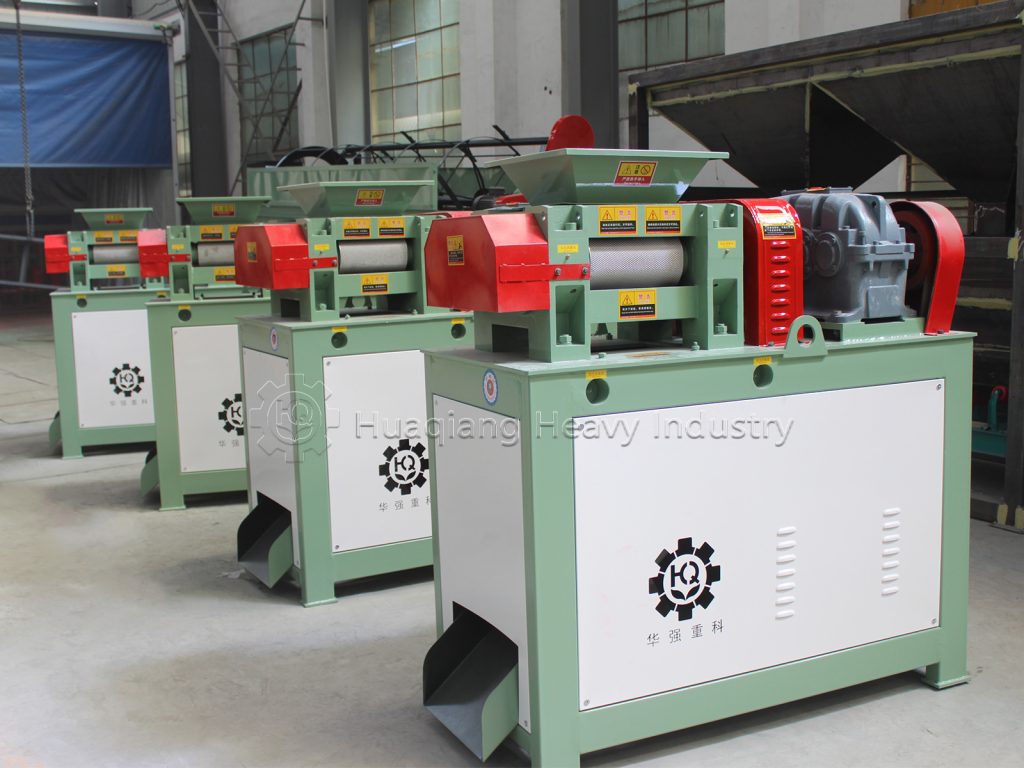
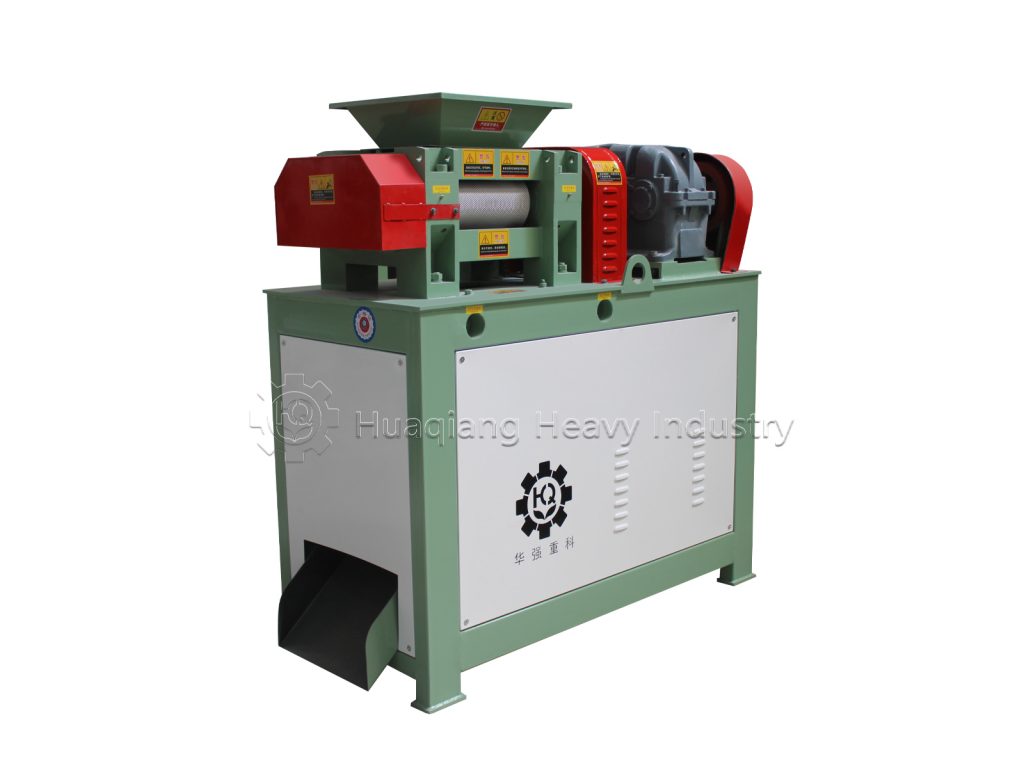
The unique working principle of the double roller press granulator

The reason why the double roller press granulator can occupy an important position in the organic fertilizer granulation equipment is inseparable from its unique working principle, which also allows it to show many advantages.  Its working process is clear and straightforward. First, the pre-treated dry powder raw material is conveyed between two relatively rotating rollers. The surface of this pair of rollers is usually provided with specific lines or grooves. Under the action of strong extrusion force, the raw material is tightly squeezed to form continuous flakes. These flakes then enter the crushing device and are crushed into particles of different sizes. Next, the particles will go through the screening stage, and the fine powder or large particles that do not meet the requirements will be separated and sent back to the granulation system, while the qualified particles will become the final product.

This working principle brings significant advantages. There is no need to add a lot of water, and the subsequent drying step is omitted, which not only saves energy, but also maintains the original nutritional content of the raw materials. The whole process is coherent and efficient, from the entry of raw materials to the output of qualified particles, which can be completed in one go and quickly meet production needs. At the same time, due to the physical extrusion granulation, it has strong adaptability to raw materials, and a variety of organic raw materials can be made into granules in this way.

The double roller press granulator has become an efficient and practical granulation choice in the organic fertilizer production line due to its scientific working principle, helping producers improve efficiency and ensure quality.

The secrets of organic fertilizer production line and bio organic fertilizer production line

In agricultural production, the quality of fertilizer directly affects the growth and harvest of crops. Today, let’s take a deep look at the differences between organic fertilizer production line and bio organic fertilizer production line to help you make a better choice.

Organic fertilizer production line mainly uses animal and plant residues, such as livestock and poultry manure, crop straw, etc. as raw materials. After collection, pretreatment is first carried out, such as crushing and mixing, to make the raw materials uniform in texture. Then enter the key fermentation and decomposition link, using natural microorganisms to decompose and transform organic raw materials under suitable temperature, humidity and ventilation conditions. This process often takes several months to make organic matter reach a stable state and finally make organic fertilizer.

Bio organic fertilizer production line goes a step further on this basis. After the raw materials are also collected, pretreated and conventionally fermented and decomposed, wait for the material temperature to drop to a suitable range (usually not more than 40℃), and evenly mix in specific microbial agents, such as Bacillus, yeast, etc. These microorganisms play an important role in the follow-up, and can decompose nutrients such as insoluble phosphorus and potassium in the soil and convert them into plant-absorbable forms. However, since microorganisms are sensitive to the environment, the subsequent storage and transportation conditions must be strictly controlled to prevent inactivation.

From the production process point of view, the bio-organic fertilizer production line adds the addition of microbial agents. It seems simple, but it has higher requirements for equipment and environment, and the production process is more complicated.

In terms of product effect, organic fertilizer can improve soil structure, slowly release nutrients, and provide long-term nutrition for plants; bio-organic fertilizer not only has these functions, but also can prevent and inhibit pests and diseases, enhance plant resistance, reduce the use of pesticides, and improve the quality and safety of agricultural products.

Whether you want to invest in organic fertilizer production or focus on bio-organic fertilizer processing, choosing our equipment can escort your production, help you produce high-quality fertilizers, and seize the opportunity in the field of agricultural planting.

How chicken manure is turned into fertilizer and the equipment used

The large amount of chicken manure produced by chicken farms every day was once a headache for farmers – it piled up and occupied land, the odor disturbed people, and polluted the environment. Today, with the upgrading of environmental protection technology, chicken manure has transformed into high-quality organic fertilizer, and this “gorgeous transformation” is inseparable from the help of professional processing equipment.

The core of chicken manure turning into fertilizer is composting and fermentation. Fresh chicken manure contains a lot of pathogens, insect eggs, and a strong smell of ammonia nitrogen. Direct use will burn the roots of crops and attract pests and diseases. Therefore, the first step is to “disinfect and improve the quality” of chicken manure.

First, send the chicken manure to the dewatering machine to remove excess water. The dehydrated chicken manure cannot be fermented directly, but must be matched with straw and sawdust to adjust the air permeability and make the fermentation more complete.

The mixed materials are sent to the fermentation area, and the turning machine (such as the compost turning machine) is on the scene to turn the materials regularly to ensure sufficient air, so that the upper and lower layers are heated evenly to ensure the fermentation effect.

The fermented materials are crushed and agglomerated by a pulverizer, and the impurities are removed by a drum screener machine. The powdered organic fertilizer obtained can be used directly. If you want to improve storage stability and application convenience, you can perform granulation.

Granulation requires an organic fertilizer granulator to condense the powdered material into uniform particles. Granular fertilizer is not easy to absorb moisture and agglomerate, and it is resistant to loss during transportation and storage. When applied, the amount can be controlled to prevent waste. It can also slowly release fertilizer in the soil, prolong fertilizer effect, and improve crop absorption efficiency.

This system not only solves environmental problems, but also creates profits. Chicken manure organic fertilizer improves soil, improves the quality of fruits and vegetables, and is very popular.

From waste to “hot cakes”, the counterattack of chicken manure is clear. Choose professional equipment to turn chicken manure into treasure, protect green waters and green mountains, and collect gold and silver mountains. This is a wise choice for the circular development of modern agriculture.

The Core Value of Granulators in Fertilizer Production Lines

Among the numerous pieces of equipment in a fertilizer production line, granulators are a key link in transforming raw materials into finished products, directly determining the fertilizer’s physical form and performance.

The primary function of a granulator is to process evenly mixed raw materials into granules of a specific size. Direct application of crushed and blended powdered raw materials can easily lead to problems such as clumping and flying. Granulators, however, use processes such as extrusion, rolling, or spraying to agglomerate the raw materials into 3-5 mm granules. This form facilitates transportation and storage, reduces waste, and controls the rate of nutrient release into the soil, preventing nutrient loss and improving nutrient utilization. For example, in compound fertilizer production, granulators precisely encapsulate elements such as nitrogen, phosphorus, and potassium, ensuring balanced nutrient release.

Granulators play an irreplaceable role in improving fertilizer quality. High-quality granulation equipment ensures uniform granules with a moderate hardness, neither too hard to break down nor too soft to cause pulverization. Take organic fertilizer as an example. In organic fertilizer production lines, the continuous temperature and pressure during the granulation process further kill pathogens and insect eggs in the raw materials, reducing the risk of crop disease. It also allows the organic matter to more tightly bind with the auxiliary materials, extending the fertilizer’s effectiveness.

Granulators are equally important for improving production efficiency. Modern equipment enables continuous operation, processing several tons of raw materials per hour. Combined with screening machines, they can separate unqualified granules in real time for secondary processing, reducing waste. Compared to traditional manual granulation, mechanical granulation reduces labor intensity and can be controlled through parameter adjustments to maintain stable quality, meeting the needs of large-scale production.

From an ecological perspective, granulators contribute to environmentally friendly fertilization. Granulated fertilizers reduce dust pollution and prevent powder drift. The slow-release granule design reduces the risk of soil compaction and water eutrophication caused by over-fertilization, supporting green agriculture.

Thus, granulators not only shape the fertilizer form but also safeguard its quality, occupying an unshakable core position in the fertilizer production line.

Sheep manure organic fertilizer production line

Sheep manure organic fertilizer is a new type of high-quality organic fertilizer specially treated by organic matter that is not completely digested by sheep. It is suitable for geological improvement of alkaline land and barren land, and has a good effect on improving crop yield. Because the sheep is a ruminant and rarely drink water, the feces are dry and fine, and the amount of feces is also small. The organic fertilizer of sheep manure is a kind of hot fertilizer between horse dung and cow dung.

sheep manure organic fertilizer production line

Sheep manure organic fertilizer manufacturing process:
1. Combine the sheep manure with the right amount of straw powder, and mix it with the amount of water depending on the amount of sheep manure. Generally, the fermentation requires 45% water content, that is, the hand is pinched into a group, the fingers are seen in the water, but the water is not dripped. The solution is scattered. Then add cornmeal and strains, the role of cornmeal is to increase the sugar, for the fermentation of the strain, so that the multi-dimensional complex enzymes quickly dominate.

2. Add the mixed mixture to the mixer for mixing. The mixing must be uniform, and it should be thoroughly penetrated without leaving a block.

3. The stirred ingredients are piled into strips with a width of 1.5 m to 2 m and a height of 0.8 m to 1 m, which are thrown once every 2 days with a compost turner machine.

4. Stacking 2 days warming, 4 days odorless, 7 days loose, 9 days fragrant, 10 days into fertilizer (that is, the second day of the heap temperature can reach 60 ° C-80 ° C, killing E. coli, eggs and other pests and diseases On the 4th day, the smell of sheep manure was eliminated; on the 7th day, the compost became loose and dry, and it was covered with white hyphae; on the 9th day, a scent of koji was produced; on the 10th day, the fertilizer was fermented and matured).

5. The compost can be crushed with a semi-wet material pulverizer if it is dried slightly, granulated by an organic fertilizer granulator machine, dried and dehydrated by a dryer, and then screened through a sieve machine, the finished organic fertilizer is ready, it can be loaded, packed and stored.

Back To Top