Tag: Organic Fertilizer Production Equipment

Turning straw into fertilizer: The green magic of organic fertilizer production equipment

Under the agricultural trend of “reducing chemical fertilizer use and promoting ecological planting,” organic fertilizer production equipment is quietly rewriting the fate of waste. These unassuming machines use technological power to transform agricultural waste such as straw and livestock manure into “green nutrients” that nourish the soil, becoming invisible heroes of ecological agriculture.

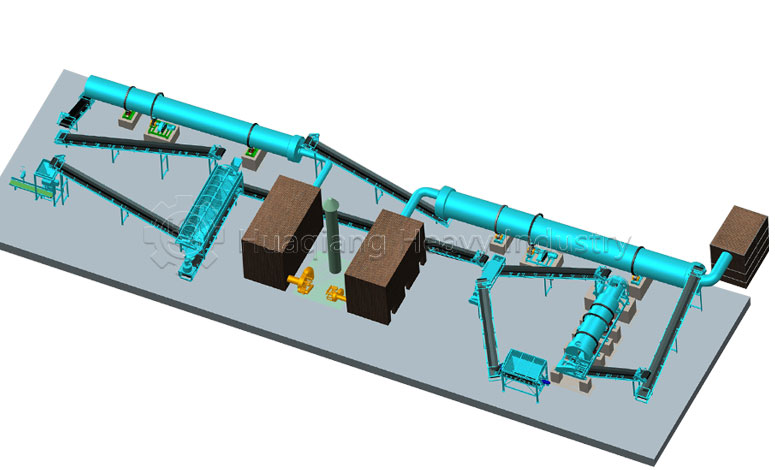
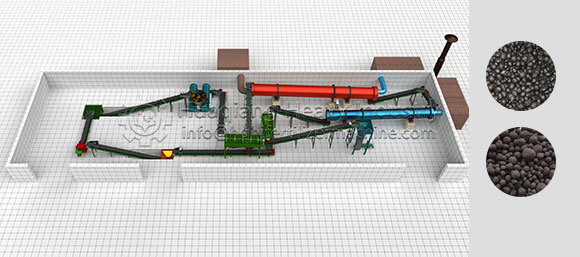
The core logic of organic fertilizer production equipment is simple: to allow organic matter to undergo a “transformation” under scientific conditions. The entire process requires no complicated operations. First, the raw materials such as straw and dead branches are broken down into fine particles by a crushing device. Then, a mixing device mixes them with livestock manure in a specific ratio, adjusting the carbon-to-nitrogen ratio to meet the fermentation requirements. The fermentation stage is crucial. Specialized equipment can precisely control temperature, humidity, and aeration, allowing beneficial microorganisms to efficiently decompose organic matter, shortening the fermentation cycle and thoroughly killing insect eggs and pathogens. Finally, after processing by granulation and drying equipment, the loose fermented material becomes uniformly granulated organic fertilizer that is easy to store and transport.

Compared to traditional composting, these devices solve many pain points. No need for manual turning; automated operation reduces labor intensity. Closed-loop fermentation minimizes odor spread and avoids secondary pollution. More importantly, standardized production ensures more stable nutrient content in organic fertilizer, effectively improving soil compaction.

From field waste to ecological fertilizer, organic fertilizer production equipment bridges the gap in circular agriculture. It not only reduces reliance on chemical fertilizers in agriculture but also makes “turning waste into treasure” a reality, injecting continuous momentum into the development of green agriculture.

Disc granulation production line: A new solution for low-energy, circular organic fertilizer formation

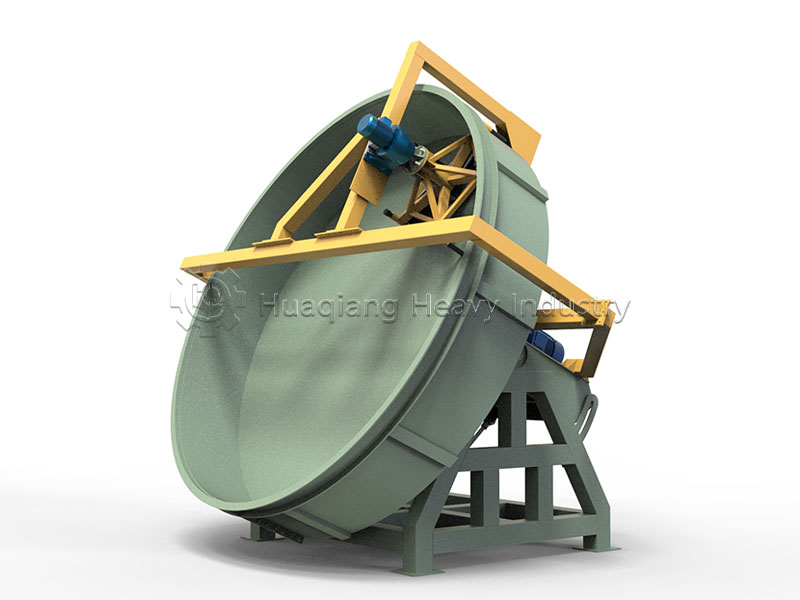
The innovative value of the disc granulation production line lies not only in the pellet forming itself, but also in its core design logic of “low-energy circulation,” perfectly meeting the needs of modern agricultural waste resource utilization.

Its core advantage lies in “highly efficient energy utilization.” The disc granulation production line utilizes the natural forces of gravity and centrifugal force to achieve agglomeration and forming, eliminating the need for additional high-intensity mechanical pressure and significantly reducing motor load. Simultaneously, the frictional heat naturally generated during the material’s rotation within the disc helps evaporate excess moisture, reducing energy consumption in subsequent drying stages.

In terms of raw material recycling, this production line demonstrates strong ecological compatibility. It can efficiently process various agricultural wastes such as straw, livestock manure, and mushroom residue. Especially for “non-standard raw materials” with high moisture content (25%-40%) and low viscosity, stable pelleting can be achieved simply by adjusting the disc’s tilt angle and rotation speed, without complex dehydration or the addition of large amounts of binders.

“Lightweight” operation and maintenance are also unique highlights. The disc granulation production line has a simple structure with no complex transmission or enclosed components. The material flow path is clear, reducing the likelihood of blockages or material residue. Daily cleaning and maintenance require only simple operations, lowering labor costs.

Furthermore, the formed granules, due to their natural agglomeration, have a rich porous structure. When applied to the soil, they quickly integrate into the topsoil, enhancing water and fertilizer retention while promoting soil microbial activity, perfectly aligning with ecological planting principles.

Oil palm empty fruit bunch: “Green Raw Materials” for organic fertilizer production lines

As a major waste product of the oil palm processing industry, oil palm empty fruit bunch, with their rich organic matter and unique physical properties, have become a high-quality raw material for organic fertilizer production lines. Their deep integration with various stages of the production line not only realizes waste resource utilization but also optimizes the organic fertilizer production process.

In the raw material pretreatment stage, oil palm empty fruit bunch need to be processed by crushing equipment to break them into 1-3 mm granular materials. This removes coarse and hard impurities while retaining an appropriate amount of fiber structure. The crushed material is then mixed with livestock and poultry manure, microbial agents, etc., in a specific ratio. Its loose properties naturally adjust the carbon-nitrogen ratio of the mixture while improving its permeability, laying the foundation for subsequent fermentation.

In the fermentation stage, oil palm empty fruit bunch a highly efficient combination with a compost turning machine. During the composting and fermentation of the mixed materials, the fibrous structure of the oil palm empty fruit bunch prevents the pile from compacting, while the periodic turning by the compost turner further enhances aeration, allowing aerobic microorganisms to multiply rapidly and maintaining the composting temperature at a stable 55-65℃.

In the post-processing stage, the composted oil palm empty fruit bunches are suitable for the forming requirements of organic fertilizer granulators. Their residual fiber toughness enhances granule cohesion, preventing breakage due to compression during granulation and avoiding die clogging, thus improving granulation efficiency. The formed granular organic fertilizer, retaining some of its fibrous structure, possesses both long-lasting fertilizing effects and soil-improving functions.

The deep integration of oil palm empty fruit bunch with the organic fertilizer production line solves the waste disposal problem and optimizes the production process through the characteristics of the raw materials.

Organic fertilizer production line processing chicken manure: A comprehensive analysis of key considerations

Chicken manure, rich in nutrients and widely available, is a high-quality raw material for organic fertilizer production. However, due to its high moisture content, susceptibility to fermentation and spoilage, and the presence of impurities, key processes must be carefully controlled to ensure product quality and smooth production.

Pretreatment is fundamental. Fresh chicken manure typically has a moisture content of 70%-80%. It needs to be reduced to 55%-60% using organic fertilizer production equipment to prevent anaerobic putrefaction during fermentation. Simultaneously, impurities such as stones, plastics, and feathers must be removed manually or mechanically to prevent damage to subsequent equipment. If the chicken manure is severely clumped, it needs to be crushed to ensure uniform particle size, laying the foundation for fermentation.

The fermentation stage is crucial. Chicken manure has a high nitrogen content and needs to be mixed with straw, sawdust, and other carbon source materials in a specific ratio to adjust the carbon-to-nitrogen ratio to 25-30:1, promoting microbial activity. During fermentation, the compost pile needs to be turned regularly using a compost turning machine to ensure aeration and maintain a high temperature of 55-65℃ for 7-15 days to achieve sterilization, insect control, and decomposition.

Subsequent processing must be standardized. The decomposed chicken manure needs to be crushed and screened again to ensure there are no large pieces of uncomposted material, with a particle size controlled within 2 mm for easy granulation. During granulation, the material moisture content must be controlled at 20%-30% to avoid clogging the die holes; the drying temperature should not exceed 80℃ to prevent damage to organic matter and beneficial microorganisms. Simultaneously, the entire organic fertilizer production line must be properly sealed and deodorized to reduce odor diffusion and meet environmental protection requirements.

The connecting process of flat die granulator in organic fertilizer production line

In the overall process of an organic fertilizer production line, the flat die granulator plays a crucial “bridging” role. It receives the organic fertilizer raw materials from the preceding processes, after fermentation, crushing, and mixing, transforming the loose, powdery material into structurally stable granules, laying the foundation for subsequent drying, cooling, and packaging stages.

From a working principle perspective, the flat die granulator uses a motor-driven transmission mechanism to rotate the pressure rollers. When the raw material enters the machine, the pressure rollers exert extrusion force on the material, forcing it through pre-set die holes on the flat die, ultimately forming cylindrical or other shaped granules. This process requires minimal binders, relying primarily on the material’s own viscosity and extrusion force to achieve shaping, thus preserving the nutritional components of the organic fertilizer while avoiding the potential impact of chemicals on the soil.

For organic fertilizer production, the flat die granulator not only solves the problems of dust and caking during raw material transportation, but also controls the diameter and hardness of the granules by adjusting the die size and pressure roller pressure, meeting the needs of different crops and different fertilization scenarios. It is one of the indispensable core equipment in the production line.

Intelligent control: Improving the stability of organic fertilizer production lines

With the large-scale development of organic fertilizer production, intelligent control has gradually become a core means of improving organic fertilizer production line stability. Compared to traditional manual monitoring, intelligent systems can precisely control key parameters, reduce operational errors, and ensure consistent finished product quality.

Intelligent control is primarily applied in three key areas: First, fermentation process monitoring. By deploying temperature, humidity, and oxygen concentration sensors, the system collects real-time data from the fermentation chamber. When parameters deviate from the appropriate range, the system automatically triggers an alarm and adjusts the turning frequency and ventilation volume to prevent under- or over-roasting of the material. Second, granulation process control. Based on changes in material moisture content, the system automatically adjusts the fertilizer granulator machine speed and binder dosage to minimize problems such as granule clumping and breakage. Third, production data management. The system automatically records operational data from each stage, creating a production ledger that facilitates process traceability and allows for optimization of process parameters through data review.

This intelligent transformation of organic fertilizer production lines does not require replacing core equipment; it is often achieved through the addition of sensors and upgraded control systems. This reduces labor costs and improves the yield of finished products, making it suitable for small and medium-sized production enterprises to implement gradually.

Drum fertilizer cooler selection: Consider key dimensions and avoid common mistakes

Choosing the right drum fertilizer cooler not only ensures effective material cooling but also reduces subsequent operating costs. However, when selecting a drum fertilizer cooler, it’s easy to fall into the trap of focusing solely on throughput, overlooking key factors like material properties and operating requirements.

First, clarifying the material properties is essential. Differences in moisture, particle size, and viscosity between materials directly impact cooling performance. For example, high-humidity materials tend to adhere to the drum’s inner walls, so a model with internal scrapers or special liners should be selected to prevent material accumulation. For fine powders, sealing performance is crucial to prevent dust leakage during cooling, requiring efficient, sealed feed and discharge devices. Ignoring material properties can lead to uneven cooling and equipment blockage, even if the throughput is appropriate.

Second, determine the cooling method based on cooling requirements. If the material needs to be cooled quickly and has no special requirements for the cooling medium, forced air cooling can be chosen to improve cooling efficiency by increasing air volume. If the material temperature is extremely high (over 600°C) or needs to be protected from air contact, jacket cooling is preferred. This uses thermal oil or cold water for indirect cooling, minimizing material contact with the outside world.

Finally, drum fertilizer cooler parameters should be tailored to the operating conditions. Consider the workshop space (determining drum length and diameter), power supply voltage (matching drive motor parameters), and ease of maintenance (ease of disassembly and cleaning). For example, if workshop height is limited, a horizontally arranged short-drum machine may be appropriate. If continuous production is essential, a machine with fault alarms and automatic cleaning features should be selected to minimize downtime for maintenance.

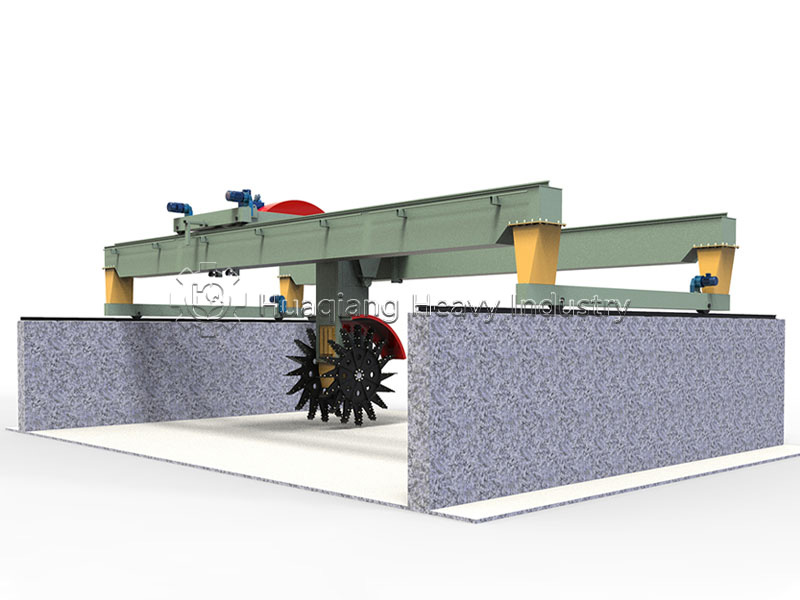
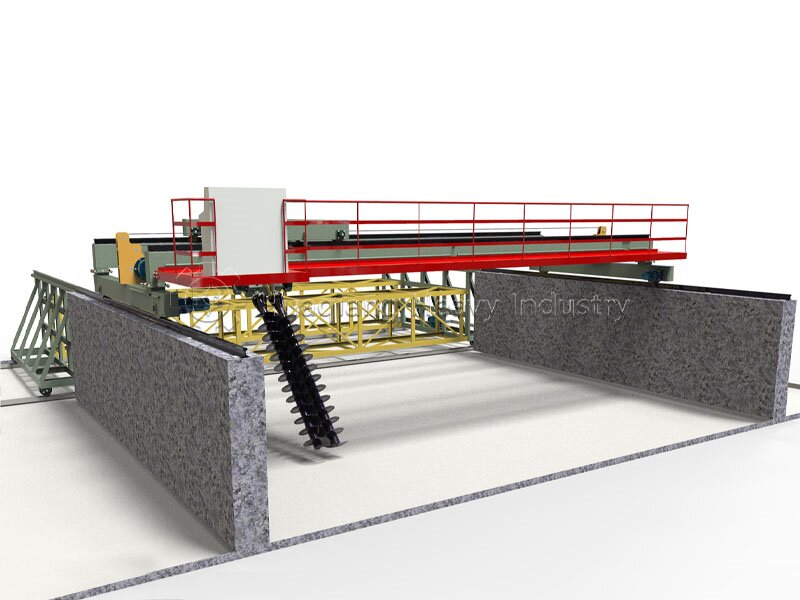
Large wheel compost turners: A super assistant for organic waste treatment

Large wheel compost turners make organic waste treatment more efficient and convenient, injecting a powerful impetus into environmental protection efforts and sparking curiosity about their many advantages.

1. Efficiently Breaks Agglomerated Materials

In organic waste treatment, materials such as livestock and poultry manure and straw often clump. The large wheel compost turner’s blades easily cut through these agglomerated materials. Whether it’s hard straw clumps or sticky livestock and poultry manure lumps, the blades quickly break them down into fine particles.

2. Deep Compost Turning Meets Diverse Needs

Large wheel compost turners typically reach a turning depth of 1.5 to 3 meters, making them suitable for organic waste fermentation projects of varying sizes and types. For large-scale organic waste treatment projects, they can penetrate deep into the bottom layer of the pile and turn the underlying material to the upper layer, ensuring sufficient oxygen supply and uniform fermentation throughout the entire pile. For small gardening farms and family farms, the turning depth can be flexibly adjusted based on actual needs to ensure effective fermentation.

3. Energy-saving Design Reduces Operating Costs

Some large wheel compost turners utilize advanced energy-saving features such as variable frequency drive. This design automatically adjusts the motor speed and power during operation based on the material’s condition and actual needs. When handling lighter, looser materials, the motor automatically reduces speed to reduce energy consumption; when handling harder, denser materials, the motor speed is increased appropriately to ensure effective turning.

Drum screener machines are an ideal choice for material screening in various industries

When it comes to high-efficiency screening equipment, drum screener machines, with their outstanding performance advantages, play a vital role in material screening operations in various industries, including mining, building materials, chemicals, food, and agriculture. In fertilizer production, they are particularly crucial for ensuring material quality.

In terms of structural design, drum screener machines are built around the core requirement of “high-efficiency screening” and primarily consist of a drum body, a vibrating device, a drive unit, a support system, and a feed and discharge ports. The drum body’s screen mesh diameter can be customized to meet the screening standards of various industries, ensuring precise separation of materials of varying particle sizes. The vibrating device utilizes a scientifically designed vibration frequency to evenly distribute material within the drum, preventing localized accumulation that could affect screening performance. The drive unit provides stable and continuous rotational power to the drum, and together with the support system, ensures the equipment’s long-term operational stability.

Its high efficiency is reflected in multiple dimensions. Not only does it rapidly separate materials, its processing capacity can accommodate production scales ranging from small workshops to large factories, but it also boasts strong environmental adaptability—maintaining stable screening efficiency for both dry ore particles and wet organic materials, and exhibiting high tolerance to moisture and viscosity.

Furthermore, the drum screener machine’s core components are constructed of wear-resistant materials, reducing wear over time, extending its service life, and lowering ongoing maintenance costs, making it an ideal choice for material screening across multiple industries.

A deep dive into fertilizer crusher: Structure, Principle, and Core Advantages

As a crucial piece of equipment in the fertilizer production process, fertilizer crushers play an indispensable role in the production of organic fertilizers, NPK fertilizers, and other fertilizers. To fully maximize their performance, a thorough understanding of their structure, operating principles, and core advantages is essential.

Structurally, a fertilizer crusher primarily consists of a crushing chamber, crushing components, a feed inlet, a discharge outlet, and a drive system. The crushing chamber provides space for material crushing. The crushing components within, such as the blades, hammers, and toothed plates, are the core components that directly act on the material. The drive system provides power to the crushing components, ensuring stable operation. Some fertilizer crushers are also equipped with a screening system to select the particle size of the crushed material to meet different production requirements.

The operating principle is based on a combination of impact, cutting, and grinding. After material enters the crushing chamber through the feed inlet, the high-speed rotating crushing components cut and grind the material. This, combined with intense collision and friction between the material and the crushing components, ultimately breaks the material into particles of the desired quality before discharging through the discharge outlet.

The core advantages of a fertilizer crusher lie in its high processing efficiency, adaptability, and ease of maintenance. It can quickly crush a variety of fertilizer raw materials, and its structural design facilitates routine maintenance and cleaning, significantly reducing production downtime and providing strong support for fertilizer manufacturers to increase production capacity.

Back To Top