Tag: organic fertilizer granules machine

Ring die granulator: What is the core mechanism of pellet formation?

In fertilizer granulation production, the ring die granulator is a key piece of equipment for achieving “powdered raw materials → uniform granules.” It is particularly suitable for a variety of fertilizer types, including organic fertilizers, compound fertilizers, and biofertilizers. The key to its granule formation lies in the synergistic effect of the “ring die + press roller” system, as well as precise adaptation to the raw material characteristics.

The core working components of the ring die granulator are a ring die with densely packed holes (ring die) and two to three press rollers within it. When the machine is started, pre-treated (mixed and conditioned) fertilizer raw materials (usually with a moisture content of 15%-25%) are fed into the extrusion chamber between the ring die and the press rollers. The motor drives the ring die at high speed, while the press rollers follow in the opposite direction. Friction forces press the raw materials tightly against the inner wall of the ring die.
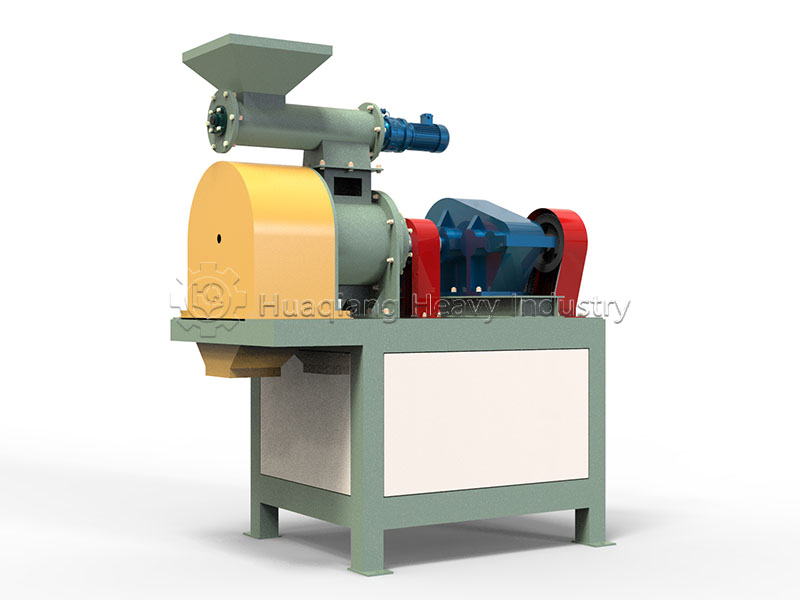
As the ring die continues to rotate, the raw materials are forcibly squeezed into the small holes of the ring die, where they undergo a process of “extrusion → shaping → solidification.” The shape of the small holes (circular, cylindrical, or oblate) determines the appearance of the pellets, while the length-to-diameter ratio of the holes (also known as the “compression ratio”) influences pellet hardness.

Finally, the formed pellets are cut by a scraper on the outside of the ring die, forming uniform fertilizer granules. The entire process achieves “continuous feeding and continuous granulation,” adapting to the mass production needs of organic fertilizer production lines.
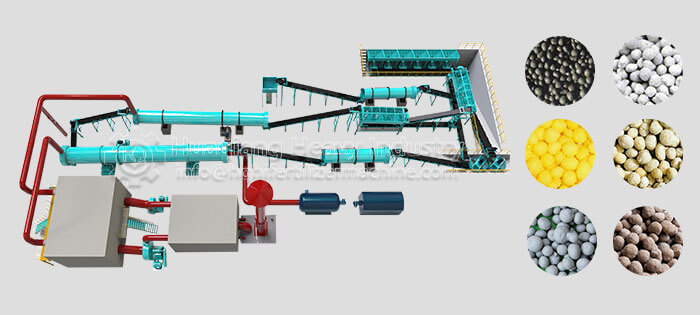
Dynamic synergy between NPK fertilizer production lines and the agricultural production cycle

NPK fertilizer production isn’t a fixed process; it’s a dynamic system deeply integrated with the agricultural production cycle. Two to three months before spring plowing, NPK fertilizer production lines should prioritize production of high-nitrogen formulas (such as 25-10-10) to meet the nutritional needs of seedling crops like wheat and corn. During this period, granulation production should be adjusted to increase daily production capacity by 30%, while also stockpiling raw materials to avoid supply interruptions during the peak spring plowing season.

During the summer fruit and vegetable bulking season, NPK fertilizer production lines must quickly switch to high-potassium formulas (such as 15-10-25). A modular silo design allows for formula conversion within four hours, and a low-temperature granulation process (controlled at 55-60°C) is used to minimize potassium loss.

After the autumn harvest, to meet soil maintenance needs during the fallow period, NPK fertilizer production lines will increase the proportion of slow-release NPK products containing humic acid. This requires extending the coating process and adjusting the nutrient release cycle from 30 days to 90 days.

This dynamic synergy requires the establishment of a “farming cycle-production plan” linkage mechanism. By analyzing historical planting data to predict demand, this ensures that fertilizer supply is precisely matched to crop nutrient absorption points, avoiding production capacity waste and ensuring agricultural production efficiency.

How do new type organic fertilizer granulators adapt to different organic fertilizer raw materials?

New type organic fertilizer granulators are more flexible than traditional models. Whether it’s straw, manure, mushroom residue, or distiller’s grains, they can be adapted with minimal adjustments without having to replace equipment.

If using fermented straw for granulation, this raw material is fibrous and somewhat loose, making it difficult to produce compact pellets. Add 5%-8% bentonite (a common binder) to the raw material, mix it thoroughly before feeding it into the new type organic fertilizer granulator, and increase the roller pressure. This will ensure compact pellets without breaking them up and damaging the organic matter in the straw.

For wet, sticky raw materials like chicken manure and pig manure, the biggest concern is clogging the granulator. Instead of adding too much binder, add about 10% dry mushroom residue to reduce moisture. Also, slow the new type organic fertilizer granulator’s feed rate to allow the raw material to fully form in the granulation chamber. The resulting pellets are smooth and less likely to stick to the machine.
When it comes to fine raw materials such as mushroom residue and wine lees, they have moderate viscosity and do not require additional adhesives, which saves materials and time.

How should a windrow compost turner be adjusted for different organic fertilizer raw materials?

Organic fertilizer raw materials vary greatly, such as straw, chicken manure, mushroom residue, and distiller’s grains, and their properties can vary greatly. When using a windrow compost turner, a few adjustments can ensure smoother fermentation.

If you’re turning dry straw, it’s fluffy and porous, but it’s prone to “lifting.” The blades of a windrow compost turner tend to only scrape the surface, failing to thoroughly turn the bottom. In this case, you can steepen the blade angle to allow it to penetrate deeper into the pile. At the same time, slow down the compost turner’s speed to 2-3 kilometers per hour. This ensures that both the top and bottom of the straw pile are turned loosely, breaking up any large clumps and facilitating subsequent fermentation.

If you’re turning wet, sticky raw materials like chicken manure and pig manure, they tend to clump and stick to the blades, and the pile may become compacted after turning. At this time, the blade angle should be adjusted to a gentler angle to reduce sticking, and the forward speed can be increased slightly to allow the turned manure pile to quickly disperse and breathe. Additionally, before turning the pile, sprinkle some dry sawdust on the surface. This will automatically mix the material as the compost turner turns, reducing moisture and preventing clumping.

When turning fine ingredients like mushroom residue and distiller’s grains, the main concern is “missing” them. If the pile is too loose, they can easily leak through the gaps between the blades. By reducing the blade spacing on the windrow compost turner and maintaining a moderate speed, the fine ingredients can be turned over, ensuring even mixing and accelerating fermentation by about 10 days.

Key factors affecting BB fertilizer mixer mixing uniformity

The core quality indicator of BB fertilizer (blended fertilizer) is nutrient uniformity, and the mixing performance of the BB fertilizer mixer directly determines the quality of the final product. This process is influenced by several key factors and requires targeted control.

First, the raw material pretreatment stage. BB fertilizer raw materials are mostly nitrogen, phosphorus, and potassium single granular fertilizers or powdered organic fertilizers. If the raw material particle size varies greatly, stratification due to different densities is likely to occur. Screening is required to control the raw material particle size deviation to within 2mm. At the same time, the raw material moisture content must be maintained at a stable 12%-15%. Too high a moisture content can easily cause the particles to stick together, while too low a moisture content can cause the powdered raw material to generate dust.

Second, the mixing parameter setting is important. The speed of the BB fertilizer mixer should be adjusted according to the raw material type. When mixing granular fertilizer, the speed can be set to 15-20 rpm to avoid particle collision and breakage caused by high speed. When mixing raw materials containing powder, the speed can be increased to 20-25 rpm. The mixing time also needs to be controlled. Typically, 8-12 minutes per mixing cycle is sufficient. Too short a time will result in uneven mixing, while too long a time can easily cause excessive friction and loss of the raw materials.

Finally, the compatibility of the equipment structure is important. The impeller design of the BB fertilizer mixer must balance convection and shearing. If the raw materials contain a small amount of fiber (such as when adding straw powder to organic fertilizer), impellers with scraping functions should be used to prevent the raw materials from adhering to the cylinder walls. The cylinder should avoid right angles and instead use rounded transitions to reduce dead corners where raw materials accumulate, ensuring that every portion of the raw materials is mixed and ensuring uniformity from a structural perspective.

Different fertilizer types require special adaptation requirements for ring die granulators

In fertilizer production, ring die granulators must adjust core parameters based on the characteristics of different raw materials, such as organic fertilizer, compound fertilizer, and slow-release fertilizer, to ensure optimal granulation.

For organic fertilizers, whose raw materials often contain fiber components such as straw and fermented manure, ring die granulators require large-aperture ring dies (typically 8-12mm) and anti-entanglement rollers to prevent fiber entanglement and pelletizing stalls. Furthermore, the steam injection time should be appropriately extended during the conditioning stage to enhance the viscosity of the fiber raw material.

If producing bio-organic fertilizers containing live bacteria, a rapid cooling device should be added after granulation to reduce the pellet temperature to below 35°C to prevent high temperatures from killing the live bacteria.

Compound fertilizer raw materials are primarily nitrogen, phosphorus, and potassium powders, which are prone to moisture absorption and agglomeration. Therefore, granulators require ring dies made of wear-resistant materials (such as alloy steel) to minimize wear on the die holes, and the roller pressure must be precisely controlled. Excessive pressure can cause components like nitrate nitrogen in the raw materials to decompose and be lost due to the high extrusion temperature, while too little pressure can cause the granules to become loose.

Slow-release fertilizers, however, contain special ingredients like coating agents, so the ring die granulator requires a lower extrusion temperature (below 30°C). This is usually achieved by reducing the roller speed (from 30 rpm to 20 rpm) and adding a cooling device to prevent high temperatures from damaging the slow-release coating structure and ensure the fertilizer’s slow-release effect.

Working principle of the fertilizer granule coating machine: Core design adapted to fertilizer characteristics

In fertilizer production, the core function of the coating machine is to address the issues of loose granules and their tendency to absorb moisture and agglomerate. Its workflow is precisely designed based on fertilizer characteristics.

First, during the granule conveying process, the coating machine utilizes an “anti-scattering conveyor belt + vibrating discharge mechanism” to prevent granule accumulation. A flow sensor controls the conveying rate, ensuring that each batch of granules enters the coating area evenly. Even with materials with complex ingredients and uneven particle sizes, such as compound fertilizers, this ensures a uniform distribution of granules of varying sizes, paving the way for subsequent coating.

Next, the film wrapping process occurs. To prevent fertilizers from absorbing moisture, PE or PP film is often used. A film guide mechanism, combined with a particle deflector, tightly wraps the granules from all sides. An adaptive tension system adjusts the film tension based on granule flow to prevent leakage or agglomeration. The heat-sealing and shaping process is particularly critical. The coating machine utilizes hot air circulation to achieve film shrinkage while preventing the loss of fertilizer components due to high temperatures. For example, urea fertilizers are prone to decomposition above 160°C, and precise temperature control maximizes nutrient retention. Zoned temperature control also prevents localized overheating that can lead to pellet clumping, ensuring that pellets remain loose after coating.

Finally, the packaging is cut to pre-set specifications and the bag opening is simultaneously compacted to ensure packaging integrity. This process addresses both fertilizer storage and transportation requirements, ensuring that the packaging is protected from damage and leakage, even during bumpy long-distance transport.

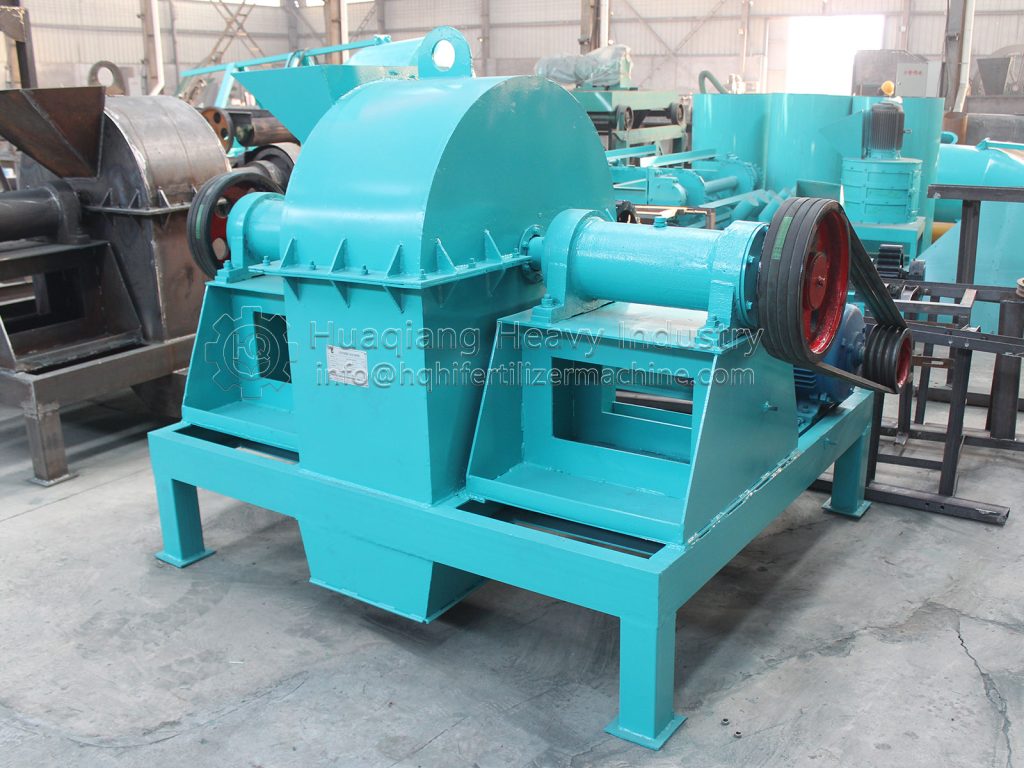
Analysis of the working principle of a cage crusher for fertilizer grinding

In modern industrial production, material pulverization is a crucial step. Cage crushers, with their unique performance and efficient operation, stand out among numerous pulverizing equipment and have become a valuable tool in many industries.

Cage crushers are primarily designed based on the principle of impact pulverization. Their core structure consists of two counter-rotating cage rotors equipped with numerous impact bars or claws. When material enters the grinder through the feed inlet, it is rapidly propelled by the high-speed rotating cages. These cages typically rotate at speeds between 800 and 1500 rpm, generating strong centrifugal forces. Under this high-speed rotation, the material is subjected to multiple, intense impacts from the impact bars or claws of the counter-rotating cages.

In addition to the impact, the material also collides within the cages, generating shear forces that further aid in pulverization. This repeated impact and collision effectively reduces lumpy or larger particles into the desired fine size.

Moreover, operators can optimize the crushing effect and meet diverse production needs by adjusting parameters such as the cage crusher’s rotation speed, the number and arrangement of beating rods or claws, according to different material properties and finished product particle size requirements.

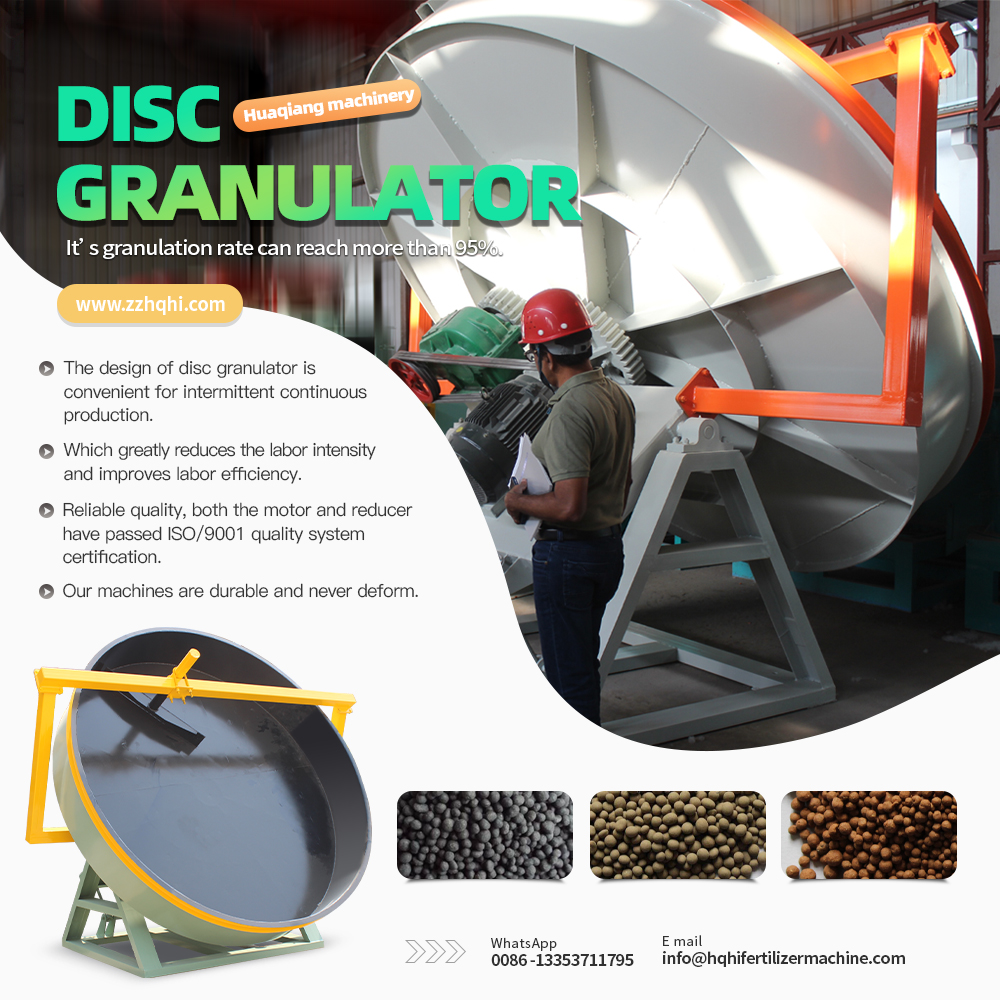
Disc granulator: High-efficiency granulation equipment for fertilizer production

In fertilizer production, selecting the right granulation equipment directly impacts product quality and production efficiency. Disc granulators, with their outstanding advantages, have become the preferred choice for many companies. As a common fertilizer granulator, they boast a granulation rate exceeding 95%. They can convert powdered or lumpy fertilizer raw materials into granules. The resulting granules have excellent sphericity and high strength, making them easy to store and transport, while also improving fertilizer utilization.

Disc granulators are highly adaptable to fertilizer raw materials, efficiently processing everything from organic fertilizers like livestock and poultry manure and fermented straw to inorganic compound fertilizers containing nitrogen, phosphorus, and potassium. Operating them simply, they easily control the granulation process by adjusting the disc’s tilt angle, rotation speed, and the amount of water or binder applied, meeting the production requirements of diverse fertilizer specifications.

At the same time, compared with other granulation equipment, the disc granulator has lower energy consumption, can effectively reduce the production and operation costs of enterprises, bring significant economic benefits to fertilizer production enterprises, and is an important equipment to promote the efficient development of the fertilizer industry.

Back To Top