Tag: NPK fertilizer production line

How organic fertilizer production lines transform waste into fertile soil “Gold”?

Under the concept of circular agriculture, organic fertilizer production lines are quietly undergoing a transformation. They are no longer simple processing facilities, but rather a bridge for resource transformation, turning ubiquitous agricultural waste into valuable resources that nourish the land.

The entire production line begins with scientific proportioning and mixing. Here, the fertilizer mixer machine plays a central role. Through its unique structural design, it can uniformly mix raw materials of varying properties—whether it’s viscous livestock manure or dry straw powder—in a short time. This efficient mixing not only improves production efficiency but also ensures the stability of subsequent fermentation quality.

When the production line needs to meet more specific nutrient requirements, it demonstrates its strong compatibility. By introducing the proportioning concept of NPK fertilizer production lines, the system can precisely add elements such as nitrogen, phosphorus, and potassium, forming a perfect complement to organic matter. This scientific combination of organic and inorganic elements retains the advantages of traditional organic fertilizers in improving soil while compensating for their lack of rapid effectiveness.

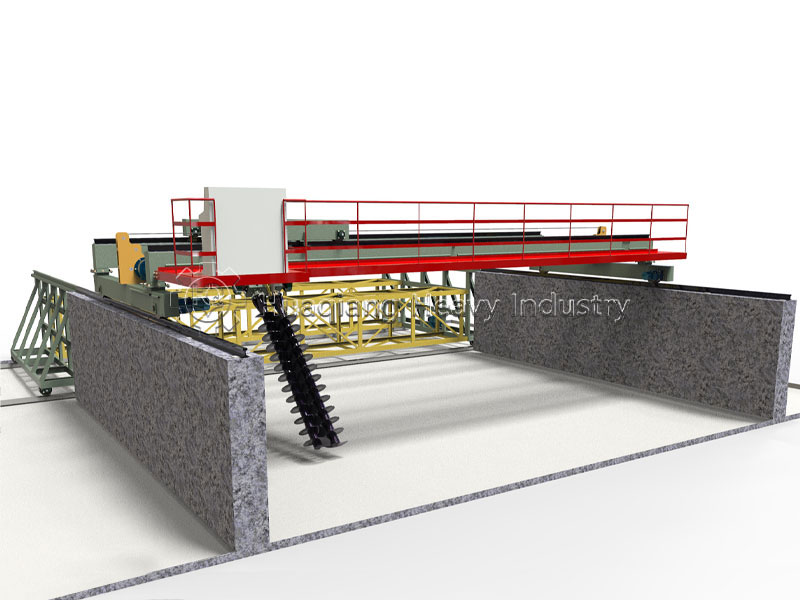
From the turning and ventilation during fermentation, to the precise temperature control during aging, and the shaping process in granulation, each stage reflects a deep understanding of the material’s properties. The final product is not just uniform fertilizer pellets, but a commitment to the health of the land.

This modern production line is redefining the value of “waste.” It allows agriculture to return to its cyclical nature, enabling nutrients to find a new home within the ecosystem.

Fertilizer mixer machines: Connecting fertilizer production line and quality

In the vast landscape of fertilizer production, the fertilizer mixer machine plays a silent yet crucial role. It doesn’t possess the power of a crusher, nor the shaping ability of a granulator, but it is the core element determining the homogeneity of the product.

Walk into any modern NPK fertilizer production line, and you’ll almost always find it in a core section. Various precisely measured nitrogen, phosphorus, and potassium raw materials, along with trace amounts of additives, are fed into it. Whether it’s the powerful agitation of the twin-screw agitation or the uniform tumbling of the horizontal drum, the goal is crystal clear: to fuse materials of varying shapes and densities into a uniform, nutrient-rich mixture in the shortest possible time.

When the scene shifts to a bio-organic fertilizer equipment array, the fertilizer mixer machine takes on a more nuanced role of “harmonizing.” The materials processed here are more complex—fermented organic matter, livestock manure, peat moss, or microbial residue, all with varying moisture content and loose textures. The mixer needs to provide gentler and more sustained agitation here to ensure that the organic raw materials come into full and even contact with the appropriate amount of functional microbial agents, nitrogen-fixing and phosphorus-solubilizing bacteria, and other microbial communities, avoiding localized over-concentration or under-concentration of the microbial community.

Therefore, whether it’s an NPK fertilizer production line pursuing precise chemical ratios or a bio-organic fertilizer equipment emphasizing biological activity, the mixer is an indispensable “link.”

NPK blending machines: The unsung hero of high-efficiency fertilizers

In modern fertilizer production, the NPK blending machine plays a crucial role. It is not only the core equipment of the NPK blending fertilizer production line but also a key factor determining the final fertilizer quality.

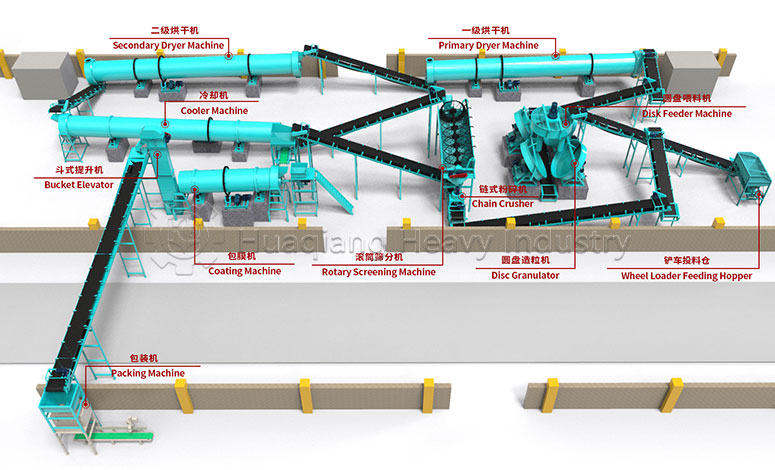
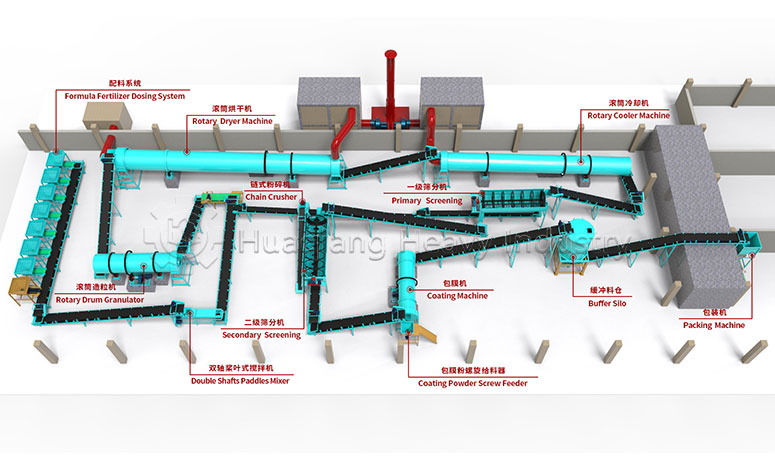
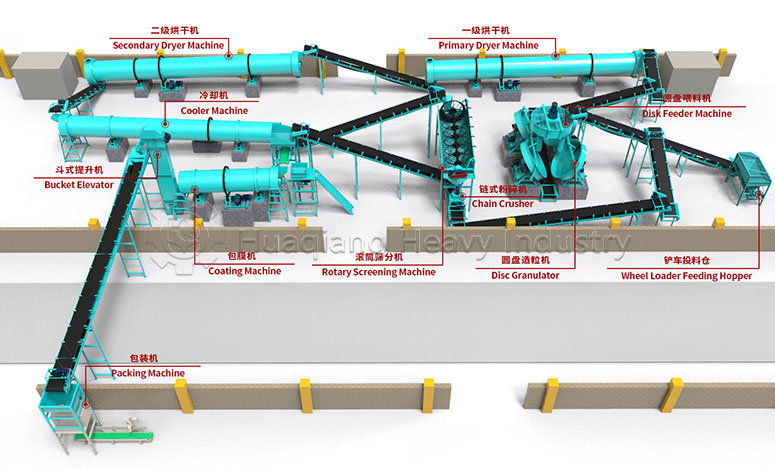
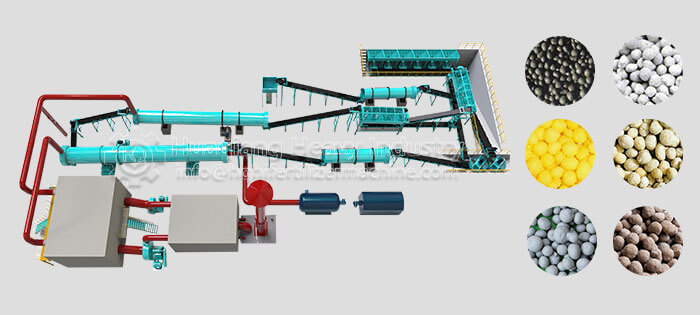
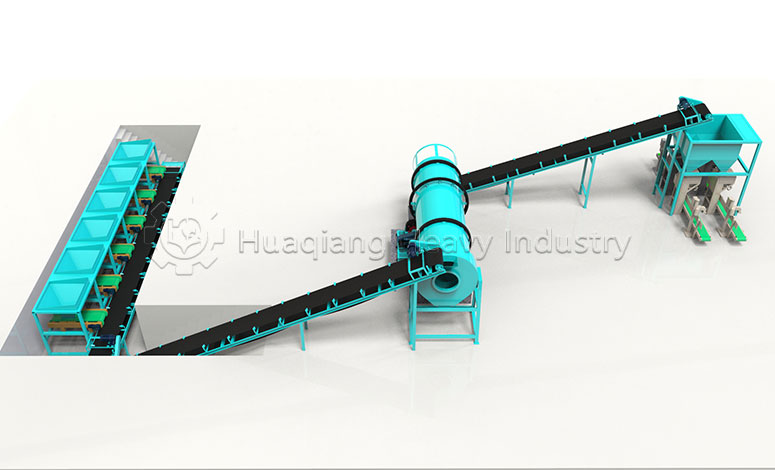
A typical NPK blending fertilizer production line constitutes a complete system from raw material input to finished product packaging. In this system, the fertilizer mixer machine, with its unique design and efficient operation, ensures the uniform distribution of various nutrients. Its rational structural design enables nitrogen, phosphorus, potassium, and trace elements to achieve ideal mixing effects in a short time.

The advantages of this specialized mixing equipment are obvious. It can handle raw materials in different forms, whether granular or powdered, achieving thorough mixing. The unique internal stirring device, through scientific movement, causes convection and diffusion of materials within the container, avoiding stratification or segregation.

In practical applications, the performance of the fertilizer mixer machine directly affects the efficiency of the entire production line. Its stable operation ensures production continuity, while the uniform mixing effect lays a good foundation for subsequent processes. This not only improves product quality but also optimizes production efficiency.

With the continuous improvement of agricultural demands, NPK blending machines and the blending fertilizer production lines they are used in are developing towards greater intelligence and precision. These specialized machines, through continuous optimization, consistently provide reliable support for agricultural production.

Detailed explanation of the mixing process in an NPK blending fertilizer production line

In the production of NPK blended fertilizer, the mixing process is the core link that determines the quality of the final product. Its goal is to uniformly blend basic fertilizers such as nitrogen (N), phosphorus (P), and potassium (K) from different sources, ensuring that each fertilizer particle has a consistent nutrient ratio.

1.Raw Material Pretreatment is Fundamental

The physical properties of the raw materials are crucial before they enter the fertilizer mixer machine. The particle size of each elemental fertilizer must be highly matched; this is a prerequisite for achieving uniform mixing and preventing nutrient separation (segregation) during subsequent transportation and use. Moisture content also needs to be strictly controlled to prevent material agglomeration.

2.Efficient Mixing is Key

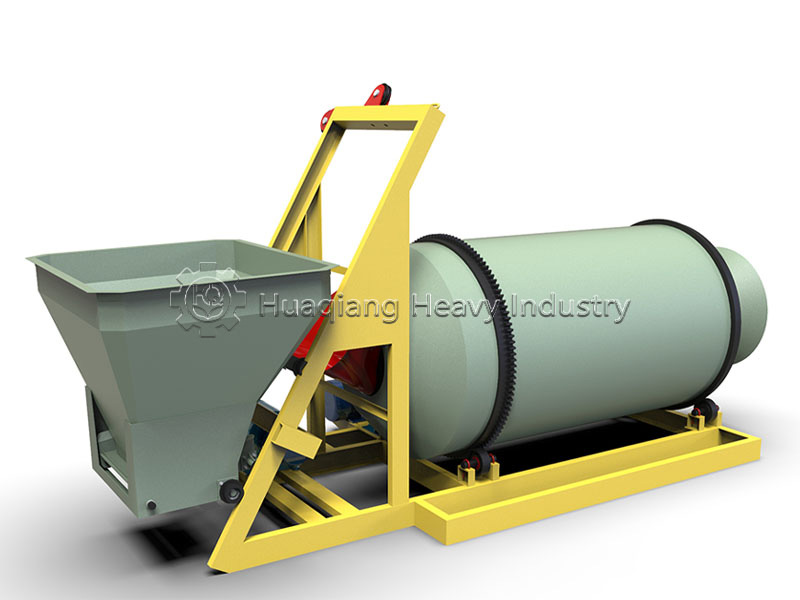
The core equipment is a double axis paddle mixer. When the material enters, two shafts rotating at specific angles and speeds drive the paddles, causing the material to undergo multi-dimensional composite motion within the machine. This includes both radial circular motion and axial lateral movement. This intense convection, shearing, and diffusion action can thoroughly interweave the various raw materials in a very short time (usually 2-4 minutes).

3.Precise Control as a Guarantee

The entire mixing process is precisely controlled by an automated system. Parameters such as feeding sequence, mixing time, and main unit load are monitored and recorded in real time. This precise control eliminates human error, ensuring the stability and reproducibility of each batch of product.

In short, the seemingly simple mixing process is actually the culmination of science, technology, and experience. It ensures that the NPK blending fertilizer production line can accurately deliver its nutrient formula, laying a solid foundation for balanced crop nutrition.

Key technology paths for low-energy retrofitting of NPK fertilizer production lines

To achieve the goal of efficient fertilizer production, low-energy retrofitting of NPK fertilizer production lines has become an industry imperative, with key improvements focused on optimizing technologies in high-energy-consuming processes.

In the raw material pretreatment stage, a waste heat recovery system is used to redirect 80-120°C exhaust gases generated during the drying process into the pulverization process, reducing energy consumption by 18%-22% and simultaneously reducing thermal emissions.

In the granulation process, a core energy consumer, traditional steam heating is gradually being replaced by electromagnetic heating, increasing heating speed by 50% and boosting thermal efficiency from 65% to over 90%. This reduces energy consumption per ton of product by approximately 80 kWh.

A closed-loop cooling system is introduced in the cooling process, increasing water reuse from 30% to 95% while minimizing the impact of circulating water on the surrounding environment.

In addition, the NPK fertilizer production line has achieved refined management and control through motor frequency conversion and an intelligent energy consumption monitoring platform. This platform monitors power changes across each device in real time, allowing for timely adjustment of operating parameters and avoiding idle energy consumption. Data shows that after systematic low-energy consumption upgrades, the NPK fertilizer production line can reduce overall energy consumption per ton of NPK fertilizer by 25%-30%, achieving both environmental and economic benefits.

NPK fertilizer production line: Targeting precise nutrients from diverse materials

NPK fertilizers can be formulated with nitrogen, phosphorus, and potassium nutrients according to crop needs, becoming “customized” fertilization solutions for agriculture. The core capability of this NPK fertilizer production line lies in its flexible handling of diverse materials.

First and foremost is the “difference” in the form of raw materials. The nitrogen source for NPK may be granular urea or powdered ammonium chloride, the phosphorus source is often lumpy monoammonium phosphate, and the potassium source is mostly free-flowing potassium chloride granules. The production line must first use crushing and grinding processes to grind the lumpy phosphorus source into fine powder, and then adjust the different forms of nitrogen and potassium raw materials into a homogeneous intermediate to avoid “particle clumping and powder settling” during subsequent mixing, ensuring that each nutrient is evenly distributed.

Secondly, there are the “special” physical and chemical properties of the materials. Some nitrogen sources tend to clump after absorbing moisture; for example, urea will harden into lumps when damp. Phosphorus sources have lower corrosivity, while potassium sources need to be protected from high temperatures to prevent nutrient loss. This requires the NPK fertilizer production line to “prescribe the right medicine for the right disease” during processing.

Finally, there is the “flexibility” of the material ratio. Different crops require different NPK ratios; for example, rice needs high nitrogen and low potassium, while fruits and vegetables need high potassium and low phosphorus. The production line needs to use a precise metering system to adjust the input of each raw material according to the formula at any time during material processing. In short, the NPK fertilizer production line“Strength” lies in the meticulous handling of diverse materials.

Fertilizer mixer machines lay a solid foundation for bio-organic fertilizer equipment

In the entire operation of bio-organic fertilizer equipment, the fertilizer mixer machine, seemingly a “basic link,” is actually a “hidden hero” that determines the final fertilizer effect and production efficiency.

The core objective of bio-organic fertilizer equipment is to transform organic waste such as straw and livestock manure into ecological fertilizer rich in beneficial bacteria through harmless treatment. The uniformity of raw material mixing directly affects the fermentation effect and nutrient balance. The fertilizer mixer machine perfectly addresses this key requirement: through the rotational action of its multi-dimensional mixing structure, it breaks down the physical differences between raw materials, achieving uniformity in carbon-nitrogen ratio, humidity, and microbial distribution across the entire process.

The mechanical mixing of the fertilizer mixer machine ensures that every component of the raw material is fully in contact. This not only provides a “homogeneous substrate” for the fermentation stage of the bio-organic fertilizer equipment but also allows microbial agents to adhere evenly to the organic materials, significantly improving microbial activity and composting efficiency, and shortening the fermentation cycle.

As the “quality gatekeeper” in bio-organic fertilizer equipment, the fertilizer mixer machine ensures the nutrient balance and fermentation quality of ecological fertilizer through precise mixing, making every step of the transformation of organic waste into high-quality fertilizer more controllable and efficient, and providing solid support for the large-scale development of green agriculture.

The synergistic code between BB fertilizer mixers and NPK fertilizer production lines

In the wave of “on-demand fertilization” in modern agriculture, BB fertilizer mixers and NPK fertilizer production lines are not independent entities. Their synergy allows NPK fertilizers to move from “standardization” to “customization,” adapting to the nutrient needs of different crops.

The core value of the BB fertilizer mixer lies in its “uniformity control.” Targeting the physical characteristics of nitrogen, phosphorus, and potassium fertilizers (or additives containing micronutrients), it uses the staggered operation of multi-directional mixing paddles, combined with anti-caking devices, to ensure that raw materials of different particle sizes and specific gravities are thoroughly mixed in a sealed chamber, laying the foundation for “precision fertilization.”

The NPK fertilizer production line, on the other hand, is the complete chain that translates “precise proportioning” into “standardized products.” From raw material screening and automatic metering to the core mixing stage of the BB fertilizer mixer, and then to subsequent granulation, cooling, and packaging, the entire production line is connected through automated processes, avoiding errors and efficiency bottlenecks caused by manual operation.

The synergy between the two also addresses the “single-formula pain point” of traditional NPK fertilizers. Through flexible formula adjustments on the production line, coupled with the precise mixing of the BB fertilizer mixer, it’s possible to quickly switch between specialized NPK formulas for different crops such as wheat, corn, fruits, and vegetables. This meets the needs of large-scale production while reducing fertilizer waste and soil nutrient imbalances.

From “precise mixing” to “closed-loop process,” the linkage between the BB fertilizer mixer and the NPK fertilizer production line ensures that NPK fertilizer production maintains both “quantity” and “quality,” better meeting the modern agricultural demands for “efficiency, precision, and environmental protection.”

A new ecosystem for fertilization: Bio-organic fertilizer and NPK blending machine

In modern agriculture’s pursuit of “ecology + efficiency,” bio-organic fertilizer equipment and NPK blending machines are forming a complementary synergy, protecting soil health while precisely meeting crop nutrient needs.

Bio-organic fertilizer equipment starts with organic waste, transforming straw, livestock manure, and other materials into bio-organic fertilizer rich in beneficial microorganisms through processes such as composting, fermentation, and granulation. Its core value lies in cultivating a soil microbial environment, improving compacted soil, and releasing nutrients fixed in the soil, thus laying a solid “ecological foundation” for crop growth.

NPK blending machines focus on precise nutrient supply, mixing nitrogen, phosphorus, and potassium fertilizers in scientifically proportioned ratios according to the needs of different crops and growth stages. It overcomes the limitations of single-nutrient fertilizers, using mechanized precision mixing to ensure fertilizer nutrients better match the crop’s growth rhythm, achieving highly efficient “supplementing what’s lacking.”

The two do not exist in isolation but rather form a highly efficient synergy. The “ecological fertilizer” produced by the bio-organic fertilizer equipment improves soil texture, creating favorable conditions for the absorption of NPK fertilizer; the “precision fertilizer” formulated by the NPK blending machine provides fast-acting nutrients, compensating for the slightly slower effect of bio-organic fertilizer.

In actual production, the fertilizers produced by the two types of equipment can be further combined to ensure both short-term crop growth needs and long-term soil maintenance, achieving a closed loop of “fast-acting + long-lasting” nutrient supply.

The Proportioning Process of an NPK Fertilizer Production Line

In an NPK fertilizer production line, the proportioning process is the key step in determining fertilizer quality and effectiveness. By precisely controlling the ratios of nitrogen (N), phosphorus (P), potassium (K), and trace elements, it adapts fertilizer to the needs of different crops, soils, and growth stages, directly impacting agricultural production yield and quality.

The proportioning process must adhere to the principle of “customization on demand.” Nutrient requirements vary significantly among crops: rice requires high nitrogen to promote tillering, so the nitrogen content in the proportion is often 20%-25%; fruit trees require high potassium to enhance sweetness during the fruit-bearing stage, so the potassium ratio should be adjusted to 15%-20%; vegetables require a balanced ratio of nitrogen, phosphorus, and potassium, typically maintaining a ratio of approximately 1:1:1. Soil conditions also influence the proportioning process. Acidic soils require reduced phosphorus application to prevent fixation, while saline-alkali soils require increased nitrogen to compensate for leaching losses.

Precise proportioning relies on advanced technology. Modern production lines often utilize “automatic batching systems.” Sensors monitor the moisture and particle size of raw materials in real time, and combined with a PLC control system, they automatically adjust the feed rate with an error controllable within ±0.5%. For example, for wheat fertilizer, the system automatically delivers urea, monoammonium phosphate, and potassium chloride to the mixer in the corresponding proportions according to an “18-12-15” formula, ensuring consistent nutrient content in each batch.

The batching process must also balance environmental protection and efficiency. Improper batching can lead to nutrient waste: excessive nitrogen content can easily lead to eutrophication, while excessive phosphorus can cause soil compaction. Therefore, production lines incorporate “nutrient balance algorithms” to optimize the batch based on regional soil testing data, minimizing nutrient loss while meeting crop needs. Furthermore, pre-mixing disperses insoluble raw materials, preventing localized nutrient excess or deficiency caused by uneven batching.

As the core link of the NPK fertilizer production line, scientific ratio is not only the key to improving fertilizer competitiveness, but also an important guarantee for helping agriculture “reduce weight and increase efficiency” and achieve green production.

Back To Top