Tag: NPK fertilizer production equipment

BB fertilizer: A core support for high-quality development in modern agriculture

BB fertilizer (bulk blended fertilizer), with its flexible formulation, precise nutrient content, and strong adaptability, precisely meets the needs of modern agriculture for high efficiency, green practices, and large-scale operations. It serves as a crucial link between fertilizer production and field application, its importance permeating the entire planting process.

Suitable for Precision Fertilization: Modern agriculture pursues precise fertilization tailored to specific crops. BB fertilizer, through NPK blending production lines, can be mixed with single-element fertilizers according to crop nutrient requirements using BB fertilizer mixers, flexibly adjusting nutrient ratios to help improve crop quality and yield.
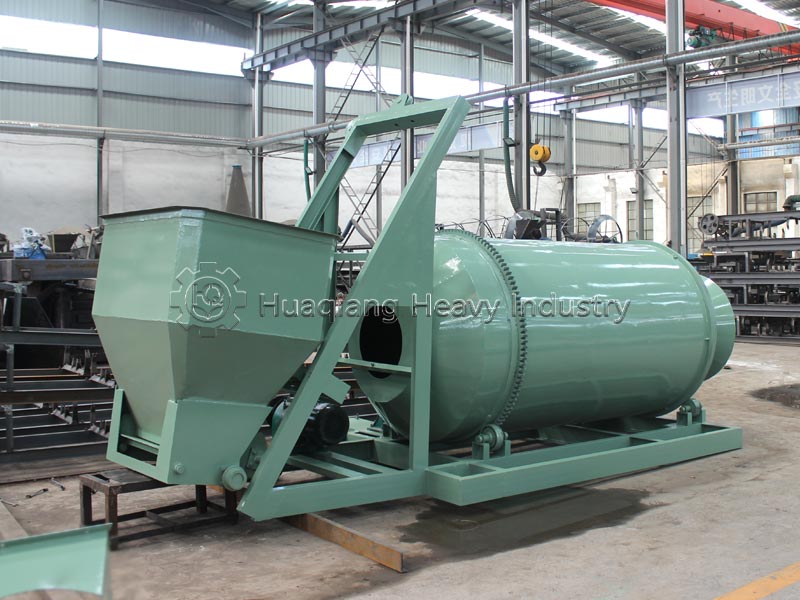
Suitable for Large-Scale Planting: Large-scale farms rely on mechanized operations. BB fertilizer granules are uniform and have excellent flowability, allowing direct compatibility with integrated fertilization equipment, significantly reducing manual labor. Simultaneously, it can be produced in batches as needed, rapidly processed through NPK fertilizer production equipment, aligning with efficient turnover.

Reduces Resource Waste: BB fertilizers allow for precise fertilizer control, avoiding nutrient loss and soil pollution caused by excessive application of single fertilizers, improving fertilizer utilization, and aligning with the goals of “reducing fertilizer use and increasing efficiency” and “dual carbon” (carbon reduction and emission reduction), thus promoting circular agricultural development.

They also optimize planting costs. Growers can dynamically adjust fertilizer formulations based on crop growth, eliminating the need to stockpile multiple finished fertilizers, reducing financial and storage pressures; the simplified process also reduces energy consumption in fertilizer production equipment, indirectly lowering overall costs.
A comprehensive guide to the main types of compound fertilizers: Choose the most efficient option

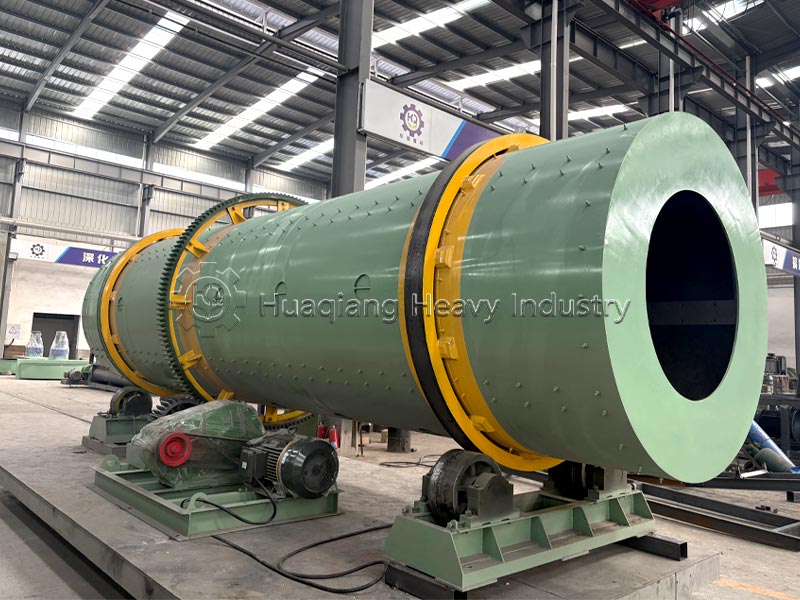
Compound fertilizers come in a wide variety of types. The production of high-quality compound fertilizers largely relies on NPK fertilizer production lines, processed using core NPK fertilizer production equipment such as NPK fertilizer granulators. The core classification logic revolves around “nutrient ratio” and “functional suitability.” Different types differ significantly in nutrient composition and fertilizer efficacy characteristics, making them suitable for different crops and planting scenarios.

Based on the nitrogen, phosphorus, and potassium nutrient ratio, they can be divided into balanced and specialized types. Balanced types, such as 15-15-15 compound fertilizer, have equal amounts of nitrogen, phosphorus, and potassium, making them suitable for the entire growth period of field crops such as wheat and corn, and offering strong versatility; specialized types have targeted ratios, such as high-nitrogen types (25-10-10) suitable for leafy vegetables to meet the needs of branch and leaf growth; high-potassium types (15-10-25) suitable for the fruit expansion stage of fruits and vegetables to improve fruit sweetness and quality; and high-phosphorus types (10-25-10) suitable for the seedling stage of crops to promote root development.

Based on functional orientation, they can be divided into conventional compound fertilizers and functional compound fertilizers. Conventional compound fertilizers only provide basic nutrients to meet the basic growth needs of crops; functional compound fertilizers additionally contain humic acid, amino acids, trace elements, or beneficial microorganisms, and have functions such as soil improvement, stress resistance, and disease resistance.

Based on form, there are granular and powdered compound fertilizers. Granular compound fertilizers are processed and shaped by NPK fertilizer granulators, offering stable fertilizer release and convenient storage and transportation, making them suitable for large-scale mechanized planting; powdered fertilizers dissolve quickly and are fast-acting, suitable for small-scale planting or stages where crops urgently need fertilization.

What to Consider When Choosing NPK Fertilizer Production Equipment

The selection of NPK fertilizer production equipment directly impacts production efficiency, product quality, and the economic benefits of the enterprise, serving as a fundamental guarantee for the development of fertilizer production companies. When making a selection, it is necessary to consider multiple factors comprehensively and accurately match the equipment to your production needs to achieve efficient and stable operation.

Clearly defining production needs is the prerequisite for equipment selection. The equipment capacity should be determined based on the company’s scale; small and medium-sized enterprises can choose small to medium-sized equipment with a capacity of 0.8-6 t/h, while large enterprises require large-scale production lines with a capacity of 10-50 t/h. At the same time, it is necessary to consider product positioning, clearly defining the requirements for fertilizer granule size, shape, and formula diversity, ensuring that the equipment is compatible with different raw materials such as urea and potassium chloride, and meeting diverse production needs. Leaving a certain capacity redundancy will lay the foundation for future expansion.

Equipment quality and technological advancement are core guarantees. Core components should be made of corrosion-resistant, high-strength materials such as 304 stainless steel to resist the corrosive nature of NPK fertilizers and extend the equipment’s service life. Pay attention to the manufacturing process, check the welding strength and component processing accuracy, and verify equipment stability through on-site factory visits and user feedback. Prioritize equipment equipped with intelligent batching and PLC control systems to improve automation, reduce manual intervention, and ensure batching accuracy and product uniformity.

Compatibility, environmental protection, and after-sales service cannot be ignored. The equipment should have good scalability to facilitate future upgrades and modifications; it should be equipped with devices such as pulse dust collectors and explosion-proof motors to meet dust explosion prevention and environmental emission standards. Choose a fertilizer machinery manufacturer with comprehensive after-sales service to ensure timely installation, commissioning, training, and spare parts supply, reducing downtime risks.

Cost considerations should balance short-term investment and long-term benefits, avoiding blindly pursuing low-priced equipment. Low-priced equipment often has inferior materials and frequent malfunctions, which increases maintenance costs. A cost-benefit analysis should be conducted to select the most cost-effective equipment and maximize return on investment.

In summary, selecting NPK fertilizer production equipment requires a focus on production needs, while also considering quality, technology, environmental protection, and after-sales service, in order to choose suitable equipment and provide support for the high-quality development of the enterprise.

Back To Top