Tag: fertilizer screener machine

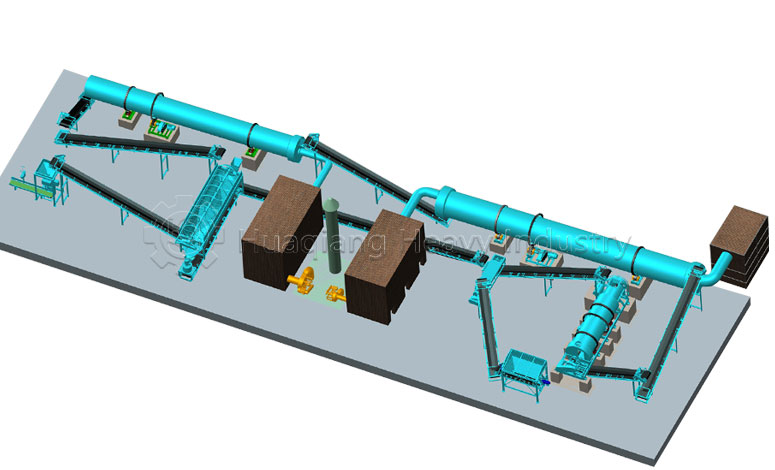
Detailed process flow of roller press granulator production line

Roller press granulator production lines, with their advantages of cold pressing, energy efficiency, and wide compatibility with raw materials, are widely used in the processing of compound fertilizers and organic fertilizers. They eliminate the need for high-temperature drying, maximizing the retention of raw material activity and nutrients.

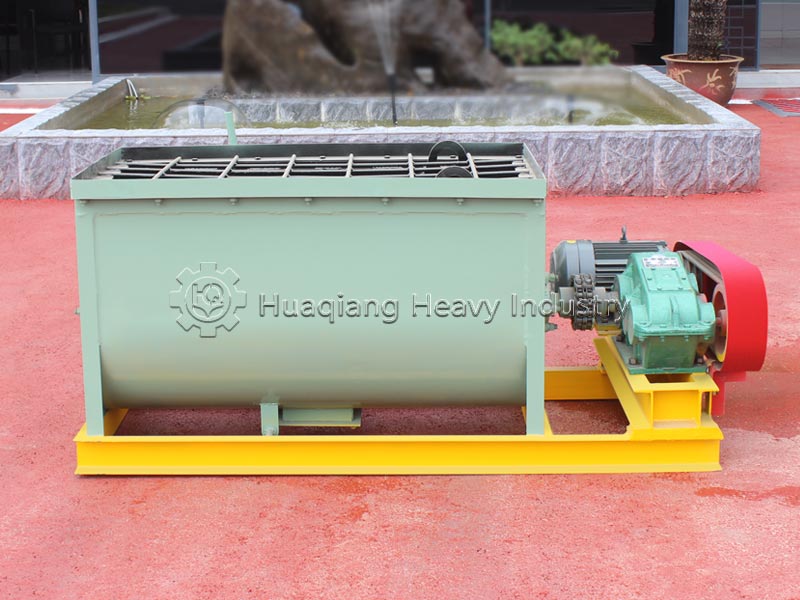
Raw Material Pretreatment: First, the raw materials are precisely proportioned according to a preset ratio. Inorganic raw materials such as urea and monoammonium phosphate, or well-rotted organic materials, are mixed with auxiliary materials and fed into a fertilizer mixer for homogenization, ensuring uniform nutrient distribution. Then, the material is processed by crushing and screening equipment to achieve a particle size of 80 mesh or higher, while simultaneously adjusting the moisture content to 8%-12% to avoid clumping or poor forming.
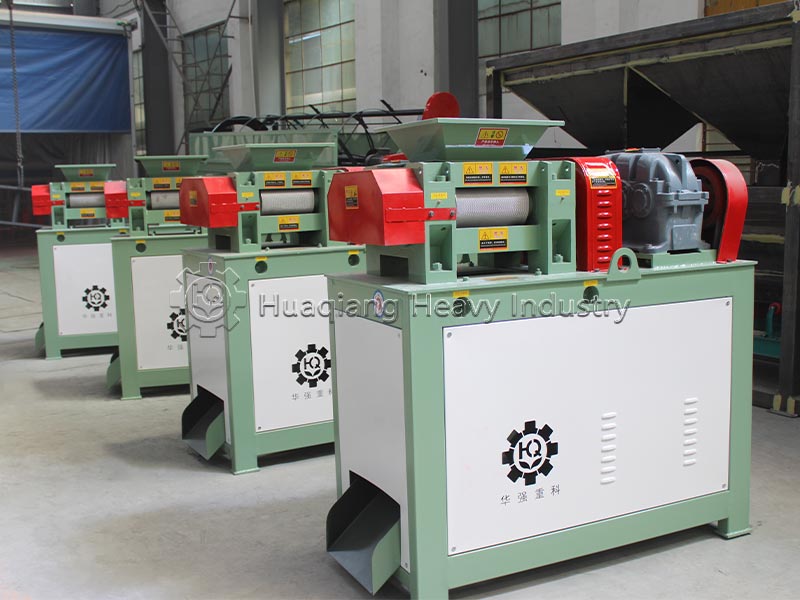
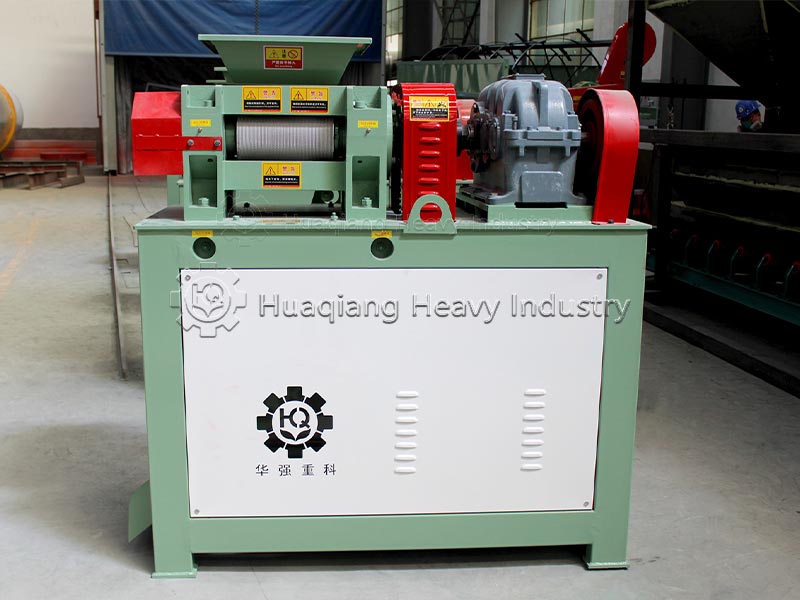
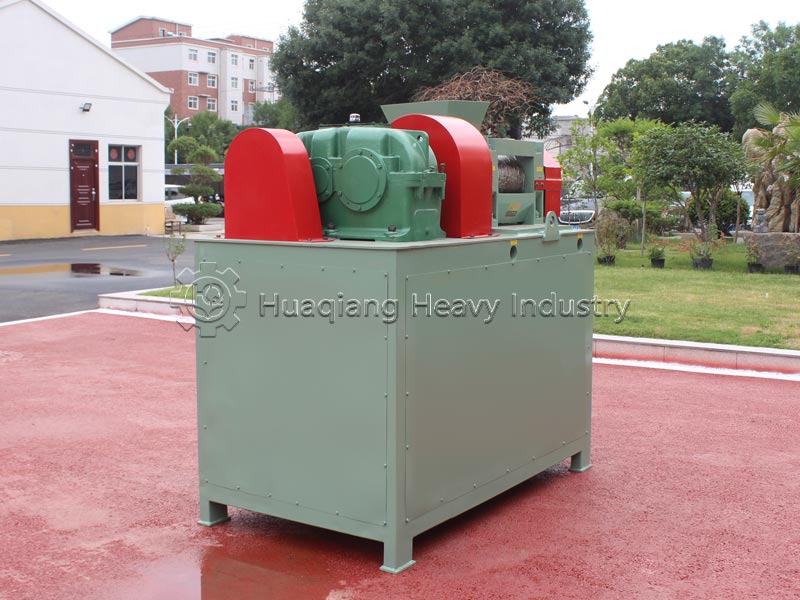
Roller Pressing: The pretreated material is fed into a double roller press granulator. High pressure is applied by a pair of counter-rotating rollers, pressing the loose material into dense flakes or blocks. The roller pressure needs to be finely adjusted according to the material characteristics. Insufficient pressure will result in brittle particles, while excessive pressure may damage the equipment and affect solubility; precise control is essential.

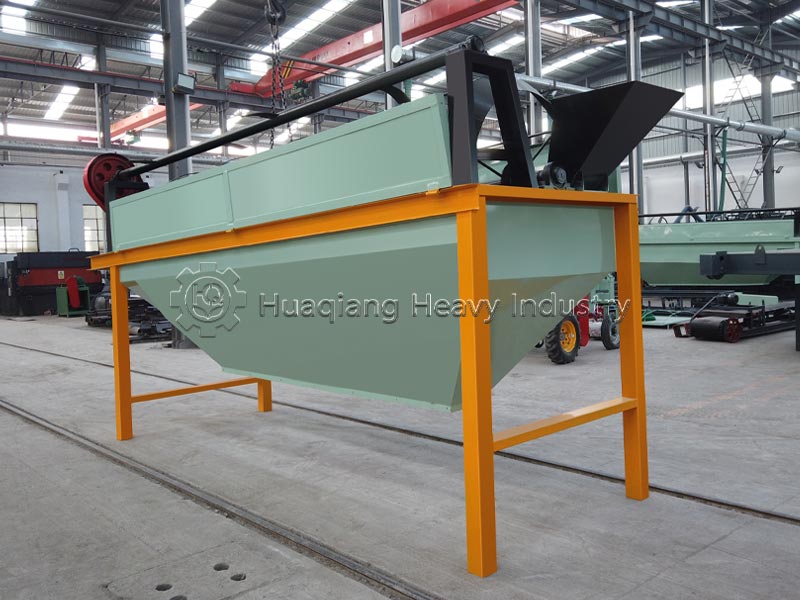
Post-Processing Screening: The raw material is crushed into irregular particles by a crusher, then classified by a fertilizer screener machine. Qualified particles enter subsequent stages, while unqualified coarse particles and fine powder are returned to the pretreatment stage for reprocessing, forming a closed-loop production process and improving raw material utilization. Finally, qualified particles are quantitatively packaged and sealed for storage.

This process is simple and compact, with low energy consumption and strong environmental friendliness. It is suitable for processing various material combinations and is an ideal choice for small- to medium-capacity fertilizer production lines.
How to optimize pig manure drying process for maximum efficiency?

Pig manure drying is a crucial step in its resource utilization and conversion into organic fertilizer. However, improper process control can lead to high energy consumption, uneven drying, and nutrient loss. Optimizing the pig manure drying process requires focusing on three core aspects: “raw material suitability, equipment coordination, and precise parameter control.”

Raw material pretreatment optimization. Fresh pig manure has a moisture content of 70%-80%, and direct drying can easily lead to equipment sticking and low heat transfer efficiency. It is necessary to first reduce the initial moisture content to 50%-60% through solid-liquid separation equipment, and then remove stones and impurities using a fertilizer screener machine to ensure uniform material particle size (recommended ≤3mm). For severely caked pig manure, a small amount of bulking agent can be added to improve permeability, reduce thermal resistance during the drying process, and improve heat utilization efficiency.

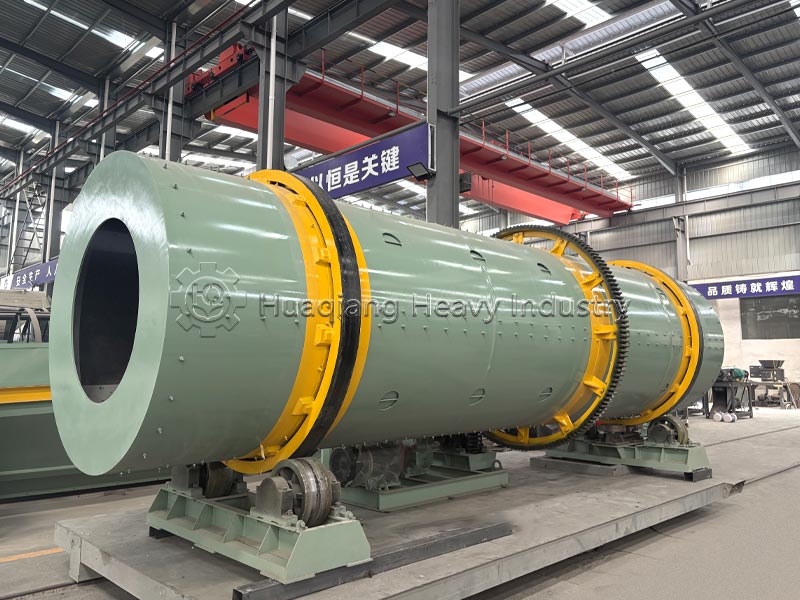
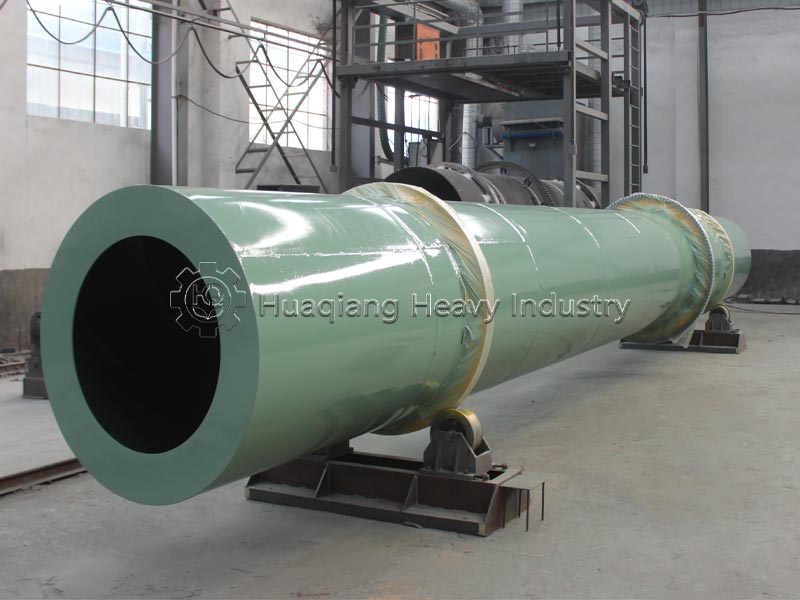
Drying equipment selection and parameter adjustment. Prioritize the use of highly adaptable equipment such as rotary dryers, and precisely adjust parameters based on material characteristics: control the drum rotation speed at 3-6 r/min to ensure sufficient contact between the material and hot air; the hot air temperature should be adjusted according to the subsequent use, controlling it at 120-150℃ for organic fertilizer production to avoid high-temperature damage to organic matter; the wind speed should match the material residence time, generally 1.5-2.5 m/s is appropriate.

Heat source selection and process coordination. Prioritize the use of low-cost heat sources such as biomass energy and industrial waste heat. At the same time, connect the processes before and after drying, matching the capacity of the front-end solid-liquid separation equipment with the drum fertilizer dryer to avoid material accumulation; a cooling device should be installed at the back end to quickly cool the product to room temperature, reducing moisture regain and maximizing overall process efficiency.

How does a bulk blending fertilizer machine produce bulk blended fertilizers?

Bulk blended fertilizers (BB fertilizers) are characterized by their flexible formulation and uniform nutrient distribution. The bulk blending fertilizer machine, as the core production equipment, is involved throughout the entire process, and its operation directly determines the mixing quality. The entire production process revolves around the mixer, efficiently producing qualified products in four main steps.

Raw material pretreatment is fundamental to mixing. Single fertilizers such as urea and potassium chloride, as well as trace element raw materials, are processed through a fertilizer screener machine to remove impurities and crushed to ensure uniform particle size (80-100 mesh), with moisture content controlled at 8%-12% to prevent caking. Then, a precise metering system weighs the materials according to the formula, with an error of ≤±1%, laying the foundation for uniform mixing.

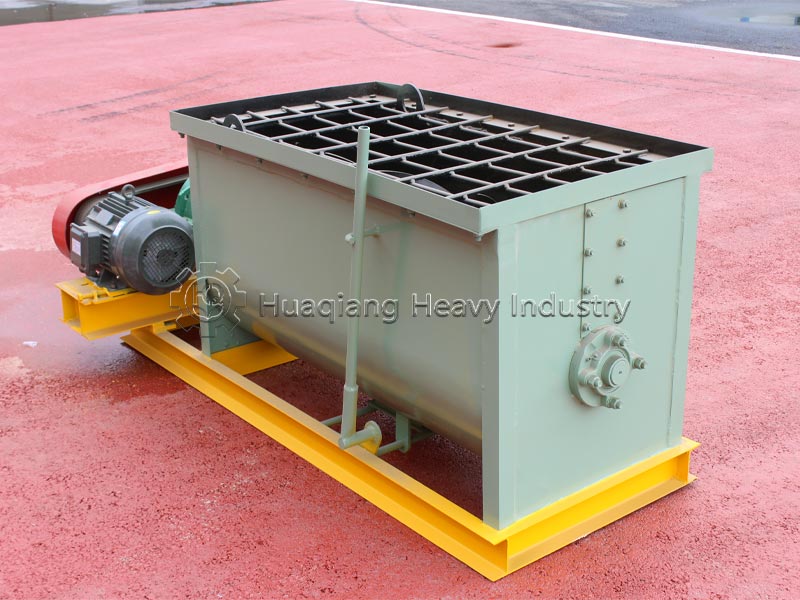
Layered feeding and precise mixing are crucial. A double shafts paddle mixer or a BB fertilizer mixer is preferred, following the principle of “fine before coarse, light before heavy”: fine and light raw materials are added first and mixed at low speed for 1-2 minutes, then coarse and heavy raw materials are added, and the speed is adjusted to 25-35 r/min for continuous mixing for 5-10 minutes.

During mixing, uniformity must be monitored in real time. Samples can be taken from the sampling port and the coefficient of variation of nutrients can be tested using the “quartering method.” If it is >5%, the mixing time should be extended or the feeding order adjusted.

After mixing is complete, the material can be discharged and stored. The qualified fertilizer is transported from the mixer’s discharge port to a bulk storage silo, or packaged in bulk form, avoiding secondary pollution and segregation throughout the process. In summary, the bulk blending fertilizer machine, through a scientifically designed process, achieves efficient conversion from raw materials to finished products and is key to large-scale production.

Roller press granulation technology: A reliable choice for improving the strength and uniformity of fertilizer granules

The strength and uniformity of fertilizer granules directly affect their transportation and storage stability and application effectiveness, making them a core indicator of high-quality fertilizers. Roller press granulation technology, with its unique principle of “dry extrusion and die-hole molding,” can precisely control particle characteristics from the molding source, effectively improving strength uniformity.

Roller press granulation uses the synchronized pressure rollers of a fertilizer compaction machine to apply constant pressure to dry powder raw materials that have been mixed by a fertilizer mixer and screened by a fertilizer screener machine. The raw materials are then extruded and molded through die holes. The fertilizer compaction machine’s pressure control is precise, and the roller speed and pressure are constant, ensuring that each granule receives the same extrusion pressure, thus preventing strength differences caused by uneven pressure from the source.

This technology has wide raw material adaptability; NPK compound fertilizers and other materials, after pretreatment, can be stably granulated through the fertilizer compaction machine. At the same time, the precise feeding system of the fertilizer compaction machine can stabilize the raw material supply speed, avoiding local pressure changes caused by feeding fluctuations; secondary screening after molding removes irregular particles, further improving the consistency of finished product particle size and strength.

In practical applications, fertilizer granules produced by roller press granulation have a coefficient of variation in strength of ≤5%, far superior to traditional processes, with a transportation pulverization rate of less than 2%. This meets the high requirements for particle stability in large-scale planting, reducing fertilizer waste and ensuring uniform application. In summary, roller press granulation technology, through precise pressure control and process optimization, can significantly improve the strength and uniformity of fertilizer granules, providing strong support for the production of high-quality fertilizers.

Can urea granulation technology improve agricultural productivity?

Urea, as a core nitrogen fertilizer in agriculture, has an application efficiency that directly impacts crop yield and quality. Urea granulation technology, through morphological optimization and process upgrades, addresses pain points from multiple dimensions and is a key technological support for boosting productivity.

Granulation technology optimizes urea characteristics. After screening raw materials with uniform particle size using a fertilizer screener machine, powdered urea is converted into granular urea with uniform particle size and moderate strength through processes such as rotary drum granulation and spray granulation. This solves the problem of caking during transportation and storage, and also extends the nutrient release cycle. Granular urea releases nitrogen slowly after being applied to the soil, reducing high-temperature volatilization losses, avoiding waste, and providing continuous fertilization.

Granulation technology improves application efficiency. Granular urea is compatible with mechanized fertilization equipment, enabling precise broadcasting and band application, significantly improving efficiency, adapting to large-scale planting bases, and reducing labor input; uniform granules prevent localized nutrient excess that can burn seedlings, ensuring crop growth. Some granulation processes add slow-release agents and efficiency enhancers, extending fertilizer efficiency and reducing the number of fertilizations, indirectly lowering planting costs.

Granulation technology contributes to green agriculture. Granular urea reduces nitrogen loss and pollution to soil and water bodies, aligning with the needs of green transformation; its stable characteristics facilitate mixing with phosphorus and potassium using a fertilizer mixer to produce compound granular fertilizers, achieving balanced fertilization and improving crop yield and quality. High-quality granular urea allows crops to fully absorb nutrients and grow robustly, directly boosting yield per unit area and contributing to increased agricultural productivity.

Why are compound fertilizer production equipment so crucial for the production of fertilizer granules?

The quality of fertilizer granules (forming rate, uniformity, strength, etc.) directly determines the fertilizer’s effectiveness and market competitiveness, and all of this highly depends on the performance and suitability of the compound fertilizer production equipment. From raw material mixing to finished product screening, the operating status of each piece of equipment directly affects the entire granule production process.

Production equipment is the core guarantee of granule quality. The mixing uniformity of the fertilizer mixer determines the consistent distribution of nitrogen, phosphorus, potassium, and additives in the material, preventing nutrient segregation in the granules; the parameter accuracy of the NPK fertilizer granulator (such as rotation speed and pressure) directly affects the granule forming rate and strength; and the fertilizer screener machine accurately screens qualified granules, removing impurities and unqualified products, ensuring that the finished product meets the required particle size.

Equipment performance determines production efficiency and stability. Efficient complete sets of production equipment can achieve continuous operation of raw material processing, mixing, granulation, and screening, significantly increasing the granule output per unit of time; at the same time, the stability of the equipment directly affects production continuity, reducing downtime losses caused by equipment failures.

Rational equipment configuration is key to cost control. Suitable production equipment can accurately control raw material usage and energy consumption, reducing material waste; high-quality equipment has lower maintenance costs and a longer service life, reducing long-term investment. In addition, equipment that meets standards can ensure that granule quality meets requirements, avoiding additional costs caused by rework due to unqualified products, and indirectly improving production efficiency.

What is the role of screening in the organic waste treatment process?

In the entire organic waste treatment process, screening is a core pre-treatment step, requiring specialized equipment such as drum screener machine or vibration screener machine. Its core value lies in removing impurities and optimizing material characteristics through physical classification, laying a solid foundation for subsequent processes such as fermentation and resource utilization.

The primary function is to remove impurities and ensure the safe and smooth operation of equipment. Inert impurities such as stones, metals, and plastics mixed in organic waste can easily wear and clog equipment such as fermentation tanks and mixers. Precise screening with a fertilizer screener machine effectively separates impurities, reduces operating and maintenance costs, and ensures a continuous and stable treatment process.

Secondly, it involves material classification to optimize the effectiveness of subsequent processes. Organic waste of different particle sizes has significantly different fermentation efficiencies. Screening can classify materials by particle size: fine materials can fully contact microorganisms and oxygen, improving the speed and uniformity of composting; coarse materials can be returned to the crushing system for reprocessing, preventing incomplete fermentation and uneven nutrient distribution in the final product.

Furthermore, screening improves the quality of resource-recovered products. When producing organic fertilizer from organic waste, fine screening with a fertilizer screener machine removes uncomposted coarse particles and residual impurities, ensuring uniform particle size and purity of the organic fertilizer. At the same time, the materials classified by drum screener machine and vibration screener machine can be adapted to different resource utilization pathways, improving resource utilization efficiency.

In summary, screening is a crucial link connecting the pre-treatment and deep treatment of organic waste, playing an irreplaceable role in improving treatment efficiency, reducing costs, and ensuring resource utilization value.

Three core equipment pieces build a robust quality defense line for NPK granular fertilizers

The market competitiveness of NPK granular fertilizers hinges on granule strength, particle size uniformity, and nutrient stability. The progressive synergy of the fertilizer compaction machine, fertilizer screener machine, and NPK fertilizer granulator, from molding and strengthening to screening, builds a robust quality defense line at every stage.

The NPK fertilizer granulator is the first line of quality control. After precisely proportioned nitrogen, phosphorus, and potassium raw materials are fed into the equipment, they are formed into preliminary granules through wet rolling or dry pre-molding. This ensures that the multiple nutrients are evenly distributed within the granules, preventing stratification, and also initially controls the particle size range, laying the foundation for subsequent quality improvement.

The fertilizer compaction machine undertakes the mission of strengthening the granules. The initially formed granules lack sufficient strength and are prone to pulverization in subsequent stages. After precise extrusion, the internal structure of the granules becomes denser, significantly increasing strength and resulting in a more regular shape. Especially in dry granulation scenarios, the combination of these two machines can increase the granule formation rate to over 95%, meeting the needs of storage and transportation.

The fertilizer screener machine is the final quality control officer. The granules, after molding and strengthening, are graded by the multi-layer screens of the screening machine, removing oversized, undersized, and damaged unqualified products. Qualified products enter the packaging stage, while unqualified products are returned to the granulator for reprocessing, forming a closed loop that ensures uniform particle size and reduces raw material waste.

The synergy of these three pieces of equipment achieves controllable quality throughout the entire cycle of NPK granular fertilizer production, from molding to factory delivery. This not only improves the finished product qualification rate but also ensures stable fertilizer efficacy, precisely meeting the core needs of large-scale agriculture for high-quality fertilizers.

A three-step value enhancement process in organic fertilizer production lines

In modern organic fertilizer production, a complete production line not only needs to complete basic processing but also achieves significant value enhancement through refined processing.

After the materials have completed fermentation and mixing, the fertilizer compaction machine initiates the refined processing journey. It shapes loose powdery materials into uniformly sized granules using physical pressure. This process not only improves the physical properties of the product, making it easier to store and transport, but more importantly, it lays the morphological foundation for subsequent processing.

The extruded granules then enter the screening stage. The fertilizer screener machine, through a precise screening mechanism, strictly grades the finished product according to particle size specifications. Particles that meet the standards proceed to the next process, while products with unqualified particle sizes are returned to the previous process for reprocessing.

At the end of the entire organic fertilizer production line, the fertilizer coating machine plays a crucial role. This equipment effectively reduces clumping during storage by coating the granules with a special film material, while also enabling the slow release of nutrients. Products treated with coating not only have a brighter appearance but also significantly enhanced functionality and added value.

The coordinated operation of these specialized organic fertilizer production equipment demonstrates the high level of precision in modern fertilizer production. From the shaping process of the fertilizer compaction machine to the fine selection by the fertilizer screener machine, and then to the value-added processing by the fertilizer coating machine, each step contributes to the quality of the final product.

Key aspects of water-soluble fertilizer processing: Quality control from raw materials to finished products

The superior properties of water-soluble fertilizers stem from meticulous processing, with the core focus on ensuring nutrient purity, solubility, and uniformity. Compared to traditional fertilizers, their processing demands higher standards for raw materials, formulation, and manufacturing processes. The rational use of key equipment such as fertilizer screener machines, fertilizer mixers, and fertilizer packing machines is crucial for efficient processing and quality assurance.

Raw material selection is the first line of defense. High-purity, easily soluble raw materials must be selected to prevent impurities from affecting quality. Fertilizer screener machines are used to remove impurities and large particles, while simultaneous drying and impurity removal processes reduce moisture content, preventing moisture absorption and caking, thus laying the foundation for subsequent processing.

Precise formulation and uniform mixing are core aspects. After accurately weighing the raw materials according to crop needs, they are fed into a fertilizer mixer for thorough mixing to prevent uneven nutrient distribution; powdered water-soluble fertilizers can be further refined using a fertilizer screening machine to improve dissolution speed; liquid water-soluble fertilizers require controlled mixing parameters to ensure complete nutrient dissolution.

Finished product testing and packaging are the final stages. After passing quality control, the product is packaged using a fertilizer packaging machine. Moisture-proof and sealed packaging materials are used to protect quality and prevent moisture absorption and deterioration during transportation and storage. Key information such as nutrient ratios and usage instructions are also included to provide guidance for subsequent use.

Back To Top