Tag: fertilizer granules compaction machine

Mastering dry granulation technology for fertilizer processing

In fertilizer processing, dry granulation boasts the core advantages of “no high-temperature drying and low water consumption,” making it a crucial forming technology suitable for various fertilizer types. It requires minimal moisture, relying solely on a small amount of binder and mechanical pressure to shape dry powder raw materials, simplifying the process, reducing energy consumption, and aligning with green production requirements.

The core of the process relies on fertilizer granules compaction technology to achieve physical shaping, resulting in a simple and controllable process. First, uniformly pulverized and mixed dry fertilizer powder (such as NPK compound fertilizer or decomposed organic fertilizer powder) is fed into a fertilizer compaction machine. Pressure is applied through roller extrusion and other methods to bind the raw materials into granules. These granules are then sieved and graded, with substandard granules returned for reprocessing, forming a closed loop.
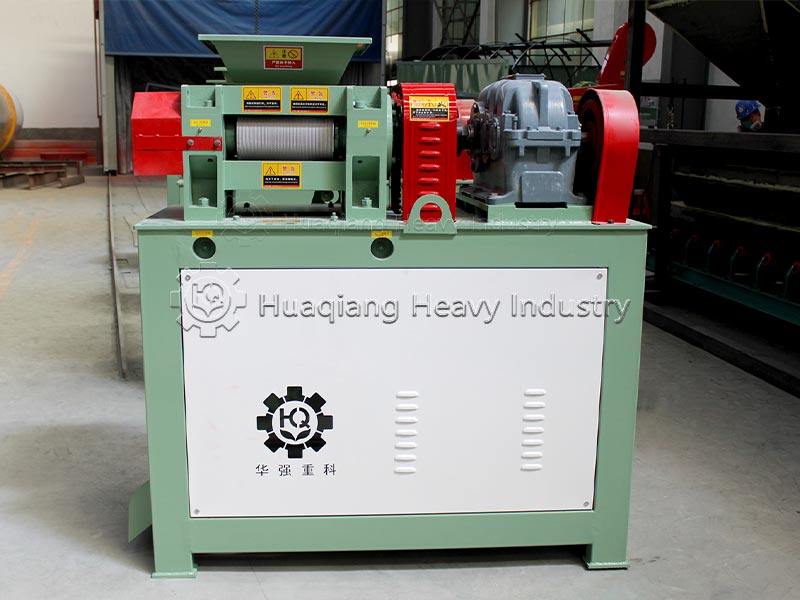
Compared to wet granulation, it offers significant energy-saving and consumption-reducing advantages, eliminating the energy consumption and equipment investment required for drying. It has low tolerance for raw material moisture, is suitable for low-moisture dry powders, avoids clumping and moisture reabsorption problems, and is more adaptable to heat-sensitive and volatile nutrient fertilizers, maximizing fertilizer efficacy.

Two key aspects need to be controlled in practical operation: First, the raw materials must be crushed to the appropriate particle size and thoroughly mixed to lay the foundation for the implementation of fertilizer granules compaction technology and ensure uniform molding; second, the pressure must be precisely controlled through the fertilizer granules compaction machine. This process is widely applicable to medium and low concentration compound fertilizers and organic-inorganic compound fertilizers, and is especially suitable for scenarios with water scarcity and high environmental protection requirements.
Fertilizer compaction machine dry granulation: Technological support for fertilizer processing

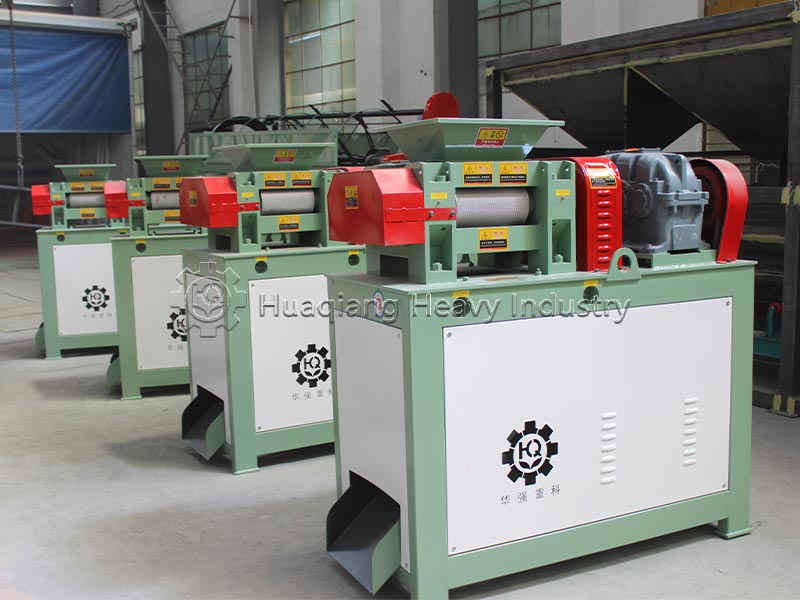
In the field of fertilizer processing, dry granulation technology using fertilizer compaction machines has become a key link in promoting green industrial upgrading and improving production efficiency, thanks to its unique advantages. Compared to wet granulation, this technology does not require the addition of water and binders, achieving raw material shaping through mechanical extrusion. Its importance is reflected in several core dimensions, including environmental protection, raw material adaptability, and product quality.

Environmental upgrading is one of the core values of dry granulation. Wet granulation requires a subsequent drying process, which consumes a lot of energy and easily generates exhaust gas pollution. Dry granulation, however, eliminates the need for drying, significantly reducing energy and water consumption while minimizing pollutant emissions, perfectly aligning with green production policies.

Expanding the range of adaptable raw materials enhances industrial flexibility. Dry granulation is more compatible with varying raw material moisture content and composition. Whether it’s organic raw materials such as livestock and poultry manure compost or straw powder, or inorganic raw materials such as chemical fertilizer intermediates, efficient shaping can be achieved through fertilizer granules compaction machines.

Ensuring product quality enhances application value. The dry granulation process is gentle, preserving the nutrient components in the raw materials to the greatest extent possible, avoiding nutrient loss caused by high-temperature drying. At the same time, the granules formed by fertilizer extrusion technology have uniform hardness and good solubility, facilitating storage, transportation, and application. This technology is suitable for large-scale planting scenarios such as mechanical fertilization, improving fertilizer application efficiency and nutrient conversion rates, and providing support for improving the quality and efficiency of agricultural production.

The core reason why fertilizer granules compaction technology processes high-quality bio-organic fertilizers

In the bio-organic fertilizer equipment system, the fertilizer compaction machine, with its exclusive fertilizer granules compaction technology, demonstrates differentiated application value and has become the preferred equipment in many production scenarios. Its core advantage stems from the unique design of the extrusion technology, which not only aligns with the production characteristics of bio-organic fertilizers but also overcomes many of the shortcomings of traditional granulation technologies.

The core advantage of fertilizer granules compaction technology is “binder-free molding.” This technology uses the pressure generated by mechanical extrusion to condense the organic fertilizer raw materials into granules through their own molecular forces. This feature not only significantly reduces the cost of auxiliary materials but also maximizes the retention of core nutrients such as organic matter, nitrogen, phosphorus, and potassium in the raw materials, avoiding dilution of fertilizer efficiency and aligning with the core demand of bio-organic fertilizers for “green and natural” products.

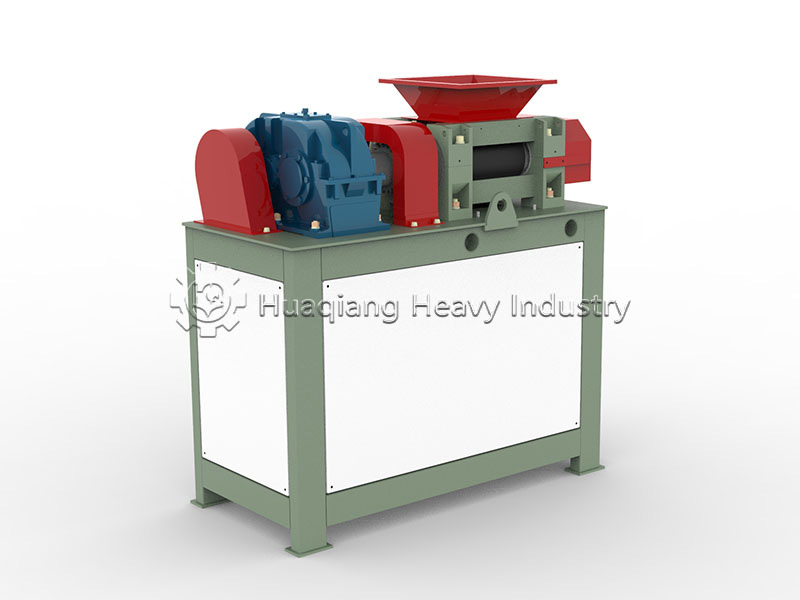
As bio-organic fertilizer equipment, the adaptability of the fertilizer compaction machine stems from the flexible control of the extrusion technology. For organic fertilizer raw materials with different moisture and fiber content, the extrusion pressure and roller speed can be precisely adjusted to avoid problems such as sticking to the walls, clogging, or loose molding.

In addition, fertilizer granules compaction technology also has the advantages of low energy consumption and easy operation. The equipment does not require additional processes such as high-temperature drying, significantly reducing energy consumption, and its structure is compact and easy to maintain. This efficient and energy-saving characteristic makes the fertilizer granules compaction machine a bio-organic fertilizer equipment that balances environmental protection and economic benefits.

Fertilizer granules compaction technology: Boosting the efficient operation of bio-organic fertilizer equipment

In the field of bio-organic fertilizer production, the coordinated operation of bio-organic fertilizer equipment is crucial for ensuring production capacity and quality. The fertilizer granulator, as a core piece of equipment, directly determines the granule formation effect. The fertilizer granules compaction machine, with its mature fertilizer granules compaction technology, has become one of the most favored granulation devices in bio-organic fertilizer production lines.

The fertilizer granules compaction machine is an important type of fertilizer granulator, and its core advantage stems from advanced fertilizer granules compaction technology. This technology uses mechanical extrusion to compress and shape pre-treated organic fertilizer raw materials. It requires minimal addition of binders, preserving the organic matter and nutrients in the raw materials while improving the granule formation rate. The resulting granules have moderate hardness, are not easily broken, and meet the quality requirements of bio-organic fertilizers.

In a complete bio-organic fertilizer production line, the fertilizer compaction machine works seamlessly with other bio-organic fertilizer equipment. After fermentation, crushing, and screening, the raw materials are transported to the fertilizer compaction machine by conveying equipment, where granulation is completed through extrusion technology. Subsequent processing by cooling and screening equipment ultimately produces qualified bio-organic fertilizer products.

Compared to other granulation methods, fertilizer granules compaction machines using fertilizer granules compaction technology are more adaptable and can process a variety of organic fertilizer raw materials, including fermented materials such as poultry and livestock manure and crop straw, achieving efficient granulation. It is not only a high-quality fertilizer granulator but also an important support for achieving large-scale and standardized production in bio-organic fertilizer production lines.

Back To Top