“A crop’s growth depends entirely on fertilizer,” goes the saying. Fertilizer is the “nutritional meal” for crops, and fertilizer machinery is the “precise dispenser” and “efficient deliveryman” of this meal. From traditional manual fertilization to today’s intelligent fertilizer blending and precision fertilization, the iterative upgrades of fertilizer machinery have not only solved the long-standing problems of “difficult and uneven fertilization,” but also propelled agricultural production towards cost-effectiveness, efficiency, and green sustainability. Today, we’ll unveil the mystery of fertilizer machinery and see how these “agricultural marvels” are changing our planting methods.

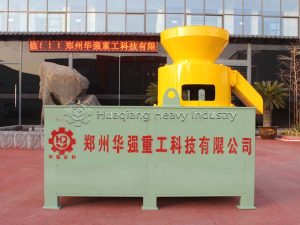
To understand fertilizer machinery, we must first understand its core mission: to ensure fertilizer is used effectively. In traditional planting, farmers often rely on experience to fertilize, either “over-fertilizing for high yields,” leading to fertilizer waste and soil compaction, or “under-fertilizing for fear of reduced yields,” impacting crop growth. Fertilizer machinery, through standardized and precise operations, perfectly solves this problem. Its family of models comprises many members, each with its own specific “job responsibilities.” In the fertilizer production stage, these “transformation masters” are responsible for converting various raw materials into qualified fertilizers. Taking organic fertilizer production as an example, the compost turner is an indispensable core piece of equipment. Through rotating blades or spiral blades, it continuously turns and tosses the fermenting materials, reducing moisture, promoting the growth of beneficial microorganisms, and ensuring more uniform decomposition, transforming polluting livestock manure and crop straw into loose, fertile organic fertilizer. The granulator, like a “shaping artist,” processes powdered fertilizer into granules through rotating discs and extrusion, facilitating storage and transportation, controlling nutrient release rates, and improving fertilizer efficiency.
In the field application stage, the “distribution experts” showcase their skills. The most common fertilizer spreader has long since moved beyond the extensive “spread as you go” approach. Modern solid fertilizer spreaders, through precise transmission systems and spreading mechanisms, can evenly distribute granular fertilizer in the field, with uniformity errors controlled within ±5%. For complex terrains such as mountains and hills, tracked mobile fertigation machines are particularly adept at maneuvering. They can easily navigate steep orchards and scattered plots, integrating irrigation and fertilization. The work time for 10 acres has been reduced from the traditional 3 people per day to just 2 hours, significantly lowering labor costs.

In recent years, with the development of smart agriculture, fertilizer machinery has also undergone an “intelligent upgrade,” giving rise to the “smart brain”—the intelligent fertilizer blender—that can “tailor-make” a nutritional meal for the land. At the intelligent fertilizer blending station in Hangjin Banner, Inner Mongolia, farmers only need to input the plot coordinates on the terminal to check the nitrogen, phosphorus, and potassium content of the soil. After selecting the crop variety and target yield, the system automatically generates a personalized fertilizer blending plan. The blender then precisely mixes the raw materials to produce a “custom-made” fertilizer. This model completely changes the traditional practice of “using the same fertilizer for everything.” Calculations show that using customized fertilizer can save 60-70 yuan per acre in fertilizer costs, reduce fertilizer application by 20 kg, and increase yield by about 30 kg per acre, truly achieving “supplementing what is lacking.” Beyond precision fertilizer application, variable-rate fertilization technology takes “precision” to the extreme. Intelligent fertilizer applicators equipped with BeiDou navigation and soil sensors can monitor real-time differences in soil nutrients and automatically adjust the amount of fertilizer applied while moving, ensuring every inch of the field receives the appropriate fertilizer supply. Data shows that the number of intelligent fertilizer applicators in my country has exceeded 42,000 units. In major grain-producing areas such as Heilongjiang and Henan, the coverage rate of intelligent fertilization equipment has exceeded 40%, and fertilizer utilization is 2%-3% higher than traditional fertilization.
The advancement of fertilizer machinery not only benefits farmers but also contributes to environmental protection. Problems such as groundwater pollution and soil degradation caused by excessive fertilization in the past have been effectively alleviated with the widespread adoption of precision fertilization machinery. For example, mobile fertigation machines, by precisely controlling the water-fertilizer ratio, can increase water resource utilization by 30%-60% and fertilizer utilization by 25%-40%, reducing waste and preventing soil compaction and salinization. Meanwhile, organic fertilizer production machinery promotes the resource utilization of livestock and poultry breeding waste, turning “waste” into “fertilizer” and forming an agricultural ecological cycle.
From simple mechanized operations to intelligent and precise control, the development of fertilizer machinery is a microcosm of the transformation and upgrading of modern agriculture. These “agricultural marvels” not only liberate farmers from heavy physical labor but also achieve the goals of “reducing fertilizer use and increasing efficiency, and promoting green development” through technological advancements. In the future, with continuous technological innovation, fertilizer machinery will develop towards greater intelligence, efficiency, and environmental friendliness, injecting continuous momentum into ensuring food security and promoting high-quality agricultural development.
Manufacturing Precision: From Factory to Field
The “agricultural marvels” that enable precision farming in the field—like intelligent spreaders and variable-rate applicators—are supplied by a sophisticated industrial manufacturing sector. The efficiency and precision of field application are entirely dependent on the quality and consistency of the fertilizer products themselves, which are produced in dedicated facilities using advanced professional fertilizer manufacturing equipment.
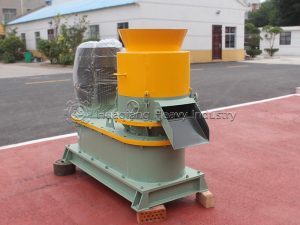
An organic fertilizer factory relies on a complete organic fertilizer production line, which begins with processing raw compost using a windrow composting machine and proceeds through granulation. Similarly, a comprehensive npk fertilizer production line encompasses the entire npk fertilizer production process. This process starts with precise formulation using an npk blending machine or npk bulk blending machine, followed by shaping the mixture using a fertilizer granulator. Granulation technology options include a disc granulation production line with a disc granulator for shaping, or a roller press granulator production line for dry compaction. The collective cost of this fertilizer manufacturing plant equipment directly influences both the organic fertilizer machinery price and the final NPK fertilizer production price. These integrated systems are what allow modern agriculture to have access to the diverse, high-quality fertilizers needed for both broad-acre and precision application.Therefore, the revolution in field application is underpinned by an equally significant revolution in manufacturing, where advanced production lines ensure a reliable supply of the tailored nutrients that smart farming equipment depends on.
Tags: