Category: organic fertilizer equipment

Optimizing double roller press granulator process to boost organic fertilizer production

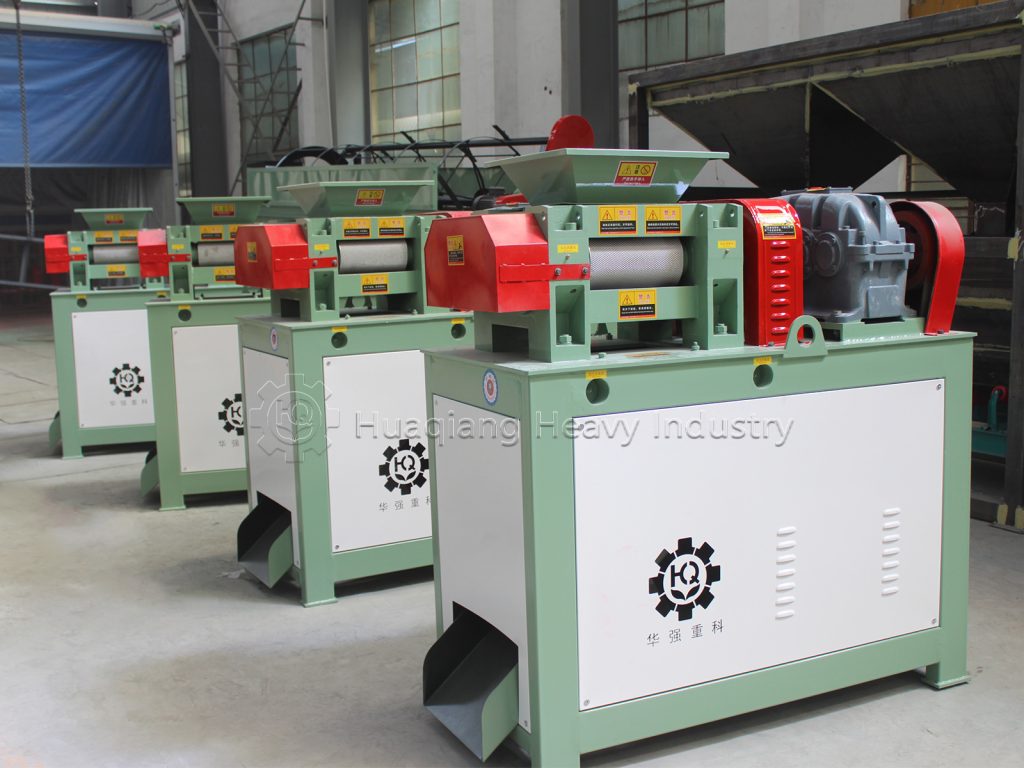
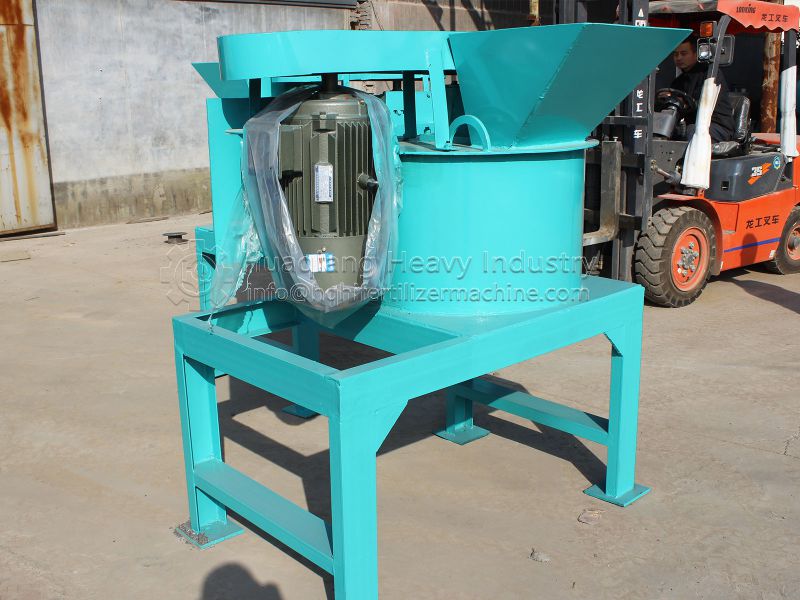
Double roller press granulators are key equipment in modern organic fertilizer production lines. Optimizing their process directly impacts a company’s output and economic benefits. With the rapid growth of organic farming, how to improve organic fertilizer production through technical upgrades to these granulators has become a major focus for many manufacturers.

1.Optimizing Raw Material Pre-treatment

Grind raw materials to 40-60 mesh.Control moisture content between 20%-25%.Adding suitable binders like bentonite or lignin can significantly improve granulation rate and reduce return material. This is expected to increase output by around 15%.

2.Precise Adjustment of Roller Parameters

For general organic fertilizer production:Set the nip gap between 1.5-2.5mm.Maintain roller pressure at 8-12MPa.Control line speed at 0.8-1.2m/s.Installing pressure sensors and automatic adjustment systems allows for dynamic optimization, improving particle formation rate.

3.Die Selection and Maintenance

Hole Size: 3-6mm suits most organic fertilizers.Open Area Ratio: Maintain between 30%-40%.Regular polishing extends die life.Recommend professional maintenance every 500 tons of material processed to ensure smooth discharge.

4.Coordinated Optimization of Supporting Equipment

Precise batching system (error <1%). Efficient mixer (mixing uniformity >95%). Energy-saving dryer (thermal efficiency >65%). Systematic upgrades like this can increase the entire line’s output by 30%-50%.

Through comprehensive optimization of the double roller press granulator process, organic fertilizer producers can significantly boost production without adding more machines.

Why invest in an NPK fertilizer production line?

NPK fertilizer, a compound fertilizer containing the three key nutrients nitrogen, phosphorus, and potassium, can meet the nutritional needs of different crops at different growth stages. It is indispensable in agricultural production, and investing in an NPK fertilizer production line has many important implications.

From an agricultural production perspective, nutrient requirements vary significantly between different crops and soil types. For example, rice requires a high nitrogen content, cotton has a higher potassium requirement, and vegetables require a balanced supply of nitrogen, phosphorus, and potassium. NPK fertilizers can flexibly adjust the ratio of the three elements based on actual needs, providing targeted nutrients to crops and effectively addressing the nutritional imbalance of single fertilizers. This helps crops grow more vigorously, achieve higher yields, and improve quality. It perfectly meets the needs of modern agriculture for precision fertilization and provides strong support for high and stable agricultural yields.

At the market level, NPK fertilizer market demand is stable, and NPK fertilizer production lines have enormous potential. As the global population grows, the demand for food and cash crops continues to rise, and agricultural production is increasingly dependent on high-efficiency fertilizers. At the same time, farmers’ awareness of scientific fertilization continues to grow. More and more people are realizing the advantages of NPK fertilizers and choosing them over traditional single fertilizers, driving continued growth in the NPK fertilizer market. Furthermore, NPK fertilizers have a wide range of applications, covering food crops, cash crops, fruits and vegetables, and other sectors. Their broad market reach offers investors stable and substantial returns.

In terms of product competitiveness, NPK fertilizers offer advantages over traditional single fertilizers, such as comprehensive nutritional content, high utilization rate, and convenient application. Appropriate application of NPK fertilizers can reduce fertilizer waste, lower agricultural production costs, and mitigate soil problems caused by single fertilizer application. This aligns with the concept of sustainable agricultural development, provides a competitive advantage, and helps investors capture a larger market share.

In summary, investing in NPK fertilizer production lines aligns with agricultural development trends, meets market demand, and offers significant economic and social value, making it a highly promising investment opportunity.

Disc granulators are a powerful granulation tool for diverse applications

As a highly efficient granulation machine, disc granulators have broad and important applications across multiple industries thanks to their simple structure, convenient operation, and excellent granulation results.
In fertilizer production, disc granulators are essential key equipment. They play a vital role in the production of compound fertilizers, organic fertilizers, and slow-release fertilizers. In compound fertilizer production lines, disc granulators mix various basic fertilizer ingredients in appropriate proportions. The rotating motion of the discs gradually forms uniform granules under the influence of centrifugal force and gravity. The resulting granulated fertilizer is not only easy to store and transport, but also improves fertilizer utilization and reduces nutrient loss. In organic fertilizer production lines, disc granulators ferment organic materials such as livestock and poultry manure and straw before granulating them. This converts loose organic materials into granulated organic fertilizer, improving its physical properties and making it easier for farmers to use. This also promotes the resource utilization of agricultural waste.
The metallurgical industry is also a key application for disc granulators. In the processing of metal ore powder, granulation is often necessary to improve smelting efficiency and utilization. Disc granulators can granulate metal ore powders such as iron ore and manganese ore. The resulting granules are characterized by high strength and good air permeability. Once introduced into smelting equipment such as blast furnaces, they facilitate a more complete smelting reaction, laying the foundation for efficient production in metallurgical enterprises.
In the environmental protection field, disc granulators have demonstrated significant application value in solid waste treatment. Granulating solid wastes such as sludge generated by municipal sewage treatment plants and slag discharged from industrial production using disc granulators not only reduces the volume of solid waste, facilitating subsequent landfill, incineration, or resource recovery, but also reduces the risk of environmental pollution.
Due to its flexible applicability, disc granulators continue to play an important role in various application scenarios. As production requirements continue to increase across various industries, their application prospects will continue to expand.

Drum Granulator: The Particle Alchemist

In modern industrial and agricultural production, the NPK fertilizer granulator performs like a magical “particle alchemist,” transforming chaotic powders into uniform granules. This advanced NPK fertilizer production technology utilizes a rotating drum where materials dance under the symphony of gravity, friction, and centrifugal force. Sprayed water or binders act as mystical glue, gradually coalescing scattered powders into perfect pellets. The sophisticated NPK fertilizer production process ensures precise nutrient ratios are maintained throughout granulation, creating consistent, high-quality fertilizer products that deliver balanced nutrition to crops while minimizing waste and dust during application.

Fertilizer Production Powerhouse

In agriculture, drum granulators serve as “transformers” of fertilizer production. They precisely blend and granulate nitrogen, phosphorus, and potassium into customized “nutrient combos” for different crops. For organic fertilizers, they perform alchemy—converting livestock manure and straw into easy-to-handle granules while preserving beneficial microorganism activity—a true multitasking marvel.

Cross-Industry Versatility

The drum granulator’s talents extend far beyond agriculture. In chemical plants, it shapes catalysts and pigments into free-flowing granules; in metallurgy, it transforms iron ore powder into sinter-ready pellets; in construction, it becomes cement raw material’s “stylist.” Like an industrial Swiss Army knife, it demonstrates remarkable adaptability across sectors.

Efficiency Meets Economy

Compared to other granulators, the drum version operates like a perpetual motion machine, enabling continuous large-scale production. Its simple design reduces maintenance while improving usability. Whether measuring sphericity, granule strength, or productivity, it delivers exceptional performance—a secret weapon for cost-conscious manufacturers.

From fields to factories, drum granulators are revolutionizing powder handling, turning raw materials into premium pellets that create tangible economic value.

How Does a Disc Granulator Turn Powder into Perfect Pellets?

 The disc granulator is a cornerstone of modern fertilizer production machine technology, efficiently transforming fine powder materials into uniform, spherical pellets. Through a combination of rotational motion, liquid binding agents, and gravitational forces, this equipment creates the ideal conditions for fertilizer granules compaction and formation. As the rotating disc turns, powder particles are gradually layered and compacted into perfectly-sized pellets through a process known as accretion granulation. This method ensures optimal density, hardness, and size consistency—critical factors for effective fertilizer application and nutrient delivery.

The Art of Granulation

In modern chemical and agricultural industries, disc granulators play a vital role. This seemingly simple equipment performs the magic of transforming loose powder into uniform pellets, significantly improving material utilization efficiency and transportation convenience. But how exactly does this machine accomplish this transformation?

Core Working Principle

The essence of the disc granulator lies in its ingenious mechanical design. The main motor drives the reducer through a pulley and belt system, which then rotates the pinion gear. This pinion meshes with a large gear fixed at the end of the adjustment plate, transmitting power to the main shaft. The entire disc is mounted on this shaft, supported by the sturdy adjustment plate.

The Granulation Magic

When materials are fed into the rotating disc, the real magic begins. With the help of spray devices, powder materials gradually aggregate into uniform pellets under the combined action of centrifugal force and binding agents, much like rolling snowballs. The disc’s tilt angle and rotation speed are meticulously calibrated to ensure each pellet achieves perfect sphericity and consistent size.

Intelligent Cleaning System

To prevent material adhesion that could affect efficiency, an automatic cleaning device is ingeniously installed at the top of the disc. This thoughtful design not only ensures stable continuous production but also significantly extends the equipment’s service life. With the motor running continuously, materials can be fed uninterruptedly, enabling truly continuous mass production.

The Secret to Efficient Production

The true advantage of disc granulators lies in their perfect marriage of simple principles and precision engineering. By optimizing every rotation parameter and mechanical interaction, this equipment can operate 24/7, meeting modern industry’s demand for continuous, automated production. Whether for chemical raw materials or fertilizer production, disc granulators consistently deliver satisfactory results.

Detailed explanation of the production process of fertilizer granules processed by flat die granulator

The flat die granulator is a key piece of equipment in modern organic fertilizer production, valued by fertilizer manufacturers for its efficient and stable processing capability.

1.Raw Material Pre-treatment Stage

Ingredient Mixing: Raw organic materials (like livestock manure, straw) and additives (like bentonite, microbial agents) are mixed according to the recipe. Moisture content is usually maintained at 30-40%.

Crushing: A crusher grinds the mixture to a particle size of 3-5mm, ensuring uniformity for the next step.

2.Core Granulation Process

Feeding System: Pre-treated material is evenly fed into the flat die granulator‘s inlet via conveyor belt. Feed rate is typically 2-3 tons per hour (depending on the machine model).

Compression Molding: Under vertical pressure, the material is forced through holes in the flat die (usually 4-8mm in diameter). The gap between the rollers and flat die is kept at 0.1-0.3mm, with working pressure maintained between 8-15MPa.

Cutting: Rotating knives cut the extruded material into standard pellets, 5-15mm long.

3.Post-processing

Initial Drying: The newly formed pellets enter a dryer. Temperatures are kept at 60-80°C to reduce moisture content below 15%.

Cooling and Screening: After cooling, a vibrating screen separates out qualified pellets (typically within ±1mm diameter tolerance). Unqualified pellets go back for re-granulation.

Coating: An anti-caking coating can be applied as needed to improve storage stability.

Flat die granulators are especially suitable for small-to-medium organic fertilizer plants due to their simple structure, strong adaptability, and low energy consumption. Optimizing these production stages significantly improves pellet formation rate and product quality while lowering production costs.

How does a rotary drum granulator work in an organic fertilizer production line?

In organic fertilizer production lines, a rotary drum granulator is the core equipment for raw material formation. It has become a mainstream choice because it meets the cohesiveness and granularity requirements of organic fertilizers such as livestock and poultry manure and composted straw. Its operation revolves around “raw material mixing – granule agglomeration – screening and output,” resulting in an efficient and stable mechanism.

The equipment primarily consists of an inclined drum (3°-5° inclination), a transmission system, a spray system, and a scraper assembly. Scrapers on the inner wall of the drum drive the material to tumble, while the spray system regulates moisture. The scraper removes material adhering to the drum wall to prevent clogging.

The first step is “raw material pretreatment and feeding.” Composted and crushed organic fertilizer raw materials (25%-35% moisture) are mixed with auxiliary materials such as clay in a suitable proportion and then fed into the drum through the feed port. The motor drives the drum to rotate at a low speed of 10-15 rpm. The scrapers repeatedly lift and drop the material, forming a uniform layer.

The second step is the core “granule agglomeration and formation” phase. A spray device applies a metered amount of water or adhesive, depending on the moisture content of the raw materials, to create a sticky surface. As the drum rotates continuously, the material particles agglomerate into small particles through collision, friction, and compression. These small particles further absorb the raw materials and grow to qualified granules of 2-5mm. The tilted design of the drum allows the particles to naturally move toward the discharge end, enabling continuous production.

The final step is “granule screening and optimization.” The formed granules are screened to separate fine powder from bulky material. The fine powder is returned to the granulator, while the bulky material is crushed and reused to ensure acceptable yields. Furthermore, a scraper cleans the drum wall of any residue in real time to ensure efficiency and prevent hardened residue from affecting subsequent production.

In short, the rotary drum granulator uses gentle physical agglomeration to adapt to the characteristics of organic fertilizer raw materials, efficiently producing uniform granules and providing a key guarantee for the stable operation of organic fertilizer production lines.

Bio-Organic Fertilizer Production Line Equipment Maintenance Guide

Bio-Organic Fertilizer production line equipment must cope with the corrosive and sticky nature of mature materials. Scientific maintenance is key to avoiding malfunctions and ensuring product quality. The following summarizes key maintenance points from three perspectives: core equipment maintenance, general maintenance principles, and special precautions.

Core equipment maintenance requires precise implementation. Check the wear of the turning teeth of the fermentation turning machine weekly. Replace any wear exceeding 5mm to prevent uneven turning. Clean the reducer oil and replace the lithium-based grease monthly to prevent damage from high temperatures. Clean residual material from the crushing machine after each shutdown to prevent caking and blockage. Check the hammer gap quarterly to maintain a 1-2mm gap to ensure a consistent particle size. Disc granulators require daily cleaning with soft tools. Bearing grease should be replaced monthly. Liner wear should be inspected annually and replaced if the thickness decreases by 1/3. Clean dust from the heat exchange tubes of the drying and cooling equipment weekly. Check the conveyor belt tension every six months to prevent deviation and slippage.

General maintenance principles must be adhered to throughout the entire process. Before starting up each day, check the motor voltage and current of each device to ensure normal operation. After shutting down, clean the equipment surface and remove any residual material. Tighten the bolts of transmission components monthly to prevent loosening and vibration. Quarterly, inspect equipment seals, such as the crusher feed inlet seal and the dryer door seal, and replace any damaged seals promptly to prevent dust leakage or heat loss.

Special precautions must not be overlooked. Bio-organic fertilizer materials contain microorganisms. After maintenance, equipment must be flushed with a high-pressure water jet to prevent residual material from mold and affecting subsequent production. During the rainy season, electrical cabinets must be protected from moisture, and wiring insulation must be regularly inspected to prevent short circuits. Maintenance records should also be established to record maintenance times and component replacements for each device. This data can be used to predict failures and minimize downtime losses.

In short, maintenance of bio-organic fertilizer production line equipment requires consideration of material characteristics, targeted maintenance of core equipment, adherence to general principles, and attention to specific details to ensure continuous and stable operation of the production line.

Want Your Granulator to Stay “Forever Young”? This Maintenance Guide is Gold!

In the world of bio organic fertilizer production, your granulation equipment is the heart of the operation. Keeping it in peak condition is crucial for maintaining efficiency throughout your entire organic fertilizer production line. Just like a well-tuned engine, proper care ensures your organic fertilizer line operates smoothly, minimizing downtime and maximizing output. This comprehensive maintenance guide reveals the secrets to extending your machinery’s lifespan while optimizing performance for sustainable organic fertilizer manufacturing.

1. Regular Checkups: Prevention is Key

Just like regular health checkups prevent illness, your granulator needs systematic inspections. Before daily startup, become a “machine doctor”: listen for abnormal “coughs” (unusual noises) in transmission parts, feel if bearings are “running a fever” (over 70°C). Weekly “tighten muscles” (bolts), monthly “measure waistlines” (check wear), and quarterly comprehensive “physicals” — from gearbox oil changes to sensor calibration, leave nothing unchecked.

2. Cleaning Care: Details Define Longevity

Imagine never washing your cooking pans? Your granulator needs “bathing” too. After production, use pressure washers to “wash away fatigue” (avoid electrical components), and apply “skincare” (anti-rust oil) to mixing blades weekly. Remember: caked materials are like cholesterol in machine arteries — untreated, they cause “heart attacks” (operational failures).

3. Lubrication Wisdom: The Machine’s “Circulatory System”

Lubrication is equipment’s “lifeline”. Gearboxes need “blood transfusions” (220# gear oil) every 800 hours, bearings require “plasma” (lithium grease) every 500 hours. But remember — more isn’t better. Like blood types must match, always clean ports before greasing, and stop when lubricant barely seeps out. Overfilling causes “hypertension” (overheating).

4. Wear Parts Replacement: The Machine’s “Metabolism”

Blades, claws — these “vulnerable organs” need periodic renewal. Always choose “OEM transplants” (original parts), and test “balance” after installation. Like adjusting to new dentures, ensure screen tension is even with tight edges, or you’ll get “leaky digestion” (material loss).

5. Smart Systems: “Brain Care” for Equipment

In this smart era, don’t neglect your machine’s “brain”. Monthly “dust removal” for control cabinets, “vision checks” (calibration) for sensors. Back up parameters like precious photos. For programming issues, consult “neurologists” (manufacturer techs) — DIY “brain surgery” often worsens the condition.

Discover how regular maintenance can prevent costly breakdowns, improve product quality, and keep your production line running like new for years to come!

Remember: Maintenance isn’t an expense, but your highest-ROI investment. Follow this guide, and your granulator will maintain “teenage vitality”, continuously creating production value!

Analysis of the Complete Fertilizer Production Process on an Organic Fertilizer Production Line

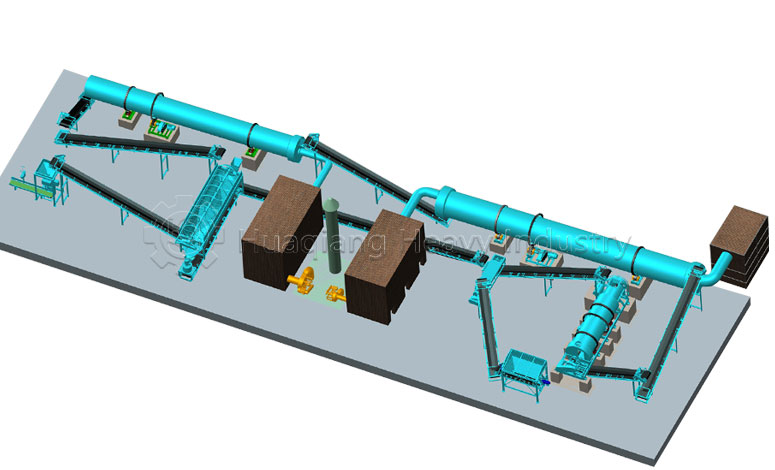
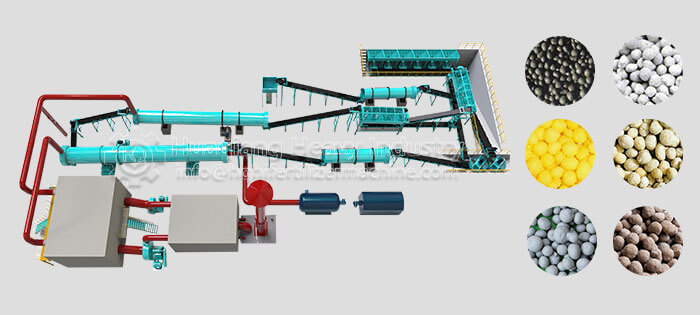
Organic fertilizer production lines use scientific processes to transform agricultural and livestock waste into high-quality fertilizer, achieving resource recycling. The entire production process revolves around four core steps: raw material processing – composting – forming – packaging, and each step directly impacts fertilizer quality.

The first step is raw material pretreatment. The production line collects raw materials such as livestock manure, straw, and mushroom residue, and uses screening equipment to remove impurities such as stones and plastic to prevent them from affecting subsequent processes. Next, a crusher is used to pulverize the straw and other coarse fiber materials to a particle size of 5-10mm. The material is then mixed with livestock manure in a ratio of approximately 3:7. A small amount of fermentation inoculant is added, adjusting the carbon-nitrogen ratio to 25:1-30:1 and controlling the moisture content to 50%-60%, laying the foundation for fermentation and composting.

The second step is fermentation and composting. The mixed raw materials are transported to the fermentation workshop and stacked in windrow or tank-type fermentation equipment. During the fermentation process, a compost turning machine regularly turns the material to ensure adequate oxygen and regulate the temperature. The entire fermentation cycle lasts approximately 20-30 days. After composting, the material transforms into a dark brown, odorless humus. It then passes through a cooling device to a temperature below 30°C to prevent nutrient loss during subsequent processing.

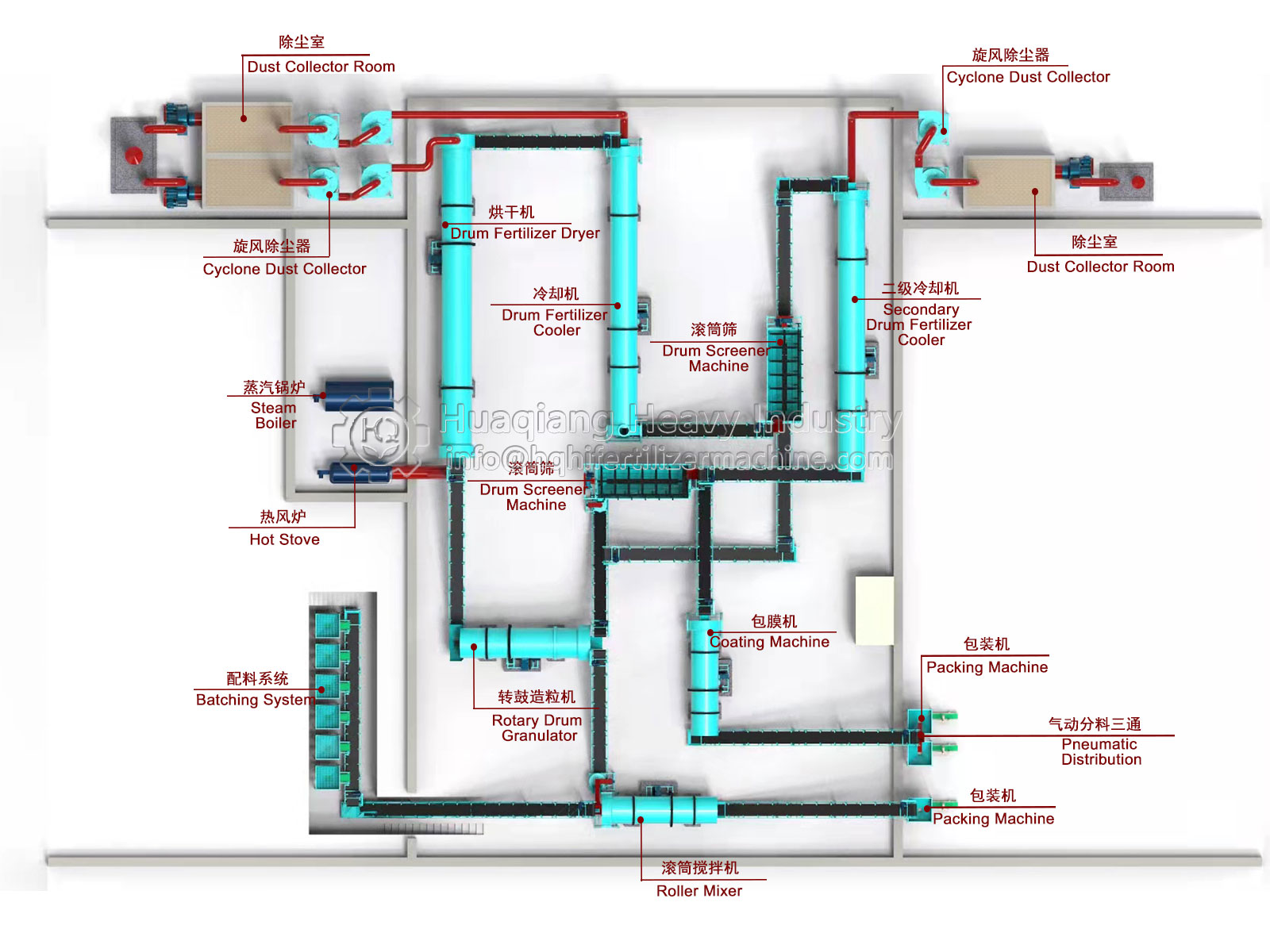
The third step is further processing and shaping. The cooled composted material is first crushed to a particle size of 2-3mm in a fine grinder. It is then mixed with a small amount of auxiliary materials such as bentonite and humic acid in a mixer to enhance the fertilizer’s stability. The material then enters the granulation stage, where a rotary drum or disc granulator physically agglomerates the material into 2-5mm granules. The granules are then dried (controlled at 60-80°C) to reduce moisture to below 15%, cooled in a cooler, and screened to separate unqualified particles. The fine powder is then returned to the granulator for reuse.

The finished product is then packaged. Qualified pellets are transported to the packaging workshop, where an automatic packaging machine weighs and seals them into 25kg or 50kg packages, producing finished organic fertilizer.

In short, the organic fertilizer production line, through standardized and mechanized full-process control, efficiently transforms waste into high-quality fertilizer, contributing to environmental protection while providing green nutrients for agriculture.

Back To Top