Category: organic fertilizer equipment

How to Choose the Perfect Fertilizer Mixer? A Guide to 4 Machine Types!

 In the NPK production process, selecting the right mixer is crucial for determining product quality and production efficiency. Faced with a dazzling array of mixing equipment on the market—Horizontal Mixers, Vertical Disc Mixers, Double Axis Mixers, and BB Fertilizer Blenders—how does one make an informed choice?

Selection Based on Performance Standards

The first consideration is mixing uniformity, which is vital for an NPK blending machine. Horizontal mixers provide gentle yet uniform mixing, ideal for formulations requiring high particle integrity. Double shaft mixers are renowned for their powerful mixing capability, quickly processing sticky materials. Vertical disc mixers have a small footprint and lower energy consumption, while BB fertilizer blenders are specifically designed for blended fertilizers, preserving raw material particle integrity.

Pro Tip: When evaluating mixers, be sure to consider their compatibility with your existing NPK production process. The equipment should integrate seamlessly into your production line to avoid bottlenecks.

Selection Based on Production Line Requirements

Production line scale and automation level directly influence mixer selection. Large-scale continuous NPK fertilizer manufacturing processes typically opt for horizontal or double shaft mixers, which can handle large volumes of materials and enable continuous operation. Small to medium production lines might prefer the compact design of vertical disc mixers. For manufacturers specializing in blended fertilizers, BB fertilizer blenders are undoubtedly the professional choice.

Material characteristics must also be considered: raw materials with high moisture content may require the powerful mixing of double shaft mixers, while dry granular materials are better suited for horizontal or BB fertilizer blenders.

Maintenance and Operational Costs

Mixer selection shouldn’t focus solely on purchase price but also consider long-term operational costs. Horizontal mixers are typically easy to maintain with readily available parts; double shaft mixers may have a higher initial investment but their high efficiency can reduce unit production costs. Vertical disc mixers have lower energy consumption, while the specialized design of BB fertilizer blenders can reduce material waste.

Choosing the right fertilizer mixer requires comprehensive consideration of production needs, material characteristics, budget constraints, and future expansion plans. The best equipment is that which integrates perfectly into your NPK fertilizer manufacturing process, enhancing production efficiency while ensuring stable product quality. Remember, there’s no “one-size-fits-all” solution—the most suitable mixer is the best choice!

BB fertilizer mixer: Efficiently handling various materials

In modern organic fertilizer production, the BB fertilizer mixer is a key piece of equipment, highly favored for its efficient mixing capability and broad material adaptability. The following are the types of materials that the BB fertilizer mixer can process:

1.Agricultural Organic Waste

Livestock manure: Chicken, pig, cow manure, etc., which have moderate moisture after initial fermentation and are easy to mix.

Crop straw: Crushed corn stalks, rice husks, wheat straw, etc., which improve material permeability.

2.Industrial By-Products and Organic Waste

Distillery residues: Vinasse, vinegar residue, sugar residue, etc., which have high moisture but help balance fertilizer efficiency when mixed.

Meal cakes: Soybean meal, rapeseed meal, peanut meal, etc., which are high in protein and need to be combined with other materials.

Sludge: Municipal sludge, food factory sludge (must be non-toxic and harmless), which can be used as filler material after dewatering.

3.Functional Additives

Nutritional additives: Inorganic fertilizers such as diammonium phosphate, urea, potash, etc., for organic-inorganic compound blending.

Microbial agents: Beneficial microorganisms like nitrogen-fixing bacteria, which require gentle mixing to avoid damaging their activity.

4.Other Special Materials

Waste kitchen garbage: After sorting and crushing, it can be mixed with other dry materials to reduce moisture.

Humic acid raw materials: Weathered coal, lignite, etc., which need to be pre-crushed to a suitable particle size.

In summary, the BB fertilizer mixer has extremely wide material adaptability. It can efficiently and uniformly mix everything from common agricultural waste to industrial by-products and even fine additives.

Rotary Drum Granulator: The All-Rounder in Fertilizer Production?

The Industrial Giant of Efficient Production

In modern NPK fertilizer production technology, the rotary drum granulator stands as an industrial cornerstone. This essential NPK fertilizer granulator operates continuously, enabling single-unit production capacities reaching several tons per hour—perfectly meeting large-scale industrial demands. While other granulation equipment remains in trial phases, the advanced NPK production line with its rotary granulator already delivers stable, high-volume output. The efficiency of this NPK production process ensures consistent quality fertilizer production at commercial scale, revolutionizing agricultural productivity.

High-Capacity Production

Capable of producing several tons per hour to meet industrial-scale demands

Continuous Operation

Designed for non-stop production with minimal downtime

Consistent Quality

Ensures uniform granule size and nutrient distribution

The Artisan Crafting Perfect Granules

This remarkable equipment is not just a production tool but resembles a perfection-seeking artisan. It can produce high-quality granules with sphericity exceeding 80%, with surfaces as smooth and rounded as pebbles, and uniformity that inspires awe. This near-perfect granular morphology gives the fertilizer excellent flowability, with almost no breakage or caking during storage and transportation, significantly enhancing the product’s commercial value.

The Versatile Material Magician

The most amazing feature of the rotary drum granulator is its extraordinary ability to handle various raw materials. Whether inorganic compounds, organic substances, or complex mixtures of both, this equipment can handle the granulation task with ease. Even those “stubborn” materials that leave other equipment helpless can be tamed by the rotary drum granulator with the addition of appropriate binders, transforming waste into treasure.

The User-Friendly Industrial Partner

Unlike complex modern equipment, the rotary drum granulator maintains a delightfully simple design. Its intuitive operation allows technicians to quickly get started, with precise control over the entire granulation process achieved by adjusting just a few key parameters: rotation speed, tilt angle, and binder dosage. This philosophy of “simple but not crude” design makes it the most reliable industrial partner for fertilizer plants.

The Rock-Solid Production Guarantee

In terms of stability, the rotary drum granulator demonstrates reliability rarely seen in industrial equipment. Its carefully designed transmission system and support structure enable long-term continuous operation with astonishingly low failure rates. On production lines running day and night, it stands like a tireless iron warrior, silently guarding the quality and efficiency of fertilizer production.

Large wheel compost turning machine: the secret code for organic fertilizer production!

In modern agriculture, efficiently processing organic waste into high-quality fertilizer has become a crucial component. The large wheel compost turner, as innovative fertilizer equipment, has completely transformed traditional composting methods, achieving a qualitative leap in composting technology through its unique large-wheel structural design.

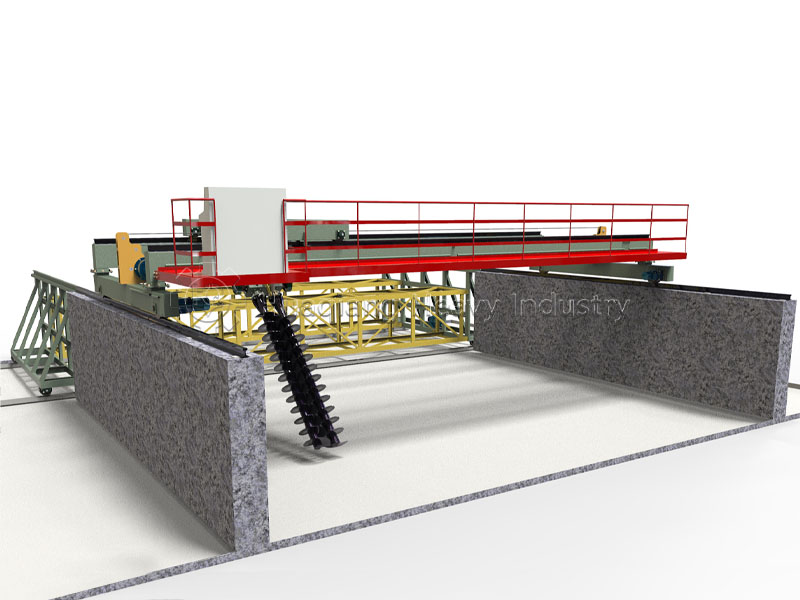
This extraordinary fertilizer machine features a giant rotating wheel several meters in diameter as its core working component. Through rotational movement, it drives turning teeth along its edges to perform cyclic turning of materials. Under centrifugal force, materials are lifted, dispersed, and re-accumulated, fully contacting air while regulating temperature and humidity to accelerate microbial decomposition and maturation. This fertilizer production machine offers wide coverage and high efficiency in single operations, making it particularly suitable for large-scale windrow fermentation exceeding 10,000 tons.

Among the equipments required for biofertilizer production, the large wheel compost turner demonstrates exceptional raw material adaptability. It efficiently processes various large-scale organic materials while promoting microbial activity and decomposition processes.

The processing capacity of this equipment is truly astonishing—it can handle hundreds of tons of raw materials daily, quickly breaking up compacted manure layers, eliminating pathogens, parasite eggs, and weed seeds through high-temperature fermentation, and effectively removing odors.

The large wheel compost turner represents not only a revolutionary breakthrough in composting technology but also core equipment promoting agricultural green development and resource utilization of organic waste, providing strong technical support for sustainable agricultural development.

NPK Fertilizer Production Line: How to Achieve Precision Formulation and Efficient Production?

In modern agriculture, NPK fertilizer production lines demonstrate exceptional adaptability, revolutionizing the entire NPK fertilizer manufacturing process. These advanced systems not only meet traditional compound fertilizer pelletizing needs but also excel in the NPK manufacturing process for diverse raw materials including pharmaceuticals, chemicals, and feed. The innovative NPK blending machine technology ensures precise nutrient formulation, while the comprehensive NPK production process delivers versatile, high-quality fertilizers that support sustainable farming practices worldwide. 

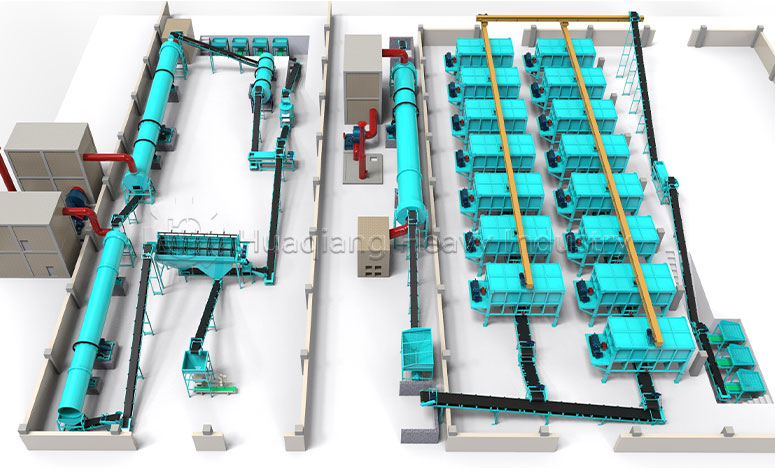
The core advantage of the NPK fertilizer production line lies in its unique aggregation process. This meticulously integrated npk fertilizer production process combines key equipment such as rotary drum granulators (or disc granulators), rotary dryers, drum screening machines, coating machines, and chain crushers to form a highly efficient and coordinated production system. Each piece of equipment plays an indispensable role in the production process, collectively ensuring the high quality of the final product.

Even more impressive is the intelligent formulation adjustment capability of modern NPK fertilizer production lines. Based on years of research and development experience, manufacturers can precisely adjust fertilizer formulations according to soil characteristics and crop needs in different regions. This customized production capacity not only significantly improves the quality of agricultural products but also elevates fertilizer utilization to new heights, making important contributions to sustainable agricultural development.

From raw material input to finished product packaging, the NPK fertilizer production line achieves full automation and precise control. This highly integrated production system not only ensures product quality stability but also greatly improves production efficiency and reduces energy consumption, truly achieving a win-win situation for both economic and environmental benefits.

Organic fertilizer equipment fertilizer crusher: Efficient crushing process and operation guide

The fertilizer crusher is a key piece of equipment in an organic fertilizer production line. Its main job is to grind fermented organic materials (like livestock manure, crop stalks, and mushroom residue) into an even, fine powder. This ensures stability in later steps like granulation or packaging. How well it breaks down the material directly affects the quality of the final fertilizer and the production efficiency.

How It Works

1.Feeding and Initial Crushing

Material is fed into the hopper, either by conveyor belt or manually. High-speed rotating blades or hammers cut and break down large chunks into smaller pieces.

2.Fine Grinding

Inside the crushing chamber, the material gets hit repeatedly by hammers, teeth, or screens. It also gets rubbed and sheared. This breaks it down gradually into tiny particles (usually 1-5mm).

3.Screening and Discharge

Particles small enough to pass through the screen at the bottom are discharged. Material that’s still too coarse stays in the chamber for more grinding, ensuring a uniform final product size.

Operating Guidelines

1.Before Starting

Make sure the power voltage is stable and all bolts are tight. Check the crushing chamber is clear of hard objects (like stones or metal) to avoid damaging the blades.

2.During Operation

Feed evenly: Avoid overloading the machine, which can cause blockages or motor overload.

Moisture control: Keep raw material moisture content ≤30%. Wet material tends to stick to the screen.

3.Maintenance and Care

Lubricate bearings regularly.

Replace worn blades/hammers (generally check every 300 hours). Clean the screen after stopping to prevent corrosion and clogging.

In short, the fertilizer crusher is vital for improving fertilizer quality. Using it correctly extends the machine’s life and guarantees efficient grinding.

Structural Design and Analysis of a Rotary Drum Granulator

As the core granulation equipment in an organic fertilizer production line, the structural design of a rotary drum granulator directly impacts granulation efficiency and product quality. Its overall design is centered around “efficient granulation, stable conveying, and adaptability to the characteristics of organic fertilizers.”

The rotary drum granulator‘s core working component is an inclined rotating drum, welded from steel plates. The inner wall is lined with a wear-resistant lining to prevent abrasion by humic acid and other components in the organic fertilizer raw materials, while also enhancing material friction to aid granulation. The drive system offers both constant and variable speed options.

The constant speed option is suitable for large-scale production with stable raw materials, while the variable speed option (8-15 rpm) can be adjusted to suit different raw materials: reducing the speed to prevent sticking when the liquid content is high, while increasing the speed to promote compact granules when the liquid content is low.The rotary drum granulator drum inclination angle is a critical parameter, typically 3-10 degrees. A too small angle causes the material to remain in the drum for too long, leading to agglomeration or oversized granules. A too large angle results in rapid material flow, insufficient granulation time, and loose granules. A 50-100mm high retaining ring is installed at the feed end to prevent loose powder from flowing back. The height of the retaining ring at the discharge end is adjustable. It can be raised to extend retention time when larger pellets are needed, and lowered or replaced with a spiral discharge ring for faster discharge. The blade angle matches the rotational speed, ensuring a uniform feed to the screen and preventing clogging.

The integrated cylindrical screen is key to finished product screening. Its aperture is customized to meet organic fertilizer requirements (2-5mm). Rotating synchronously with the drum, qualified pellets are discharged while unqualified, large particles are returned for reprocessing, achieving an integrated “granulation-screening” process. The flexible binder injection system allows for pre-injection, suitable for highly absorbent raw materials such as straw. Instantaneous injection allows for precise moisture control to prevent over-wetting. Both methods are equipped with metering pumps to ensure precise dosage (10%-15% of the total raw material) and guarantee pellet formation efficiency.

Key Steps and Practices for Establishing a Bio-Organic Fertilizer Production Line

With the advancement of green agricultural development, market demand for bio-organic fertilizer continues to rise due to its advantages in improving soil quality and enhancing crop quality. Establishing an efficient and compliant bio-organic fertilizer production line requires a comprehensive approach, from planning to operational systems.

Preliminary preparation is the foundation. Production capacity should be determined based on the regional agricultural scale and raw material supply capacity. A daily output of 50-100 tons for small-scale lines and 100-300 tons for medium-sized lines is appropriate. Simultaneously, procedures such as obtaining a business license and environmental impact assessment approval should be obtained, with a focus on improving waste gas and wastewater treatment solutions for the fermentation process. On the raw material side, collaboration can be conducted with farms and agricultural product processing companies to ensure the supply of livestock and poultry manure, straw, and other materials. Simultaneously, a testing mechanism should be established to ensure that raw materials meet national standards.

Core equipment configuration determines production efficiency. Pretreatment requires a crusher and screener to break the raw materials into uniform particles. Fermentation equipment should be selected based on scale. For small and medium-sized plants, a trough-type turner should be used. Control the temperature at 55-65°C and the humidity at 50%-60% to accelerate composting. Subsequent equipment requires a mixer, granulator, dryer, cooler, and packaging machine. When selecting equipment, consider both production capacity and energy conservation and environmental protection, prioritizing low-energy, highly automated equipment to reduce labor costs.

Control of the production process directly impacts product quality. During pretreatment, microbial strains should be added proportionally to adjust the carbon-nitrogen ratio to 25:1-30:1. During the fermentation phase, temperature should be strictly monitored to ensure a 7-15 day composting cycle and prevent root burn. Finished products must be tested for moisture (≤30%) and organic matter (≥45%), and only qualified products can be shipped. Furthermore, a production log should be established to ensure quality traceability.

Production line operations must prioritize both market and technology. We can cooperate with agricultural cooperatives and large-scale growers to provide sample trials and technical guidance; at the same time, we pay attention to industry trends, introduce intelligent monitoring systems, adjust parameters in real time, and improve the stability of the bio-organic fertilizer production line and product competitiveness.

The Granulation Revolution: Why Roller Press Granulators Are Transforming Fertilizer Production

In the ever-evolving world of agricultural technology, roller press granulators have emerged as pivotal game-changers. While a traditional bulk blending fertilizer line mixes pre-formed granules, these innovative machines are core to a modern npk fertilizer production line, physically binding raw powders into dense, hard granules through extreme mechanical pressure. This dry granulation method reshapes fertilizer manufacturing, offering superior efficiency, reduced energy costs, and more targeted nutrient delivery from the production plant directly to the farmer’s field.

1. Enhanced Fertilizer Efficiency

Roller press granulators produce uniform, perfectly-shaped fertilizer pellets that distribute evenly in soil. Unlike traditional powder fertilizers that dissolve too quickly, these granules release nutrients gradually – like a timed-release capsule for plants. Field tests demonstrate this controlled release boosts fertilizer utilization by 10-20%, meaning crops absorb more nutrients while less goes to waste.

2. Simplified Application Process

The free-flowing nature of granulated fertilizer revolutionizes field application. Farmers can now use precision equipment like seeders and fertilizer spreaders that automatically adjust for crop spacing. This mechanization increases efficiency dramatically – a single machine can cover 30-50 acres daily, outperforming manual methods by 5-10 times while significantly reducing labor costs.

3. Superior Physical Properties

Granulation transforms fertilizer into durable pellets with ideal bulk density. These robust particles resist breakage and caking during storage, maintaining quality for 6-12 months. During transportation, granulated fertilizer minimizes losses – statistics show only 1/3 to 1/2 the waste compared to powdered alternatives. This durability translates to substantial savings throughout the supply chain.

4. Customized Nutrition Solutions

Perhaps most exciting is the ability to create tailored fertilizer blends. Roller press granulators can formulate specific NPK ratios plus micronutrients to match crop requirements at different growth stages. Need high-nitrogen fertilizer for wheat? Or potassium-rich blend for fruit trees? These machines deliver precision nutrition that typically increases yields by 5-15% while supporting sustainable farming practices.

As agriculture moves toward more efficient and environmentally responsible practices, roller press granulation stands out as a technology that benefits manufacturers, distributors, and farmers alike – while ultimately helping feed our growing world.

Double axis Mixer: The “Golden Blender” of NPK Fertilizer?

In the NPK compound fertilizer production chain, the double axis mixer, like a skilled “golden blender,” silently shouldered the crucial task of uniformly mixing raw materials. The nutrient accuracy of NPK fertilizer directly impacts crop growth. With two counter-rotating mixing shafts and staggered mixing blades, the twin-shaft mixer can quickly blend and stir raw materials of varying properties, such as urea, monoammonium phosphate, and potassium chloride, into a uniform mixture, eliminating nutrient gaps and laying a perfect foundation for subsequent granulation.

This NPK fertilizer production line relies on the coordinated efforts of multiple devices. Before the double axis mixer enters the production line, the raw material crusher crushes the lumpy phosphate rock and potash fertilizer granules, refining the raw materials to a particle size that meets the mixing standards. Next, the batching scale, like a rigorous “measurer,” accurately weighs the amount of each raw material according to the preset nitrogen, phosphorus, and potassium ratios to ensure the exact nutrient ratio. When the double axis mixer completes mixing, the fertilizer granulator takes over, squeezing and rolling the uniform mixture into granules of uniform size. Finally, the drum fertilizer dryer and cooler work in sequence.

The dryer removes excess moisture from the pellets, the cooler cools the pellets to room temperature to prevent clumping, and the screener removes unqualified pellets for reprocessing to ensure the quality of the finished product.

The advantages of the double axis mixer are particularly prominent in this production line: its mixing efficiency is 30% higher than that of conventional mixers, and its mixing uniformity exceeds 95%. It can also adjust the speed to suit different raw material characteristics, reducing both material waste and energy consumption. Fertilizer plants around the world now rely on this production line to produce NPK fertilizers tailored to the needs of various crops.

Back To Top